

A Conservative Greenland Policy Rationale
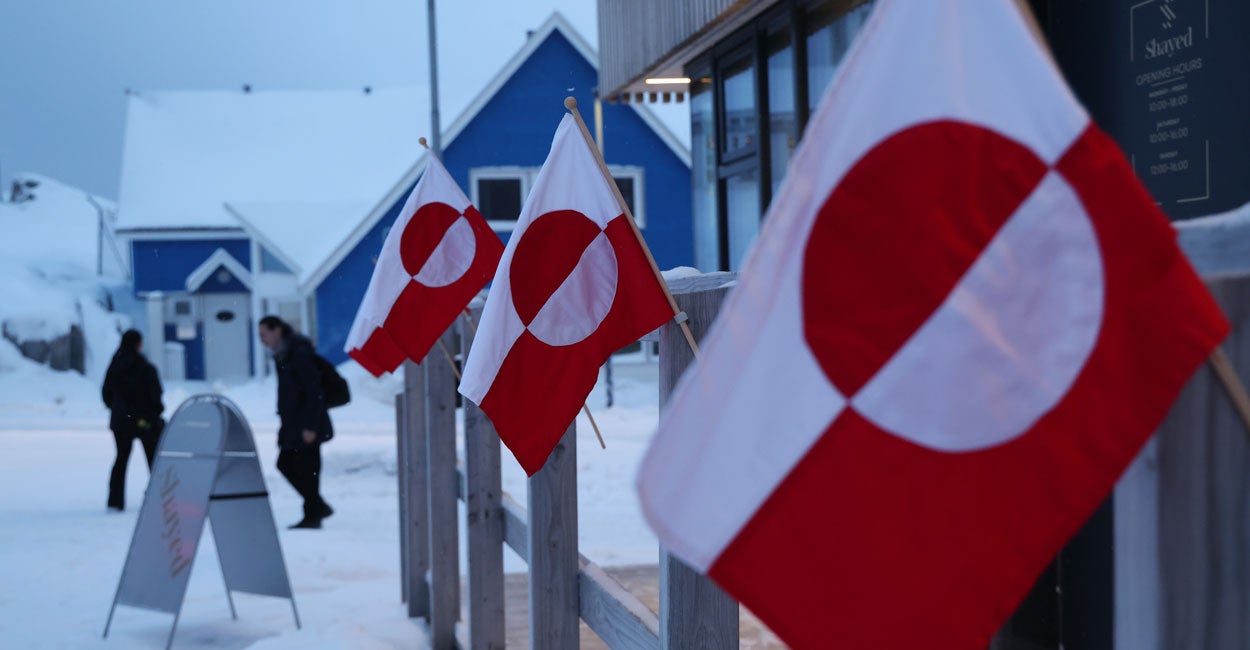
Greenland has been a national security concern of the United States since the 19th century. President Donald Trump is the most recent in a long line of American presidents expressing an interest in either acquiring Greenland or expanding the U.S. military footprint in Greenland in cooperation with Denmark.
Live Your Best Retirement
Fun • Funds • Fitness • Freedom
Given Greenland’s strategic location, Trump’s interest is eminently rational—but the United States should address the valid security concerns raised by Trump without risking a breach with NATO.
American interest in Greenland goes back more than a century and a half. Secretary of State William Seward expressed interest in Greenland as early as the 1860s. American interest in purchasing territory from Denmark has a historical precedent as the U.S. purchased the Virgin Islands from Denmark in 1917. The American military presence in Greenland dates to the 1940s, and President Harry S. Truman expressed an interest in purchasing Greenland from Denmark after World War II.
The strategic rationale for a U.S. military presence became especially clear with the beginning of the Cold War. With the advent of strategic bombers and intercontinental ballistic missiles, flying over Greenland became the shortest path between the Soviet Union’s main bases and the United States.
In 1951, the United States and Denmark signed a broad and comprehensive treaty that expanded upon a 1941 agreement, allowing the U.S. to establish and operate bases and troops in Greenland. Pituffik Space Base sits near the top of Greenland today, supporting missile warning, missile defense, and space surveillance missions.
The present public conversation around Greenland ignores some key points that explain the Trump administration’s increased interest in rethinking the American relationship to the island.
There is already a legal mechanism for Greenland to declare independence if it so chooses, as Greenland’s 2009 self-rule law “establishes basically a road map for independence.”
In 2023, a constitutional commission composed of members of the Greenlandic parliament presented a draft constitution for a post-independence Greenland.
Additionally, an opinion poll from last year showed that 56% of Greenlanders are in favor of independence.
The Danish government has long said that Greenland’s status is a question for Greenlanders to decide. The government may well also conclude that saving hundreds of millions of dollars a year currently spent supporting the Greenlandic government is a good deal for both Denmark and Greenland.
As Danish Prime Minister Mette Frederiksen has said “the self-rule law clearly stipulates that the future of Greenland is to be defined by Greenland and Greenlanders.”
If Greenland were to declare independence, however, it would lose the generous subsidy provided by Denmark each year (representing roughly half of the Greenlandic government’s budget), raising concerns that some other country could step in to fill the funding gap.
American conservatives took note of the potential emergence of a newly independent Arctic state with an uncertain source of income that could be potentially untethered from either Denmark or NATO. They are correct in fearing that China or Russia could potentially fill the funding gap and build a presence in the Arctic that would be unacceptable to both American and European interests.
Denmark is a longtime American ally and has proven itself one of America’s most steadfast friends within NATO. Indeed, during the long war in Afghanistan, Danish troops consistently engaged in combat operations and were killed in action fighting the Taliban at a higher rate per capita than any other NATO ally.
U.S.-Danish security cooperation is strong, with Denmark already operating U.S.-built F-35 fighter aircraft, discussing the purchase of P-8 Poseidon maritime patrol aircraft, and demonstrating a clear commitment to defense spending within NATO.
It is clear that should the United States acquire Greenland over the objections of Denmark and other European countries, it could create real fissures within the NATO alliance. Such fissures could ultimately result in the breakup in NATO.
What then could the United States do in coordination with Denmark and Greenland?
The U.S. has a few options it could pursue in the event the Greenlandic government decides on independence from Denmark.
The United States could offer a territorial status, akin to that of Puerto Rico or the U.S. Virgin Islands, in which Greenland is self-governing and not a state, but is a part of the United States.
Alternatively, the United States could offer an arrangement similar to the compact of free association (COFA) agreements we currently have in place with the Marshall Islands, Micronesia, and Palau, under which these countries are independent and self-governing, but the U.S. has sole access and responsibility for security matters in exchange for a generous American subsidy.
Given Greenland’s small population of less than 60,000 people and an economy of only $3 billion, it would both struggle to arm a military that could adequately defend its sovereignty and to meet its financial obligations in general.
Alternatively, the United States could work with Denmark and other European nations to station an increased number of forces in Greenland to better secure the island and the arctic from Chinese or Russian influence.
At the same time, American and European governments can work together to access critical resources in Greenland—while at the same time providing well-paying jobs to Greenlanders.
Indeed, the best near-term option is for the United States to sign an updated defense agreement with Denmark, one that updates the legal logic presented in the 1941 and 1951 agreements which justified the stationing of forces on the island as part of a continental defense architecture during a time of systemic threats.
The updated agreement should formalize and expand U.S. access to Greenland’s territory for military, space, maritime, and infrastructure purposes while reaffirming Greenland’s status as a self-governing territory that is part of Danish sovereignty. Such an agreement would pave the way for the United States to reopen shuttered military bases which would expand the U.S.’ ability to detect Russian or Chinese maritime or air and missile threats to the homeland coming over the arctic pole.
The governments of the United States, Denmark, and Greenland now have the opportunity now to craft a future that works to the advantage of all three countries, securing the interests of the American, Danish, and Greenlandic peoples alike. In acquiring Greenland, the U.S. would keep this crucial part of the Arctic free from adversarial influence, while not causing ruptures in NATO.
The post A Conservative Greenland Policy Rationale appeared first on The Daily Signal.
What's Your Reaction?
 Like
0
Like
0
 Dislike
0
Dislike
0
 Love
0
Love
0
 Funny
0
Funny
0
 Wow
0
Wow
0
 Sad
0
Sad
0
 Angry
0
Angry
0

I am just an average American. My teen years were in the late 70s and I participated in all that that decade offered. Started working young, too young. Then I joined the Army before I graduated High School. I spent 25 years in, mostly in Infantry units. Since then I've worked in information technology positions all at small family owned companies. At this rate I'll never be a tech millionaire. When I was young I rode horses as much as I could. I do believe I should have been a cowboy. I'm getting in the saddle again by taking riding lessons and see where it goes.




















Comments (0)