

After Rebranding Fiasco, Cracker Barrel Takes It On The Chin In Latest Shareholder Meeting
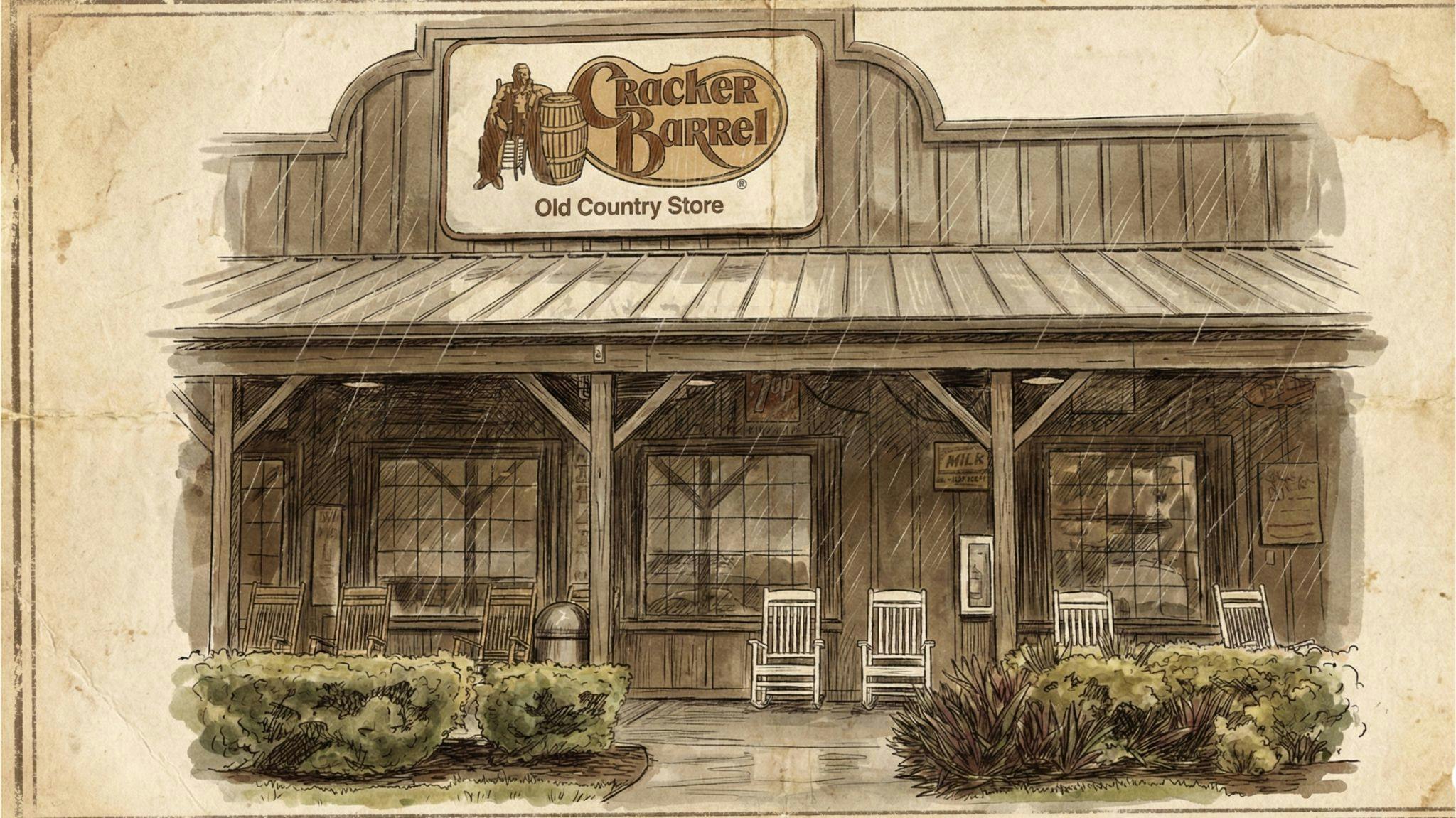
The Cracker Barrel rebrand debacle has been one of the most misunderstood corporate wokeness sagas of 2025. For months, it’s been held up as an example of the failures of ‘culture war conservatism,’ a tempest in a teapot that no one really cared about. Yet, we recently received data-driven proof that the backlash to one of America’s most beloved country brands has been anything but imaginary.
Live Your Best Retirement
Fun • Funds • Fitness • Freedom
At first glance, it would appear the outrage from consumers and shareholders was simply about the advent of a minimalist logo. The reality, however, is that Cracker Barrel’s performance has been slipping for years. For example, if you invested $1,000 in Cracker Barrel at the start of 2021, it would be worth less than $300 today. That can’t be explained away by a simple logo change. That’s a major problem, years in the making.
But the real test for Cracker Barrel wasn’t whether customers would forgive Uncle Herschel and his wayward brand. It was whether investors would forgive the Barrel’s board of directors, specifically embattled CEO Julie Felss Masino.
On November 20, Cracker Barrel held its annual shareholder meeting, and we found out exactly how much investor trust had been destroyed. Simply put: a lot. A large percentage of investor votes are guided by the recommendation of proxy advisory firms, none of which were inclined to let Cracker Barrel walk away from the debacle scot-free.
In the lead-up to the meeting, much of the ire was focused on Gilbert Dávila, Cracker Barrel’s compensation committee chair and a marketing and diversity specialist, advising a vote against, with some firms also advising against re-electing Jody Bilney, the chair of the Barrel’s nominating/governance committee. CEO Masino wasn’t spared either, with proxy advisory firm Egan-Jones recommending a ‘no’ vote over the brand’s underperformance. Pay attention to these names — this is how you measure impact.
The outcome? CEO Julie Felss Masino failed to gain support from a quarter of shareholder votes. Bilney, the nominating chair, lost almost a third of shareholder support. And Gilbert Dávila, the diversity specialist, barely broke two-fifths of shareholder support, resigning after the meeting.
In fact, of the 10 directors up for election, seven of them didn’t break 90% support. That may not sound like much, but in a corporate context, let’s be clear: that’s a vote of “no confidence” from a very sizable number of shareholders.
For comparison, in a 2024 pressure campaign against ExxonMobil, left-wing activist efforts successfully brought down vote counts by a single percentage point — to 95%. Exxon’s CEO, Darren Woods, lost maybe 1% percent of investor support over manufactured outrage. Cracker Barrel’s CEO lost around 20% percent investor support as a result of real outrage.
If you’ll recall, Cracker Barrel made the risky and seemingly unprompted decision to change its logo in August of 2025. In an attempt to reach a younger, less nostalgia-driven audience, they removed ‘Uncle Herschel’ from the classic logo that had been emblazoned on storefronts since 1969.
But that move didn’t proceed as anticipated. The rebrand got all the wrong attention, from ordinary customers to President Trump to a wide swath of conservative commentators, with Rod Dreher deeming the marketing shift “the New Coke of corporate logos.”
And Cracker Barrel, to its very limited credit, listened. After a flurry of negative X impressions and customer protests, the company walked back the rebrand. “We hear you,” Cracker Barrel announced, shortly before restoring their old logo, firing their design firm, and embarking on one of the most embarrassing rollbacks in recent corporate marketing history. “We heard clearly that the modern remodel redesign does not reflect what you love about Cracker Barrel.”
And then, you might think, the story ends. On the business side of things, however, the apology isn’t the final salvo in any marketing fumble. Customers might forgive a brand — but there was a lot more than a logo change to forgive.
Actions have consequences. It’s one of the most foundational principles of business, economics, and politics. In Cracker Barrel’s case, however, an even more foundational principle is being played out in real time: ideas have consequences. Ideas, like allowing political bias to seep into our most prominent corporate institutions, have severe consequences — like a billion dollars’ worth of largely avoidable brand damage. It’s very easy to look at the Cracker Barrel saga and conclude that it’s a non-issue, a side cultural issue invented to invent victimhood where it doesn’t exist. Yet it’s not true.
Cracker Barrel’s failure isn’t a MAGA-generated victim narrative, despite what MSNBC hosts like Jonathan Capehart might want you to believe. The company’s struggles have hurt people of all political stripes. Using a historic, valuable brand to test pet marketing theories isn’t just a matter of X debate. It’s a threat to the financial futures of millions of Americans, including Cracker Barrel’s roughly 70,000 employees who depend on the company’s success.
Many of those Americans just made their opinions known, sending a clear sign: there’s serious trouble ahead at the Barrel. The rebrand was only the tip of a very large iceberg, and it’s not just going to be hand-waved away, least of all by the CEO and what’s left of the corporate board that allowed it to happen.
* * *
Isaac Willour is an award-winning journalist focusing on race, culture, and American conservatism, as well as a corporate relations analyst at Bowyer Research. His work has been featured at outlets including USA Today, The Wall Street Journal, The New York Times Opinion, C-SPAN, and The Daily Wire. He is a member of the Young Voices contributor program and can be found on X @IsaacWillour.
The views expressed in this piece are those of the author and do not necessarily represent those of The Daily Wire.
50% off DailyWire+ annual memberships will not return for another year, so don’t miss this deal! Join now at DailyWire.com/cyberweek.
What's Your Reaction?
 Like
0
Like
0
 Dislike
0
Dislike
0
 Love
0
Love
0
 Funny
0
Funny
0
 Wow
0
Wow
0
 Sad
0
Sad
0
 Angry
0
Angry
0

I am just an average American. My teen years were in the late 70s and I participated in all that that decade offered. Started working young, too young. Then I joined the Army before I graduated High School. I spent 25 years in, mostly in Infantry units. Since then I've worked in information technology positions all at small family owned companies. At this rate I'll never be a tech millionaire. When I was young I rode horses as much as I could. I do believe I should have been a cowboy. I'm getting in the saddle again by taking riding lessons and see where it goes.



Comments (0)