

Armenia’s Spiritual Earthquake And The Warning America Cannot Ignore
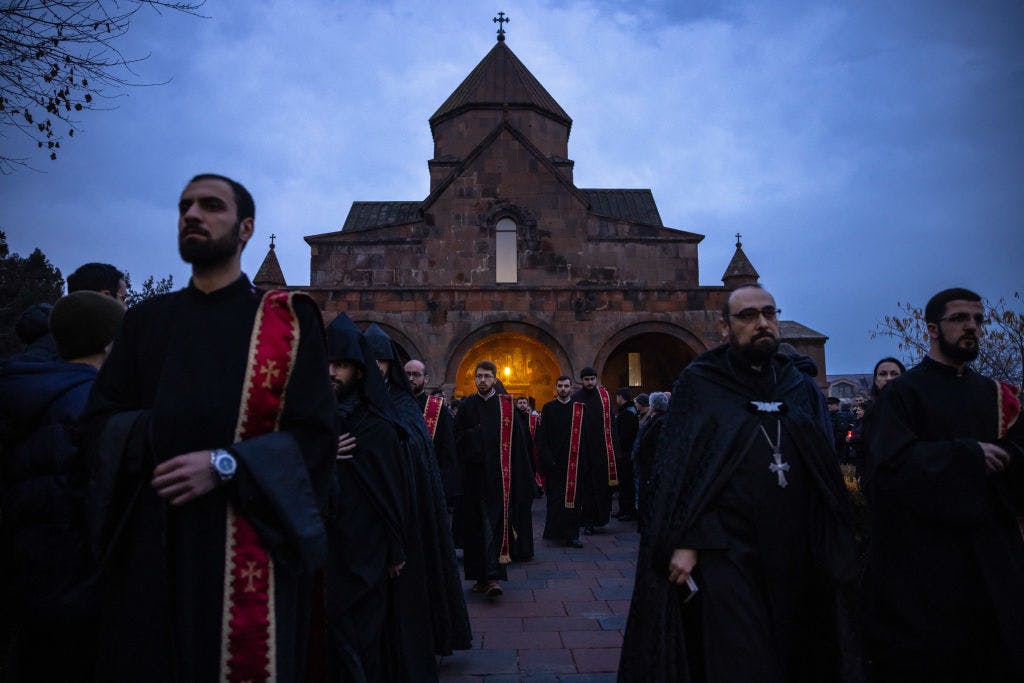
A tremor is moving through Armenia. It is not shaking its borders or its mountains. It is moving through the spiritual heart of the world’s first Christian nation. The Armenian Apostolic Church, the ancient institution that carried a people through genocide, exile, and the long shadow of Soviet repression, now stands in the center of an escalating national confrontation. Prime Minister Nikol Pashinyan’s government has accused leading church figures, including Catholicos Karekin II, of political meddling and moral misconduct. Church leaders and their supporters insist that the government is attempting to silence a sacred institution that has preserved Armenian identity through centuries of persecution. To understand the significance of this confrontation, it is important to consider how both the government and the Church explain the actions that have unfolded since early summer.
Live Your Best Retirement
Fun • Funds • Fitness • Freedom
Since June, Prime Minister Nikol Pashinyan’s government has said its actions against senior clerics are lawful investigations tied to alleged criminal conduct and concerns about political destabilization during a sensitive period for Armenia’s security and peace negotiations. Church leaders and critics counter that the arrests, including the recent detention of Archbishop Arshak Khachatryan on revived drug-related charges, amount to political pressure on the Armenian Apostolic Church and raise serious questions about religious freedom and state overreach.
The truth of these accusations remains contested. The facts are intertwined with political tension, historical memory, and the understandable anxieties of a nation that has endured repeated national trauma. Yet this controversy is about more than the conduct of any particular leader. It is about the role faith continues to play in shaping the conscience of a modern society. It is about whether institutions that helped form the Armenian nation can still speak with moral authority in an age that increasingly demands their silence.
In much of the West, faith is often treated as a personal preference or a cultural accessory, reduced to one choice among many in an age defined by individual identity. Yet faith has never been sustained by ease. It is shaped by conflict, sacrifice, and transformation. The Armenian Church has survived empires, invasions, massacres, political manipulation, and ideological pressure that sought to erase it. It has weathered the weakness of its leaders, the failures of its institutions, and the pressures of hostile governments. Through all of this, it has remained a source of identity and hope for its people.
Americans should see something familiar in this moment. We, too, have seen spiritual disappointment in every corner of our own religious landscape. We have witnessed the failures of pastors, priests, bishops, and spiritual leaders who lost their way. Yet the endurance of faith despite human failures reminds us that no institution stands or falls on the perfection of its leaders. A church draws its strength from the conviction of its people and from a shared belief that truth is larger than any one individual.
This insight matters not only for religion but also for politics. Mature societies understand that institutions must outlast personalities. A democracy cannot survive if it relies on the strength of a single figure. A church cannot survive if it places all of its hope in the purity of one clergyman. The resilience of a nation rests in the covenant of shared responsibility, shared belief, and shared accountability.
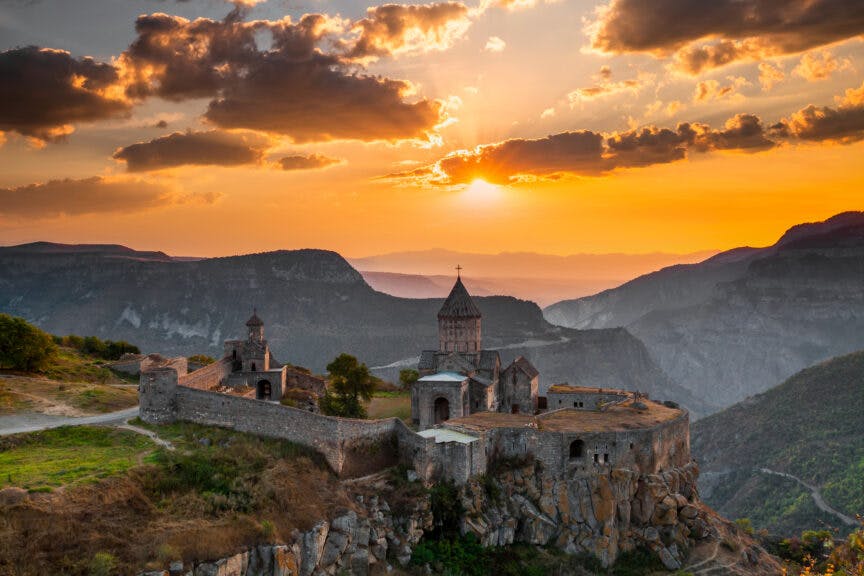
Tatev, Armenia. 9th-century Armenian Apostolic monastery located near the Tatev village in Armenia. Anton Petrus. Getty Images.
Armenia’s struggle also reveals something essential about freedom. Under Soviet rule, the Armenian Church was monitored, restricted, and infiltrated by state authorities, making open criticism dangerous or impossible. In a free Armenia, citizens can question both political leaders and church authorities. Such questioning might be loud and painful, but it is proof of democratic life. Freedom requires discernment. A society must learn how to confront wrongdoing without destroying the institutions that hold its moral memory.
None of this diminishes the seriousness of the concerns raised on both sides. If the Church has tolerated harmful practices, it must face that reality with honesty and courage. If the state is using the language of justice to exert political pressure, it must stop before it undermines the very democratic values it claims to protect. The state exists to govern. The Church exists to guide conscience. When each respects the purpose of the other, both flourish.
This moment also calls for humility among believers. It is easy to demand perfection from spiritual leaders and then abandon the Church when those leaders fail. Yet the endurance of Christianity has never depended on perfect leadership. It has grown through crises that forced communities to seek renewal, accountability, and deeper integrity. Faith is not destroyed by human weakness. It is strengthened when weakness is confronted with truth.
For that reason, the crisis in Armenia may ultimately bring spiritual renewal. A Church that survived genocide, communism, and the attempt to erase its identity will not collapse because of a political controversy. It may emerge more transparent, more accountable, and more prepared to meet the longing of a new generation that desires authenticity from every institution. And if the government learns that the Church remains an essential guardian of Armenian identity, then this moment of strain may lead to a healthier balance between state authority and spiritual influence.
Americans should pay attention to this moment. We live in a time of deep skepticism toward every institution. We have grown accustomed to believing that a single failure invalidates the entire structure. Armenia offers a humbling reminder. Imperfection is not the opposite of strength. It is the environment in which renewal can take root if people refuse to surrender to cynicism.
The world’s first Christian nation is wrestling with its soul. It is rediscovering a timeless truth. The endurance of faith is not measured by the virtue of its leaders, but by the resolve of its people to preserve what is true even when the ground beneath them is shaking. That is a message America needs to hear now more than ever.
* * *
Bishop Dr. Paul Murray is a global religious freedom advocate and nonprofit executive with more than three decades of experience working at the intersection of faith, human rights, and public life. He serves as CEO of Save Armenia and is an adjunct professor at Indiana Wesleyan University.
The views expressed in this piece are those of the author and do not necessarily represent those of The Daily Wire.
Christmas Sale – Get 40% off New DailyWire+ Annual Memberships
What's Your Reaction?
 Like
0
Like
0
 Dislike
0
Dislike
0
 Love
0
Love
0
 Funny
0
Funny
0
 Wow
0
Wow
0
 Sad
0
Sad
0
 Angry
0
Angry
0

I am just an average American. My teen years were in the late 70s and I participated in all that that decade offered. Started working young, too young. Then I joined the Army before I graduated High School. I spent 25 years in, mostly in Infantry units. Since then I've worked in information technology positions all at small family owned companies. At this rate I'll never be a tech millionaire. When I was young I rode horses as much as I could. I do believe I should have been a cowboy. I'm getting in the saddle again by taking riding lessons and see where it goes.












Comments (0)