

Bellwether Social Media Addiction Trial Puts Instagram, YouTube, And TikTok In The Crosshairs
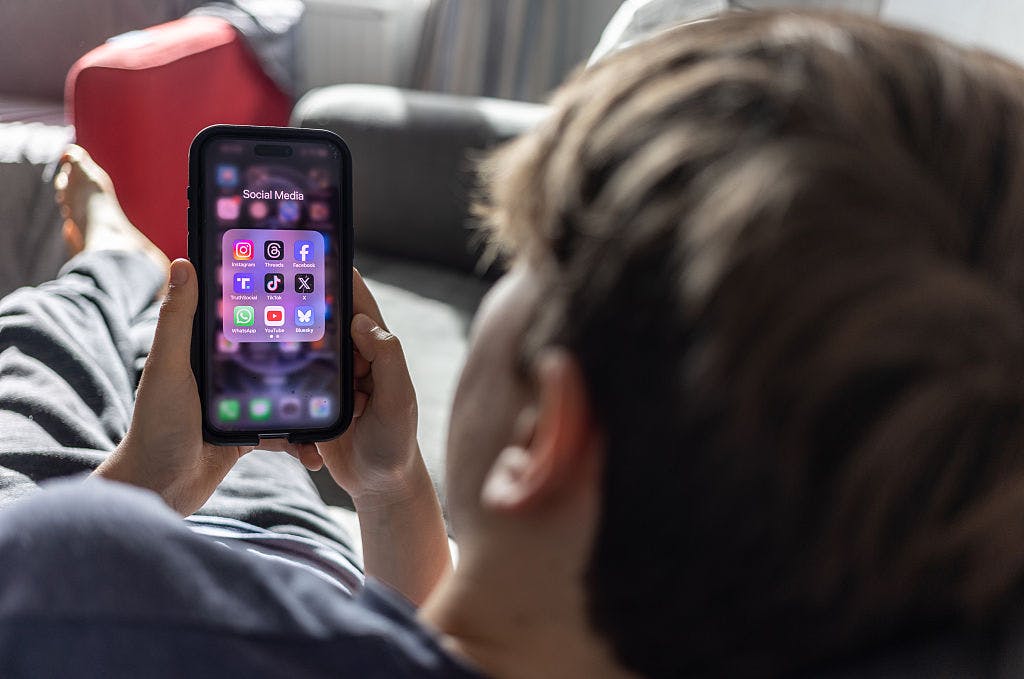
Three of the world’s largest social media platforms are heading to court on Tuesday as they defend themselves in a bellwether social media addiction case.
Live Your Best Retirement
Fun • Funds • Fitness • Freedom
The California Superior Court in Los Angeles County is set to hear the case, which alleges that Facebook, Instagram, TikTok, and YouTube have contributed to the growing problem of social media addiction and the mental health issues that stem from it. Jury selection for the trial begins on Tuesday, with opening arguments scheduled for next week. The case is part of a coordinated effort across the country that includes hundreds of similar cases where litigants accuse social media giants of fueling addiction.
In the case before the California Superior Court, a 19-year-old woman, referred to as K.G.M., argues that social media platforms have knowingly designed their platforms to get children and young users addicted. Studies have shown that social media features such as autoplay and infinite scroll induce a dopamine hit, which can lead to users spending hours on platforms each day.
K.G.M.’s social media addiction resulted in crippling depression, body dysmorphia, and suicidal thoughts, according to the lawsuit. K.G.M.’s case is just the first of many that are expected to trial this year, targeting Snapchat, Meta, TikTok, and YouTube, which is owned by Google. Snapchat settled with K.G.M., but it remains a defendant in numerous other social media cases that are set to go before state and federal courts.
YouTube told The Daily Wire that the allegations it faces in the cases “are simply not true.”
“Providing young people with a safer, healthier experience has always been core to our work,” said YouTube spokesman José Castañeda. “In collaboration with youth, mental health and parenting experts, we built services and policies to provide young people with age-appropriate experiences, and parents with robust controls. The allegations in these complaints are simply not true.”
The Daily Wire also reached out to Snapchat, TikTok, and Meta, which owns Facebook and Instagram. Snapchat told The Daily Wire that it was “pleased” to have settled the K.G.M. case in “an amicable manner.”
The K.G.M trial will likely put Meta CEO Mark Zuckerberg on the witness stand, where he will have to answer questions in front of a jury. Meta’s lawyers told Reuters that the social media giant will argue before the court that its platform did not lead to K.G.M’s mental health issues. YouTube said it will argue that its platform is different from those of the other defendants and shouldn’t be considered in the same case as Facebook, Instagram, and TikTok.
The California Superior Court trial could shape public opinion on social media platforms moving forward as the companies face more trials, including one in the U.S. District Court for the Northern District of California, which is set to begin on June 12. The lawsuit before the federal court was filed by school districts, which argue that social media addiction fueled by social media companies “not only harms individual children and their loved ones but also causes substantial and financially burdensome interference with school district, county, and municipal operations.”
In recent years, Meta has unrolled online safety features for children using Instagram. The platform’s “Teen Accounts” keep children’s accounts private, meaning other Instagram users cannot see posts from or contact a Teen Account unless the teenager accepts their follow requests. Instagram also censors content on Teen Accounts, so that children are not shown content that features fighting or cosmetic procedures.
TikTok, meanwhile, created “a separate TikTok experience specifically designed” for kids under 13 years old. The “TikTok Under 13 Experience” curates content that is more appropriate for young children, makes all accounts private, and limits screen time to one hour. YouTube also has a kids version of the platform that is “designed to be a safer and simpler place for kids to explore their interests through online video.” YouTube requires videos uploaded on YouTube Kids to be “family-friendly.”
The effects of social media on children has become a hot topic in recent years, and the issue gained more attention after the book, “The Anxious Generation,” by Jonathan Haidt was published in 2024. In the book, Haidt, a social psychologist, argues that anxiety and depression skyrocketed in the past 15 years, coinciding with what he calls the “great rewiring of childhood,” which is the flip from a play-based childhood to a phone-based childhood.
The social media addiction case in California comes as some countries move to ban social media for children. Last month, Australia became the first nation in the world to ban social media for kids under 16. Malaysia has introduced a similar social media ban, and Utah passed a law in 2024 requiring social media platforms to verify a users’ age and obtain parental consent, but parts of the law were temporarily blocked by a federal judge.
What's Your Reaction?
 Like
0
Like
0
 Dislike
0
Dislike
0
 Love
0
Love
0
 Funny
0
Funny
0
 Wow
0
Wow
0
 Sad
0
Sad
0
 Angry
0
Angry
0

I am just an average American. My teen years were in the late 70s and I participated in all that that decade offered. Started working young, too young. Then I joined the Army before I graduated High School. I spent 25 years in, mostly in Infantry units. Since then I've worked in information technology positions all at small family owned companies. At this rate I'll never be a tech millionaire. When I was young I rode horses as much as I could. I do believe I should have been a cowboy. I'm getting in the saddle again by taking riding lessons and see where it goes.
















Comments (0)