

Beyond Duality: How ‘Dark States’ Are Redefining The Nature Of Light
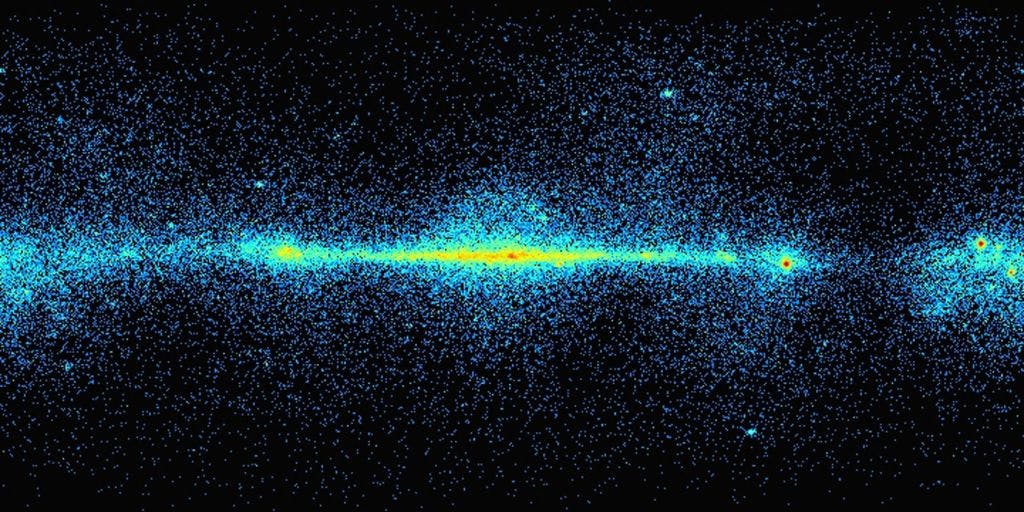
A foundational pillar of quantum mechanics—wave-particle duality—faced a significant challenge this year following a provocative reinterpretation of the classic double-slit experiment.
Live Your Best Retirement
Fun • Funds • Fitness • Freedom
While physics has long held that light simultaneously possesses particle and wave-like properties, researchers led by Celso Villas-Boas have proposed a model that explains interference patterns using only particles (photons).
In the traditional double-slit experiment, light passing through two slits creates an interference pattern of bright and dark fringes on a screen. This has historically been cited as definitive proof of light’s wave nature. However, the team from the Federal University of São Carlos suggests a different mechanism:
Instead of waves crashing into each other, the researchers utilize “dark states”—special quantum states where photons are unable to interact with other particles. These dark states account for the dark stripes on the screen. By explaining the experiment through the presence or absence of photon interactions, the need for a “wave” model is effectively eliminated.
The mathematical foundation of Villas-Boas’s work centers on the Jaynes-Cummings Hamiltonian, the standard model for describing how light (radiation) interacts with matter (a two-level atom). The crux of the math is the “coupling” between these photon states and the detector’s atoms. The researchers identified two distinct types of collective states: bright states and dark states.
The reception among the scientific community has been polarized: Many educators feel the work upends decades of established pedagogy regarding interference. Proponents argue this view clarifies “impossible” phenomena, such as interference between non-overlapping waves or between mechanical and electromagnetic waves.
Beyond theoretical debate, this shift suggests tangible advancements. Villas-Boas’s ongoing research into dark states reveals that thermal radiation (like sunlight) may contain significant “hidden” energy that does not interact with matter. Furthermore, this reinterpretation could pave the way for novel technologies, including: light-driven quantum switches and materials engineered to be transparent only to specific light states.
Traditional solar panels and thermal collectors only harvest light that “couples” or interacts with their materials. If sunlight contains photons in “dark states” that don’t interact with matter, we have been missing a massive reservoir of energy. This could lead to a new generation of Quantum Photovoltaics designed to “break” the dark state of these photons, allowing us to capture energy that previously passed right through our best solar cells.
What's Your Reaction?
 Like
0
Like
0
 Dislike
0
Dislike
0
 Love
0
Love
0
 Funny
0
Funny
0
 Wow
0
Wow
0
 Sad
0
Sad
0
 Angry
0
Angry
0

I am just an average American. My teen years were in the late 70s and I participated in all that that decade offered. Started working young, too young. Then I joined the Army before I graduated High School. I spent 25 years in, mostly in Infantry units. Since then I've worked in information technology positions all at small family owned companies. At this rate I'll never be a tech millionaire. When I was young I rode horses as much as I could. I do believe I should have been a cowboy. I'm getting in the saddle again by taking riding lessons and see where it goes.





















Comments (0)