

Commemorating the 250th Anniversary of the Battle of Great Bridge, Virginia
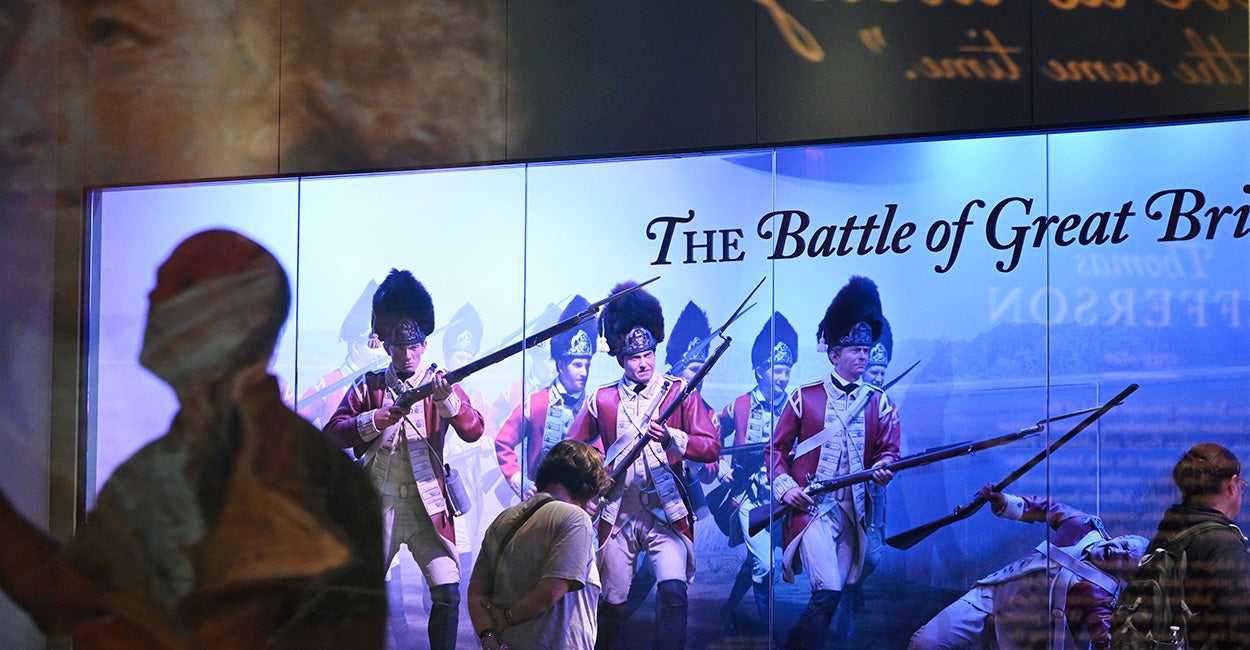
Today, Dec. 9, 2025, marks an important anniversary in the lead-up to our country’s upcoming Semiquincentennial: The Battle of Great Bridge.
Live Your Best Retirement
Fun • Funds • Fitness • Freedom
Though less well known than either Lexington and Concord, the Battle of Great Bridge was nonetheless a critical victory—both strategically and in boosting Patriot morale at a time when the struggle for American independence was still in its infancy.
The Battle of Great Bridge opened the war for Virginia in what is now the city of Chesapeake, just miles away from where the war would eventually end in Yorktown.
Events began to unfold shortly after the “Shots Heard Round the World” in April 1775, when the Virginia House of Burgesses voted to authorize new and existing militias to arm themselves as a means of self-defense.
Responding to this perceived act of rebellion, Lord Dunmore, who would consequently be the Old Dominion’s last Royal Governor, resolved to dissolve the legislature, thereby lighting a powder keg over who would control the colony’s military supplies.
After a series of skirmishes between Loyalists and Patriots following his orders to seize the gunpowder supply in the colonial capital of Williamsburg, Lord Dunmore, fearing for his safety, fled to the port city of Norfolk and its sizable Royal Navy presence.
By October, Lord Dunmore had acquired enough supplies to begin a campaign of suppression aimed at muzzling the colonists’ cries for freedom.
Calling up reinforcement under General Thomas Gage, the British commander-in-chief in North America, infantry from the 14th Regiment of Foot began raiding nearby towns for provisions. Later, the memory of such abuses would go on to inform the Framers of the Constitution when drafting the Third Amendment.
At the time, anger was an understatement on the part of the colonists, who had responded to the injustices committed by the British by capturing a ship near Hampton on October 12th, resulting in the casualties of several sailors.
In response, Lord Dunmore decreed on November 7th the imposition of martial law and the offer of emancipation to any slave willing to fight for the Crown, and Dunmore’s Ethiopian Regiment eventually grew to 300 men.
Along with the Queen’s Rangers, a homegrown regiment of Virginian Loyalists, the Ethiopian Regiment worked to reinforce the defensive maneuverings of the 14th Regiment, a formation based out of Yorkshire, England with limited knowledge of the terrain.
The House of Burgesses, now operating as the Virginia Convention, ordered Col. William Woodford of the 2nd Virginia Regiment to lead his 400-strong militia alongside 100 volunteers of the Culpeper Minutemen to march on Norfolk shortly after Lord Dunmore’s proclamation.
For both sides, the stakes were high. Upon his arrival in Norfolk, Lord Dunmore ordered the fortification of the overpass alongside the Elizabeth River in the village of Great Bridge. At the time, this was the only route to and from North Carolina.
The British hoped to suppress the colonists’ rebellion through a strategy of divide and conquer by isolating Southern port cities such as Charleston and Savannah, creating an insurmountable bottleneck that would fatally fracture any sort of solidarity among the thirteen colonies.
Col. Woodford and his men, however, saw opportunity. Virginia’s population distribution at the time was radically different from today. Instead of a sprawling metropolis, Northern Virginia along the Potomac then boasted only the small village of Georgetown.
In the 18th century, Virginia’s population was most densely concentrated in the Tidewater region. The only British military presence in the colony were the three aforementioned infantry units and the naval presence in Norfolk.
Simply put, if the Patriots could drive the British out of Norfolk, they could consolidate control in Virginia. At Great Bridge, the three British infantry units established Fort Murray, their only land-based force in the colony. On December 2nd, Col. Woodford and his forces arrived at the bridge, preparing for battle.
Both sides had to contend with faulty intelligence, though ultimately it worked immensely in favor of the Patriots. British intelligence also failed to anticipate reinforcements from the North Carolina militia that swelled Col. Woodford’s command to 700 men fit for service.
Despite this, Col. Woodford prepared for the worst, owing to rumors that the British would be reinforced by Scottish Highlanders, which turned out to be partially true owing to the Highlanders’ limited arms training. As the battle commenced, Col. Woodford focused on entrenchment rather than an all-out assault. Expecting an attack that never came, British Captain Charles Fordyce prematurely exclaimed, “The day is ours!”
The emboldened British, lulled by a false sense of impending victory, began to gradually approach the Patriot defensive line, but this turned out to be a trap. After a gut-wrenching moment of silence, the Patriots opened fire, cutting down Captain Fordyce and twelve privates.
On the side of the Virginia Patriots, black freeman William Flora distinguished himself, engaging a whole platoon of British soldiers to slow their advance and by the Patriots enough time to man their defenses. The British quickly retreated to Fort Murray and then onward to Norfolk.
Following the Battle of Great Bridge, the British presence in Virginia would be reduced to a shadow of what it once was, and the British fled the burning city of Norfolk in January 1776. Although briefly using the nearby city of Portsmouth as a landing point for raids, Lord Dunmore soon sailed north to New York City in August 1776, never to return to Virginia.
In remembering Great Bridge 250 years later, we honor more than a tactical victory—we honor the character of the people who secured it. Col. William Woodford and the men who followed him were not fighting for glory, nor from certainty of success, but from the conviction that free people can chart their own destiny.
Their courage in the swamps of Tidewater set a precedent that would echo all the way to Yorktown. America was not born in comfort or inevitability; it was built plank by plank, sacrifice by sacrifice, by ordinary men and women who refused to accept that tyranny was their inheritance.
The post Commemorating the 250th Anniversary of the Battle of Great Bridge, Virginia appeared first on The Daily Signal.
What's Your Reaction?
 Like
0
Like
0
 Dislike
0
Dislike
0
 Love
0
Love
0
 Funny
0
Funny
0
 Wow
0
Wow
0
 Sad
0
Sad
0
 Angry
0
Angry
0

I am just an average American. My teen years were in the late 70s and I participated in all that that decade offered. Started working young, too young. Then I joined the Army before I graduated High School. I spent 25 years in, mostly in Infantry units. Since then I've worked in information technology positions all at small family owned companies. At this rate I'll never be a tech millionaire. When I was young I rode horses as much as I could. I do believe I should have been a cowboy. I'm getting in the saddle again by taking riding lessons and see where it goes.









Comments (0)