

Democrats Want It Both Ways on Debt—and Working Americans Will Pay the Price
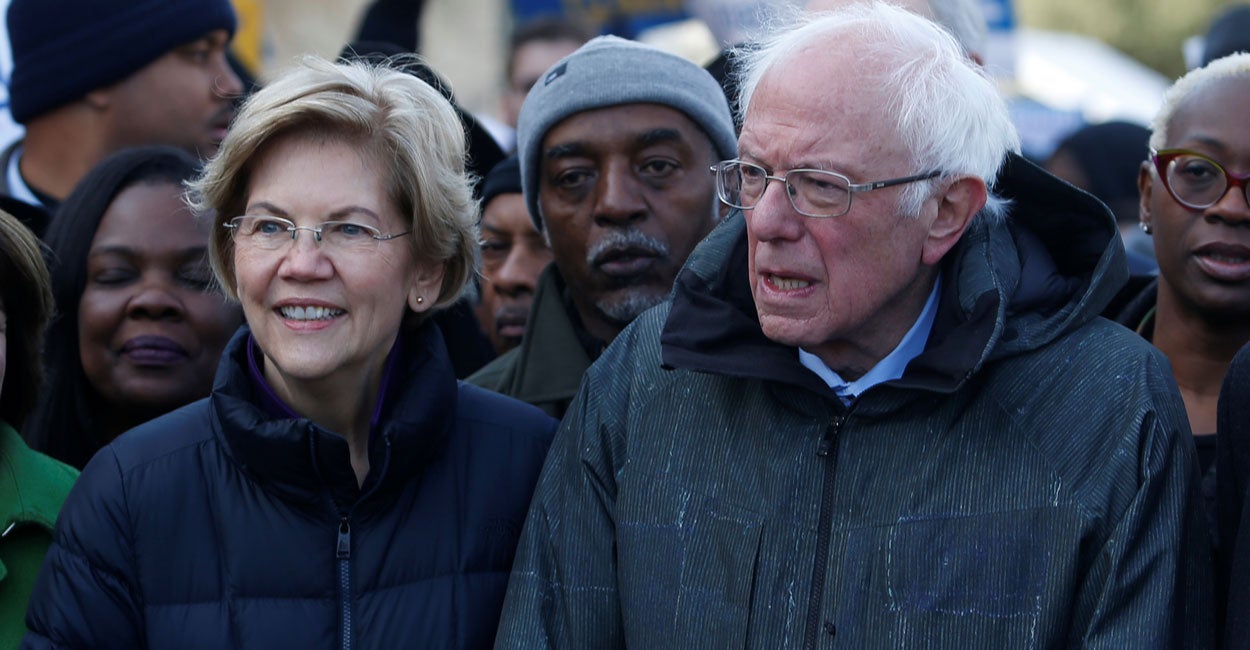
Democrats have spent the better part of two decades branding themselves as protectors of working Americans. But when you examine their actual policy choices rather than their press releases, a consistent pattern emerges: Their interventions routinely raise costs, distort markets, and ultimately hurt the very people they claim to champion. Their latest foray into student lending and consumer credit is a case study in that contradiction.
A chorus of congressional progressives—led, predictably, by Sens. Elizabeth Warren and Bernie Sanders—is now demanding that President Donald Trump halt his administration’s effort to sell off portions of the federal student loan portfolio. Their reasoning is as political as it is transparent: They want to keep these loans on the government’s books so they can one day engineer a mass “forgiveness” program. Lost in this rhetoric is the structural reality that Washington’s heavy-handed role in student lending is one of the primary drivers of soaring tuition. When the federal government guarantees easy credit, institutions raise prices accordingly. The Warren-Sanders model—limitless federal lending paired with periodic political promises of forgiveness—gives colleges every incentive to hike tuition further, secure in the knowledge that taxpayers will absorb the fallout.
Trump’s policy moves in the opposite direction. Transferring significant portions of the loan portfolio to private entities reduces federal exposure, reins in a program plagued by delinquency, and returns loan management to organizations equipped to handle it. For decades, Democrats warned about runaway deficits; yet when confronted with an opportunity to reduce a structurally unsound federal liability, these same voices insist taxpayers should shoulder even more risk.
Live Your Best Retirement
Fun • Funds • Fitness • Freedom
The inconsistency is striking—but it’s also revealing.
Because even as they fight to prevent a modest correction in the Student Loan Program, Democrats are simultaneously pushing for a national 10% cap on credit card interest rates. As economist Stephen Moore has shown in his analysis of credit markets, such a cap would instantly make millions of at-risk borrowers unprofitable to serve, drying up access to mainstream credit almost overnight. The data is clear: Unsecured lending only functions when lenders can price for risk. Eliminate that price signal and lenders retreat.
That retreat hits hardest among the populations Democrats claim to champion. Higher-risk borrowers—young adults, gig workers, families with limited savings, individuals recovering from financial setbacks—rely on access to revolving credit to manage unexpected expenses, smooth income volatility, or simply build a credit history. If Washington dictates that lenders may not charge more than 10% interest on unsecured credit, banks will respond exactly as any rational actor would: They will stop offering credit to borrowers whose risk profile exceeds the artificial ceiling.
And here is the deeper irony. In higher education policy, Warren and Sanders insist on maintaining federally subsidized lending structures that inflate tuition and embed perverse incentives throughout the system. Colleges raise prices because Washington promises unlimited credit and then flirts with broad forgiveness. In consumer credit policy, those same lawmakers champion restrictions that will make legal credit scarce precisely when vulnerable households most need it. The result is a double blow: escalating education costs on the front end and shrinking credit availability on the back end.
This creates a perverse policy loop. Federal interventions make college more expensive. Families borrow more to keep up. Tuition continues to rise. Then, when those same families need access to credit to manage expenses, progressive policymakers seek to cap rates at levels that make offering that credit impossible. What starts as misguided paternalism ends as a direct assault on household financial stability.
A responsible government would reverse both trends. It would acknowledge that federal overreach in student lending has driven tuition inflation for years and welcome efforts to reduce taxpayer risk. And it would recognize that capping interest rates on unsecured credit below market-clearing levels doesn’t protect consumers—it excludes them.
Yet Democrats want it both ways: unlimited government risk when it fuels their preferred political narratives, and heavy-handed restrictions on private credit markets when it yields a populist talking point. Trump’s approach—restoring fiscal discipline in student lending while letting market forces allocate credit—is the only one grounded in economic reality. More importantly, it is the only approach that actually protects working Americans from the long-term consequences of distorted credit markets and runaway tuition.
We publish a variety of perspectives. Nothing written here is to be construed as representing the views of The Daily Signal.
The post Democrats Want It Both Ways on Debt—and Working Americans Will Pay the Price appeared first on The Daily Signal.
What's Your Reaction?
 Like
0
Like
0
 Dislike
0
Dislike
0
 Love
0
Love
0
 Funny
0
Funny
0
 Wow
0
Wow
0
 Sad
0
Sad
0
 Angry
0
Angry
0

I am just an average American. My teen years were in the late 70s and I participated in all that that decade offered. Started working young, too young. Then I joined the Army before I graduated High School. I spent 25 years in, mostly in Infantry units. Since then I've worked in information technology positions all at small family owned companies. At this rate I'll never be a tech millionaire. When I was young I rode horses as much as I could. I do believe I should have been a cowboy. I'm getting in the saddle again by taking riding lessons and see where it goes.














Comments (0)