

Does border security mean we’re stuck with a surveillance state?
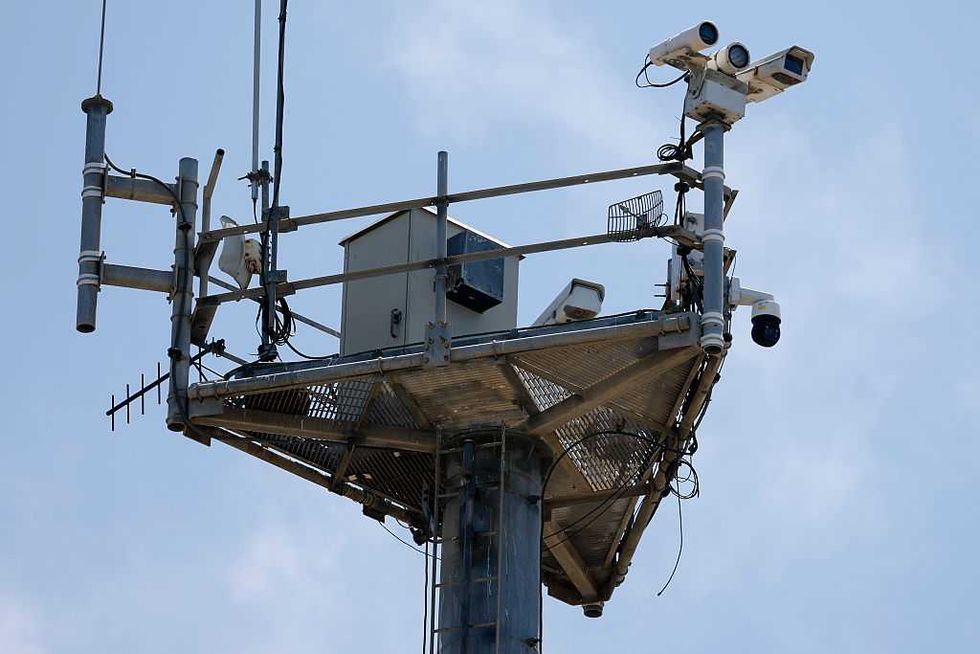
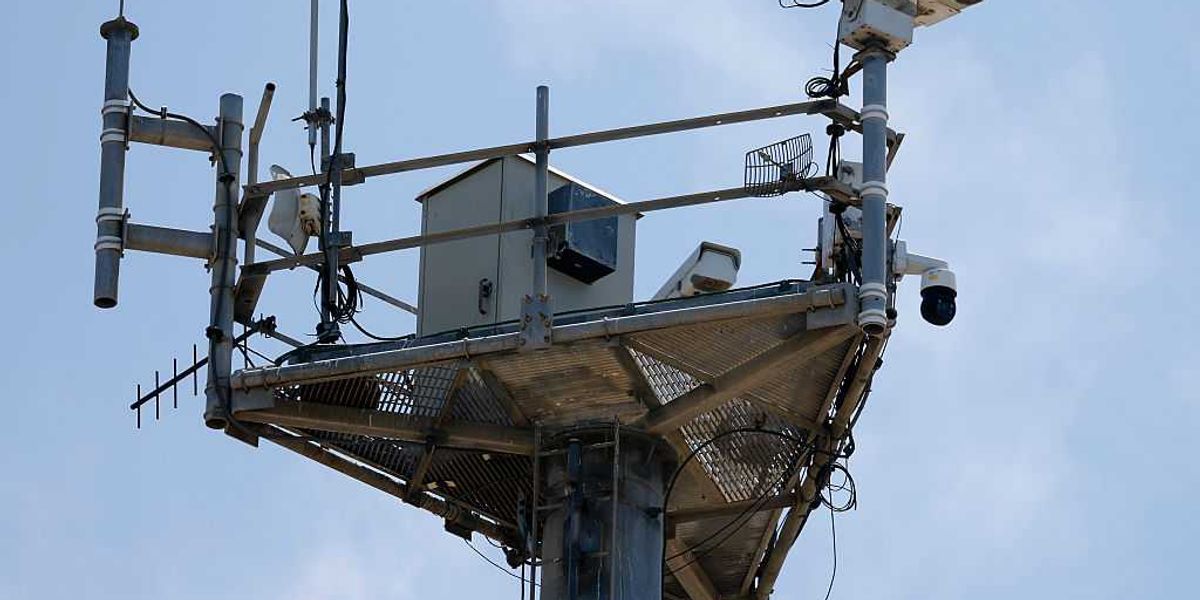
CBS recently reported that U.S. Border Patrol is now quietly “monitoring millions of American drivers nationwide.” A network of cameras does the work of scanning license plates and grabbing facial ID information. The data is analyzed by an unnamed “predictive intelligence” algorithm.
Live Your Best Retirement
Fun • Funds • Fitness • Freedom
Whatever happened to the land of the free?
The striking thing is, ever since 9/11, we all felt something like this was either happening or about to happen. Everybody knows, as the great bard Leonard Cohen sang. But what everyone doesn’t know yet is whether that sinking feeling can help us shape limits on the tech we want to deploy against others but not against ourselves.
The use of Palantir or something like it seems to be necessary to undo what the Obama-Biden revolution did.
Technologies of surveillance, identification, categorization, recordkeeping are all at their peak, and climbing. If it hasn’t happened already, we will very soon live in conditions where comprehensive, up-to-the-instant dossiers will be available on all human beings. These will later be integrated into psych profiles based on deep, personal internet histories.
True, the accuracy of these profiles will only be high if we presume a fixed human nature, devoid of spontaneity and repentance. The utility of these vast profiles will be high only insofar as our end goals are tied to a value system where material comfort and ever-increasing union between human souls and machines are prioritized. Prioritized above family, above the divine.
But more and more of us, willingly or otherwise, are signing up for that materialist, Borg-like existence.
Since 9/11, both the left and right have sounded the alarm on the “surveillance state.” Along the way, however, our demographics have undergone radical, unprecedented (some might even say suicidal) levels of alteration. We’ve imported competing tribes, ethnicities, and clans in numbers more than sufficient for those groups to wage their own little internecine wars on our streets — streets we Americans pay to upkeep in a thousand costly ways.
Why would we do this?
The answer is generally given that we Americans are no longer a people but a collection of increasingly isolated and belligerent peoples. And while some degree of regionalism has always marked the country, not until very recently did we think of ourselves this way. We can occupy ourselves with innumerable possible explanations for our increasing division, and many kill time or get paid spooling out financial, religious, historical, cyclical, and economic theories. All of these have some merit.
RELATED: Can Palantir defeat the Antifa networks behind trans terror?
 Photo by Jakub Porzycki/NurPhoto via Getty Images
But what about the technologies themselves? They seem to advance along a one-way ratchet no types of ups and downs can reverse, or even arrest. But it’s difficult to see how the tech is somehow “inevitable,” independent of human agency. Online occultists are ascribing responsibility to future entities reaching back into their past, our present day, roughly like the “temporal pincer movement” from Christopher Nolan's time-turnstile sci-fi epic “Tenet.” Easier perhaps to cobble up an explanation from human nature, economic choices, and corruption.
Regardless, we’re going to have to deal with a very real pincer situation: predictive super-tech on one side and an invidious, noncompliant, indeed hyper-fragmented population on the other.
OK. Then what should we do with the surveillance panopticon we’re building in the meanwhile? Polls vary, but even Gallup shows that in 1995, immigration was very unpopular. It made no difference. The citizenry has been remade. Acceleration of the remaking may have peaked under the Biden presidency, but even now, with leaders like Stephen Miller mincing no words about the necessity to remigrate millions, we aren’t getting very far. The use of Palantir or something like it seems to be necessary to undo what the Obama-Biden revolution did.
Meanwhile, it’s no secret that the American dream was long ago “downsized,” all but dead at present. It’s not hard to envision the panopticon moving on from unwanted and unlawful “newcomers” to the underclass of heritage American men and women bitterly struggling to survive under impossible economic conditions. They see no path because there is none. Are the men of this class, say those under age 40, going to accept such egregious limitations on their capacity to secure a living wage to offer a potential mate?
This distortion of first-world expectations is so transparent that even the U.S. Department of Labor is posting images of Rockwellian-ideal domestic existence with the accompanying text: “The American Dream has been stolen from the American People. Decades of failed policies prioritized foreign labor, offshored our jobs, and sold the American Worker out.”
Do the math: Tons of foreigners and their interest organization, plus millions of young, able-bodied heritage American males unable to form families on promised terms, plus a surveillance apparatus that has no true ideological master ... equals?
On the upside, AI-panopticon tech forged by the likes of Palantir would (you’d presume) make extremely short work of the right-coded goal to super-remigrate the 30-odd-million foreign noncitizens on U.S. soil. But wait! Regimes are changing. Palantir’s panopticon contract is sure to outlast the Trump administration. Even if we accept the ostensible inevitability of “total recall” and predictive algorithms shaping society, we don’t have much in place to backstop future abuses, even as we rush into unprecedented social, technological, and perhaps even biological change.
What's Your Reaction?
 Like
0
Like
0
 Dislike
0
Dislike
0
 Love
0
Love
0
 Funny
0
Funny
0
 Wow
0
Wow
0
 Sad
0
Sad
0
 Angry
0
Angry
0

I am just an average American. My teen years were in the late 70s and I participated in all that that decade offered. Started working young, too young. Then I joined the Army before I graduated High School. I spent 25 years in, mostly in Infantry units. Since then I've worked in information technology positions all at small family owned companies. At this rate I'll never be a tech millionaire. When I was young I rode horses as much as I could. I do believe I should have been a cowboy. I'm getting in the saddle again by taking riding lessons and see where it goes.


















Comments (0)