

Ex-Victoria's Secret owner now claiming Epstein 'conned' him once suggested he was demonically possessed
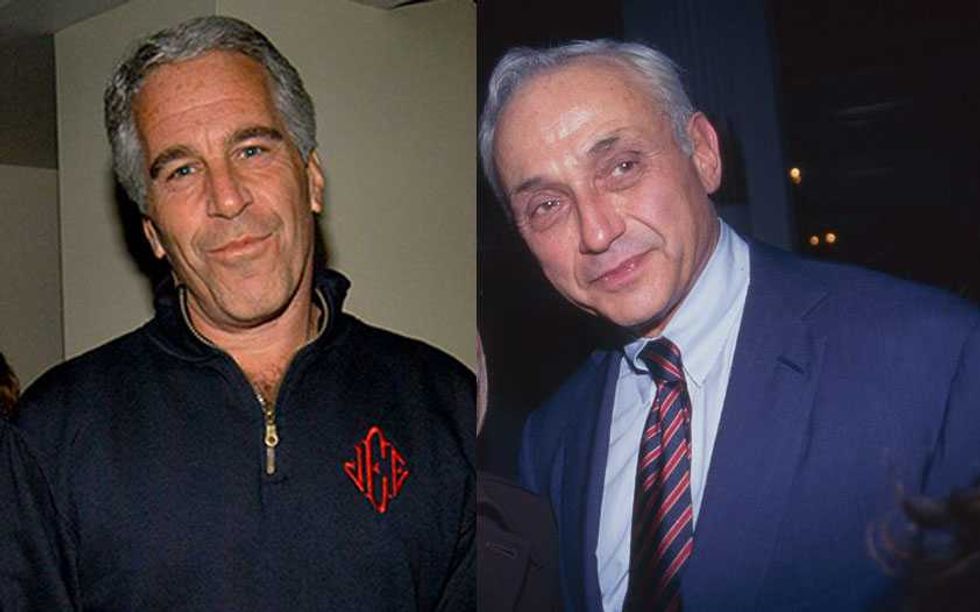
Former Victoria's Secret CEO and Bath & Body Works co-founder Leslie Wexner was questioned at his Ohio home on Wednesday by Democrat members of the House Oversight Committee over his relationship to child sex offender Jeffrey Epstein.
Live Your Best Retirement
Fun • Funds • Fitness • Freedom
The 88-year-old billionaire said in a prepared statement that he has "been the subject of outrageous untrue statements and hurtful rumor, innuendo, and speculation," adding that he was "naive, foolish, and gullible to put any trust in Jeffrey Epstein."
Although he has not been charged with any crime, Wexner was identified in the newly released Epstein files — both in a 2019 FBI document and an FBI email — as a possible co-conspirator in Epstein's sex-trafficking case.
Denial
Wexner, whose net worth is presently estimated to be $10.8 billion, told lawmakers that he was introduced to Epstein in the 1980s by Bob Meister, the former vice chairman of the insurance giant Aon.
'Taunting and poking him with impatience, that little demon he really loves.'
After allegedly receiving references for Epstein from two of the pedophile's former superiors at Bear Stearns and Élie de Rothschild of the Rothschild family banking dynasty, Wexner developed a relationship with Epstein, then ultimately hired him to manage his personal finances.
The New York Times reported that during the time he managed Wexner's personal finances, Epstein not only became extraordinarily rich but came into the possession of a New York mansion, a private plane, and a luxury estate in Ohio, altogether valued at roughly $100 million and all previously owned by Wexner or one of his companies. Wexner told lawmakers on Wednesday that Epstein purchased the New York property from him for what he "was told was the appraised value."
Wexner noted in his prepared statement that Epstein "was clever, diabolical, and a master manipulator" — a deceiver living a "double life" who "carefully used his acquaintance with important individuals to curate an aura of legitimacy that he then used to expand his network of acquaintances, and apparent credibility, even farther."
The billionaire claims that he was only personally acquainted with the one side of Epstein — the "sophisticated financial guru," not the "side of Epstein's life for which he is now infamous."
Epstein victim Virginia Giuffre alleged in court documents that she had been trafficked to Wexner, according to multiple outlets. Wexner, however, claimed both that he has never been unfaithful to Abigail, his wife of 33 years, and that he completely severed ties with Epstein around the time of the pedophile's guilty plea in 2008 for solicitation of a minor for prostitution.
RELATED: 'I wasn't his girlfriend': Whoopi Goldberg breaks silence on her presence in the Epstein files
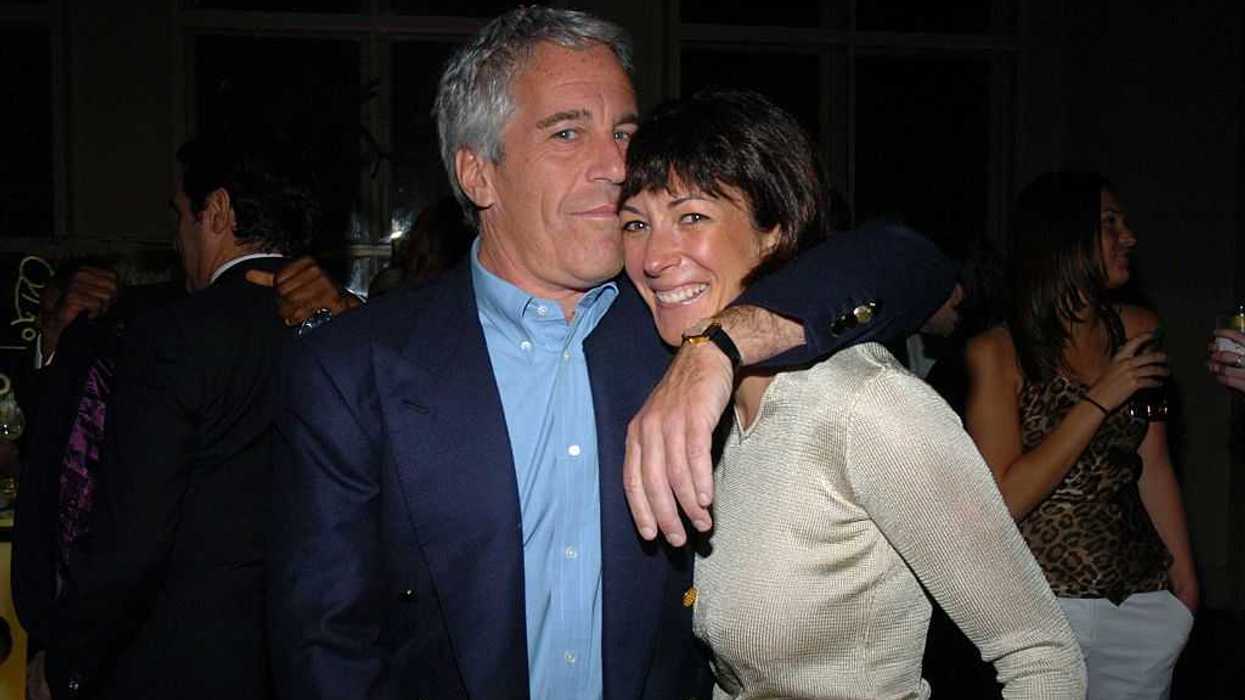 Photo by Joe Schildhorn/Patrick McMullan via Getty Images
Wexner claimed in 2019 that he had severed ties with the sex offender a year earlier, in 2007.
Wexner stressed in his statement to lawmakers that while he was "conned," he has "done nothing wrong."
Following the deposition, Rep. Robert Garcia (Calif.), the top Democrat on the Oversight Committee, stated, "There was no one more involved in providing Jeffrey Epstein with the wealth and financial support he needed to commit his crimes than Les Wexner. There would be no Epstein Island, no Epstein plane, and no money to traffic women and girls without the wealth of Les Wexner."
"And yet, with all this evidence, Mr. Wexner admitted that the FBI and DOJ never questioned him," continued Garcia. "That’s outrageous and unforgivable."
A Wexner spokesperson said in a statement obtained by Politico that the billionaire "honestly answered every question put to him today by the Committee" and that "Wexner reiterated that he has no knowledge of, and did not participate in, Epstein’s illegal conduct."
Another malicious spirit
Epstein may not have been the first "master manipulator" to exert influence on Wexner.
In an interview that served as the basis for Julie Baumgold's August 1985 profile in New York Magazine, Wexner discussed "his dybbuk, which pokes and prods and gives him the itchiness of soul that he calls shpilkes."
According to Jewish folklore, a dybbuk is an evil human spirit whose past sins preclude it from finding peace. These spirits are believed to seek refuge in the bodies of living human beings whom they cling to and/or possess.
Rabbi Julian Sinclair, writing for the Jewish Chronicle, noted that "Kabbalistic works, at least from the 16th century onwards, sometimes contain instructions and protocols for the exorcism of dybbuks, ceremonies to drive them out of the bodies they have colonised."
Baumgold wrote that when Wexner was a boy, his father called the dybbuk "tummel, a churning, so he feels 'molten' and unformed, pricked by these spiritual pins and needles."
"[Wexner] met this demon again when he was 40 and already worth half a billion," continued Baumgold, "when he climbed the mountain in front of his house in Vail and almost froze to death and decided to change his life. This demon he calls 'terminal shpilkes,' which makes him wander from house to house, repeating the pattern of his childhood on a luxurious scale, wanting more, swallowing companies larger than his own. It is precisely the reason that Wexner has a billion and didn't stop at, say, 5 million and a new Mercedes every other year and what he calls 'normal life.'"
The profile concludes with:
Lex Wexner picks up his heavy black case and flies off in his Challenger, with his dybbuk sitting next to him, taunting and poking him with impatience, that little demon he really loves. The dybbuk turns his face. What does he look like? "Me," says Les Wexner.
Journalist Whitney Webb suggested that while "one may interpret this use of shpilkes, literally 'pins' or 'spikes' in Yiddish and often used to describe nervous energy, impatience, or anxiety, as Wexner merely personifying his anxiety," his decision to use the word "dybbuk" was "significant."
Like Blaze News? Bypass the censors, sign up for our newsletters, and get stories like this direct to your inbox. Sign up here!What's Your Reaction?
 Like
0
Like
0
 Dislike
0
Dislike
0
 Love
0
Love
0
 Funny
0
Funny
0
 Wow
0
Wow
0
 Sad
0
Sad
0
 Angry
0
Angry
0

I am just an average American. My teen years were in the late 70s and I participated in all that that decade offered. Started working young, too young. Then I joined the Army before I graduated High School. I spent 25 years in, mostly in Infantry units. Since then I've worked in information technology positions all at small family owned companies. At this rate I'll never be a tech millionaire. When I was young I rode horses as much as I could. I do believe I should have been a cowboy. I'm getting in the saddle again by taking riding lessons and see where it goes.


















Comments (0)