

Is This Iran’s Gorbachev Moment?
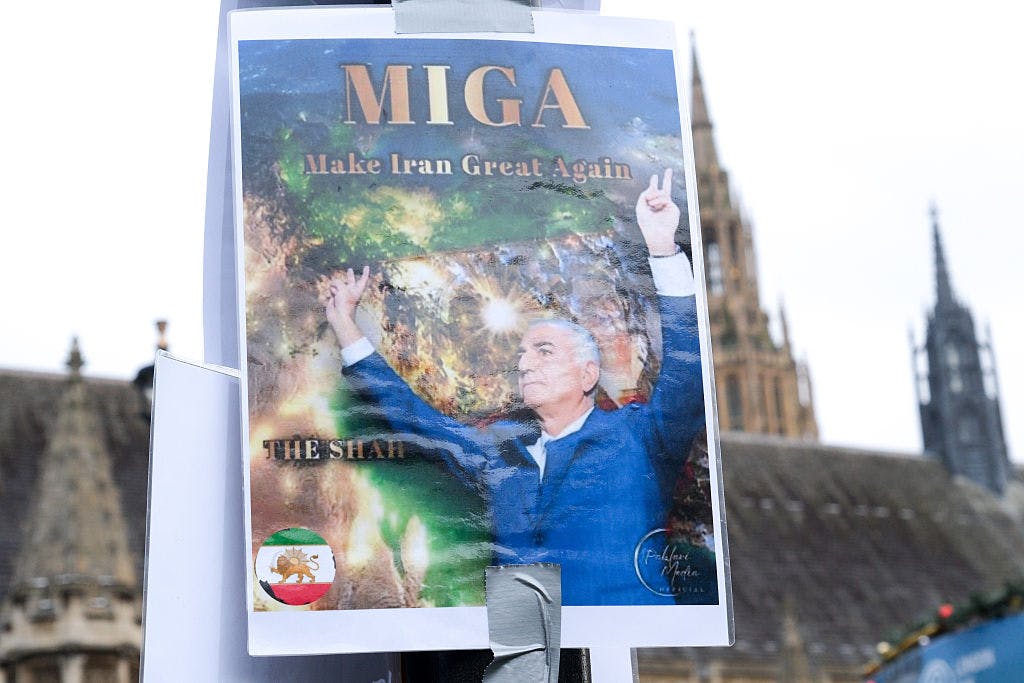
A large wave of anti-regime demonstrations broke out last week in Iran. When the Soviet Union collapsed in December 1991, few in the world anticipated the fall. But there were signs of the impending Soviet collapse. Could this be Iran’s Gorbachev moment?
Live Your Best Retirement
Fun • Funds • Fitness • Freedom
While the exact timing of the fall of the regime in Iran is not clear, The U.S. and its partners need to formulate a plan to secure Iran’s enriched uranium and other nuclear materials, chemical weapons stocks, and other armaments in the case of regime collapse or loss of central control over the weapons and strategic materials.
As instability grew in the USSR, Mikhail Gorbachev ordered the transfer of short-range nuclear missiles from the Caucasus and Baltic republics to central control in Russia. It is doubtful that Gorbachev envisioned at the time that the USSR was about to collapse, but he took precautions. The leaders of the Islamic Republic are not as prudent and are not likely to prevent loss of control over enriched uranium and other strategic threats.
Forecasting regime longevity and the outcome of anti-regime movements is not easy. At times, regimes can strengthen their power with a massive use of force, such as China’s Tiananmen Square massacre in 1989. Other times, slaughtering protestors accelerates a regime’s demise, such as Romanian President Nicolae Ceaușescu’s suppression of protests in Timisoara in 1989.
One consistent indicator of a regime’s ability to weather a challenge, however, is the loyalty of the security forces. When Russian President Boris Yeltsin in 1991 contested the right of Gorbachev’s kidnappers to rule the USSR, he had already concluded deals with several military commanders to garner their support. He knew they had his back. When Georgian President Edward Shevardnadze relinquished power to protestors in Tbilisi’s parliament building during the country’s 2003 “Rose Revolution,” Interior Force commanders had already quietly told Shevardnadze that they would not fire on the protestors, so best he exit the building.
Multiple defections of security forces and regime insiders in Iran have already taken place. The desertions are clandestine at this point, and in some ways more destructive to the regime than open defections, since their ability to carry out sabotage continues. Israel’s successful massive infiltration of the regime rests upon the defection of large numbers of regime insiders and their willingness to work with foreigners to bring it down.
The regime is using force to attempt to remain in power. Since the 12-day war with Israel, the regime has arrested more than 21,000 political opponents. In 2025, the regime’s execution rate surged to levels not seen since 1989: The regime has executed close to 1500 people. Violence is escalating in the confrontation between the regime and the current wave of protests.
The regime has lost the ability to supply the Iranian people’s most basic needs. The country is in the grip of its worst water shortage in half a century. The water shortage affects most of Iran’s provinces and its largest cities, including Tehran and Mashhad. In parallel, electricity, natural gas, and fuel shortages continue to afflict Iran’s population. The government frequently closes schools due to the inability to provide heat and power.
Like the USSR, Iran is a multi-ethnic country. Persians comprise less than 40 percent of the population, and they primarily inhabit Iran’s center, while ethnic minorities are clear majorities in Iran’s border provinces, and share ties with co-ethnics in neighboring states, including Azerbaijan, Turkey, Pakistan, and Turkmenistan.
The current wave of anti-regime protests is taking place primarily in the Persian-populated center of the country. Iran’s ethnic Azerbaijanis, Arabs, and Baluch have not joined the fight at this stage. Many of the protestors have expressed support for the Pahlavi monarchy to return to rule Iran. The monarchy greatly suppressed the ethnic minorities and banned use of their languages in schools and government institutions. Thus, many among the ethnic minorities do not want to die in order to exchange an Islamic dictatorship with a Persian dictatorship. But if they perceive they can gain rights after the fall of the regime, they may join.
Uprisings in the non-Russian republics were critical to the fall of the USSR. In Iran’s border provinces, prior to the outbreak of the protests, the ethnic minorities conducted regular killings of security forces. In recent weeks, at least ten Iranian policemen and 3 IRGC members have been killed in separate incidents in Sistan-Baluchistan Province. In small towns, they know the home addresses of the IRGC, police, and military officials and the places of work and study of their family members. Thus, unlike in big cities, the minorities can hold security services members personally accountable for their actions against protestors and other anti-regime activity.
Chaos can emerge quickly in Iran and without notice, as it did in Iraq during the Second Gulf War and Libya after the fall of Gaddafi. Loss of control of Iranian non-conventional and other weapon stockpiles pose a threat to regional and global security, especially to states that border Iran. These new weapons flow in the Middle East and could wind back recent successes in stabilizing several areas in the Middle East, such as Syria. The U.S. and its allies need a plan.
* * *
Prof. Brenda Shaffer is the Senior Advisor for Energy at the Foundation for Defense of Democracies. @ProfBShaffer.
The views expressed in this piece are those of the author and do not necessarily represent those of The Daily Wire.
What's Your Reaction?
 Like
0
Like
0
 Dislike
0
Dislike
0
 Love
0
Love
0
 Funny
0
Funny
0
 Wow
0
Wow
0
 Sad
0
Sad
0
 Angry
0
Angry
0

I am just an average American. My teen years were in the late 70s and I participated in all that that decade offered. Started working young, too young. Then I joined the Army before I graduated High School. I spent 25 years in, mostly in Infantry units. Since then I've worked in information technology positions all at small family owned companies. At this rate I'll never be a tech millionaire. When I was young I rode horses as much as I could. I do believe I should have been a cowboy. I'm getting in the saddle again by taking riding lessons and see where it goes.


















Comments (0)