

Karen Carpenter starved herself in public; today's celebs have pharmaceutical help

“Pop singer Karen Carpenter died this morning from complications of anorexia nervosa,” said the perfectly made-up anchorwoman on KTLA while I sat at the table eating my Raisin Bran.
Live Your Best Retirement
Fun • Funds • Fitness • Freedom
It was one of those bright Southern California mornings in 1983. There’s something jarring about hearing awful news in a chipper tone of voice when the sun is out and a new day is starting. Of course I was sad to hear about Karen’s death; she was that nice lady with the prettiest voice in the world who sang “the Sesame Street song.”
I fear we’re watching a replay of what happened in the 1970s and ’80s, when anorexia nervosa spread rapidly through the culture.
Sing of good things, not bad
Sing of happy, not sad
A voice from God
It wasn’t until many years later that I felt a deeper sadness and loss when I contemplated Karen Carpenter’s death at 33. She had a voice from God that comes along once in a century if we’re lucky. We had all watched her slowly kill herself right there on television. Like most deeply troubled people, Karen denied that anything was wrong, even as she sat under the interview lights as a skeleton in a sweater.
We’re seeing the same thing today in our “stars,” but unlike the early 1980s, grown-up America seems to think it’s normal. Maybe even “empowered.”
“There are rumors, though, that you were suffering from the slimmer’s disease, from anorexia nervosa. Was that right?” a British interviewer said to Karen in 1981.
“No,” said Karen, rolling her eyes inside a face that looked like a moving skull, all jagged planes and bone surfaces shining through translucent skin.
No looking away
Two years later, Karen died on the floor of her mother’s upstairs closet in Downey, California, before she made it down for breakfast. Despite having recently been treated for anorexia and gaining back a modest amount of weight, the long-term damage Karen did to her heart and organs made them give out.
And everyone knew it would. Everyone talked about it. Most adults in that era had looked on with worried skepticism at the gaunt Twiggy when she became a top model in the 1960s. Everyone knew women on TV or at the office who dieted a little too hard. But America had never seen something as extreme as what happened to Karen Carpenter.
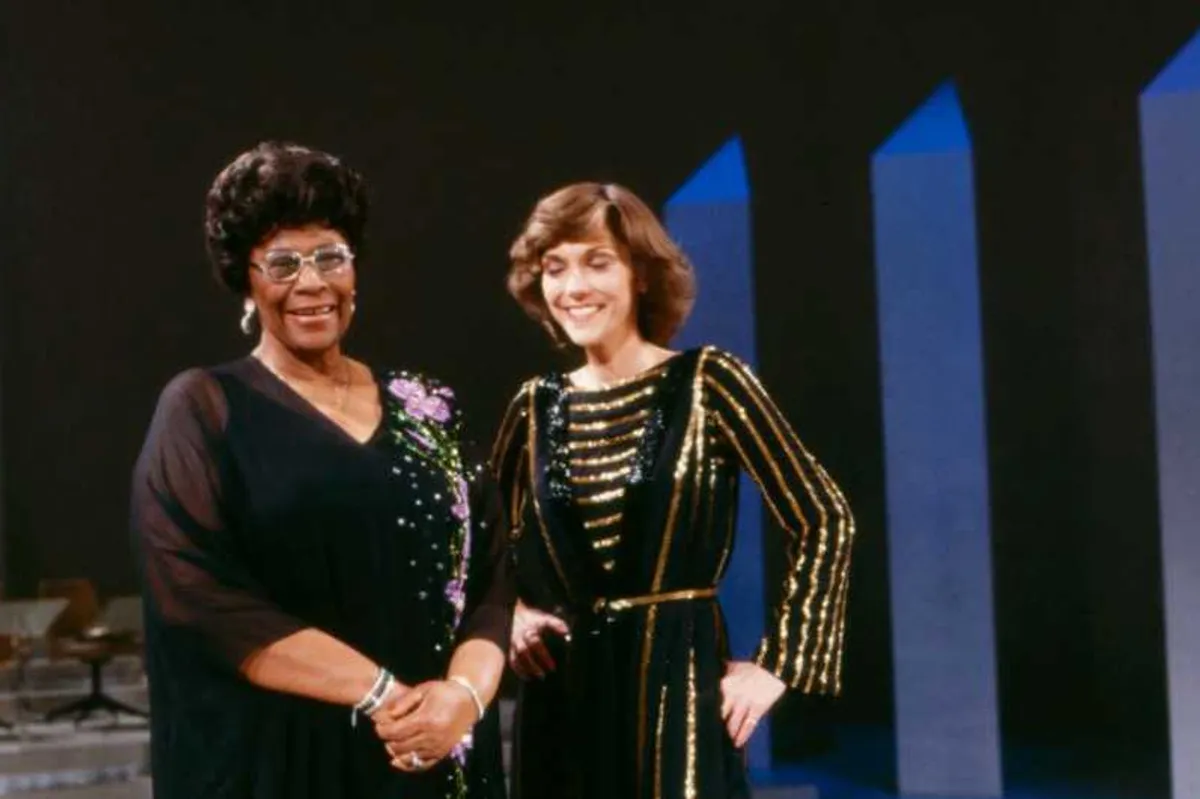
There was no looking away, no denying it. Karen stood on stage with Ella Fitzgerald for a TV special. She was barely able to stand up, and if she weighed 90 pounds, I’ll eat my hat. That velvet syrup voice was almost enough to distract from the approaching death, but not quite.
Do we even notice when our stars kill themselves in public today?
The Ozemporexia nervosa era
We’re entering our Ozemporexia nervosa era. As usual, few people are saying out loud what everyone already knows: People with troubled minds and troubled relationships to substances including food are taking the drugs to cover over, or to enhance, an eating disorder. The semaglutide injectable diabetes drugs work in part by chemically controlling appetite, so the primary reason these drugs are prescribed today is, of course, weight loss.
If you have turned on a computing device or entered a store within the past few months, you cannot avoid noticing the oversaturation of advertisements for the movie "Wicked: For Good." This is the sequel to the movie "Wicked," based on the long-running Broadway musical, itself based on Gregory Maguire’s 1995 novel.
Maguire tells the story of the young Elphaba, the innocent green-skinned girl who would go on to terrorize Oz as the Wicked Witch of the West. Maguire's novel pioneered what has now become commonplace in our entertainment: recasting the evil, the sinister, and the villainous as misunderstood and traumatized wee harmless ones who are actually the heroes.
RELATED: Out-of-control Ozempic use means sad, saggy future for TL;DR generation
 PHAS/Getty Images
Folie à deux
Cynthia Erivo plays Elphaba, although her knife-edged cheekbones and six-inch acrylic talons are less witchy and more "Nosferatu." The actress certainly seems to have the strange, self-absorbed charisma of a vampire, wasting away before our eyes even as she mesmerizes Hollywood into all manner of unnatural acts. Like casting her as Jesus in "Jesus Christ Superstar."
But it is in Erivo’s jarring relationship with fellow extreme ectomorph Ariana Grande — who co-stars as a young Glinda the Good — that we really sense the vampiric.
Like Erivo, Grande seems much frailer than she did just a few years ago. The two appear in public as if they were sewn together at the hip. In nearly every press interview for their "Wicked" movies, Erivo clicks her claws around Grande’s neck and head, fiddling with her jewelry in a creepily proprietary way. Or the two are holding hands as if they were waifs being introduced to grown-ups for the first time outside the orphanage.
Celebrities looking and acting weird. Big shock, right? This is Hollywood we’re talking about. The town is a magnet for dysfunctional people. Neglected, abused, and exploited children run for the big city lights so they can be beautiful, adored, and good enough in a way they could never be for their parents.
Eating disorders, addiction, and declining mental health all stem from these childhood circumstances, and they are worsened for those who choose fame as a means of “getting over” them.
The influence of anxiety
This is not to say that Erivo or Grande suffer from any of this or even that they use Ozempic. But their alarmingly thin bodies and their brittle, performative intimacy do not exist in a vacuum. While young people have been entranced by celebrity culture since the mid-20th century, the desperate absorption and imitation of every star’s psychiatric distress by ordinary American kids has never been as extreme as it is in 2025.
One can make a reasonable argument for using the semaglutide drugs to lose weight when one’s health is in jeopardy and other methods have not worked. Every patient has to run that calculation for herself and consider it with her doctor.
But I fear we are watching a replay of what happened in the 1970s and ’80s, when anorexia nervosa spread rapidly through the culture and clinicians noted that the intense public focus on Karen Carpenter’s illness seemed to accelerate the trend.
But this has a pharmaceutical assist that will give a “normal” brand name to what is just old-fashioned self-starvation.
All-ages contagion
British researcher Gerald Russell first described bulimia nervosa (binge eating, followed by purging, usually vomiting) in some of his anorexic patients in a paper published in the 1970s. He later shared his alarm that his paper, and the spread of terms and diagnostic language around the condition, may have caused it to spread among women in the Western population.
Russell was arguably correct, though he can’t be blamed for trying to help sufferers. Young women are especially vulnerable to trends and fads; they will do almost anything, no matter how potentially dangerous, to keep up with what their friends are doing. If Becca manages to keep her figure by discreetly puking up her lunch, why shouldn’t Caitlin?
Michelle Obama has recently displayed an alarming weight loss on a frame that didn’t have much to lose. On her Instagram she shared an behind-the-scenes image from her recent shoot with photographer Annie Leibovitiz.
At 61 years old, Obama is dressing in teen-style distressed jeans and clingy, skin-baring tops, showing off how her female curves are melting away.
Look at her face. Does this woman look healthy or happy?
No one left to notice
The problems that celebrities, normal young women, and some men and boys face about body image aren’t about a particular drug or a time-limited fashion trend. What we see today in Hollywood is not different from what we have always seen in the entertainment industry and among the kids and teens who consume it.
The problems begin at home — the home that no longer exists. Fatherlessness, divorce, and normalized neglectful, hands-off parenting have left today’s kids even more vulnerable to self destruction than those of my generation in the 1980s. And if you are old enough to remember what that was like, you remember plenty of screwed-up kids from screwed-up families.
It’s worse today because we’re pretending that it’s not wrong, that it’s not unhealthy. It has brand names and “rizz,” and besides, everyone is doing it. How can it be wrong?
In 1983, adults spoke about what happened to Karen Carpenter with alarm, and they said it out loud. Today, cool moms get glammed up along with their daughters in officially licensed Wicked(™) outfits and stand in line for tickets to watch the actresses perform “fun” while their minds and bodies decay.
Isn’t modernity wonderful?
What's Your Reaction?
 Like
0
Like
0
 Dislike
0
Dislike
0
 Love
0
Love
0
 Funny
0
Funny
0
 Wow
0
Wow
0
 Sad
0
Sad
0
 Angry
0
Angry
0

I am just an average American. My teen years were in the late 70s and I participated in all that that decade offered. Started working young, too young. Then I joined the Army before I graduated High School. I spent 25 years in, mostly in Infantry units. Since then I've worked in information technology positions all at small family owned companies. At this rate I'll never be a tech millionaire. When I was young I rode horses as much as I could. I do believe I should have been a cowboy. I'm getting in the saddle again by taking riding lessons and see where it goes.

























Comments (0)