

Liz Warren hustles Trump with a housing bill from hell

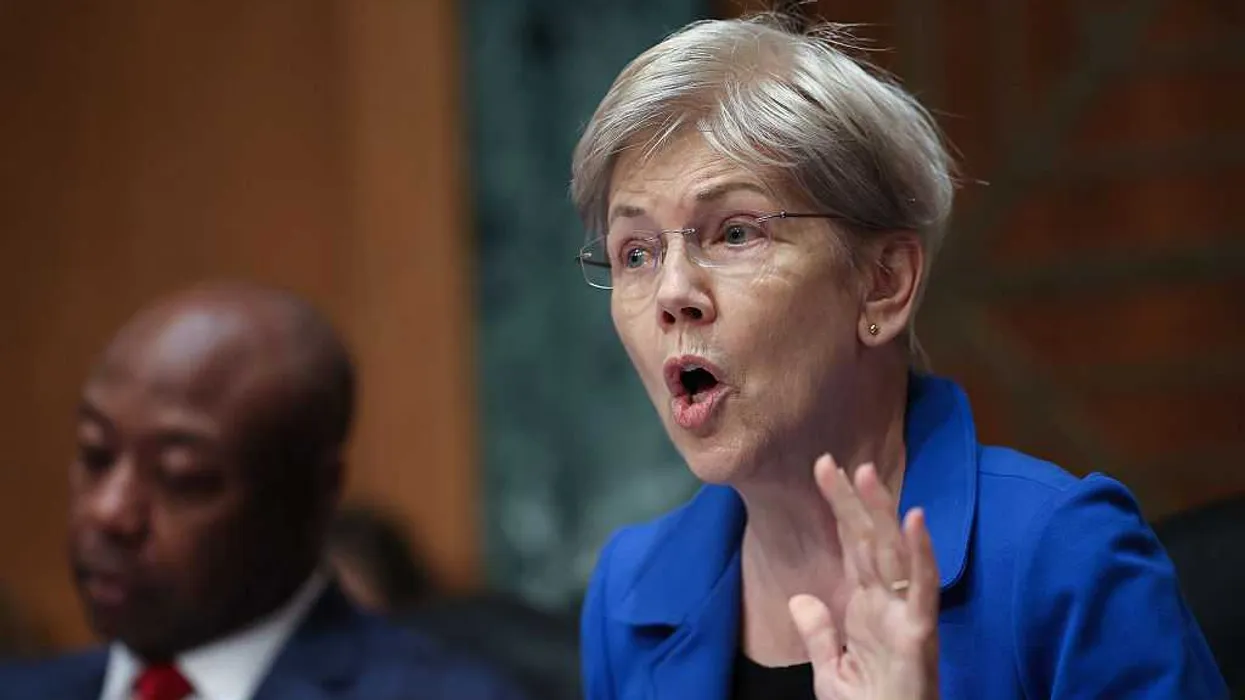
What is it about the National Defense Authorization Act that makes it a dumping ground for every dumb liberal pet project?
Live Your Best Retirement
Fun • Funds • Fitness • Freedom
First the Trump administration pushed an AI data-center amnesty that would have stripped states of authority over massive, power-hungry facilities. Then lawmakers tried to slip in Sen. Elizabeth Warren’s housing bill, a package built to subsidize Section 8 tenants and builders and to fuel the very forces driving the current housing bubble. After a backlash, both provisions came out of the NDAA. Now congressional leaders plan to pass the Massachusetts Democrat’s housing bill on its own.
The real crisis comes from government debt and the inflation it fuels. This is not a shortage of lumber or land. It is a monetary chokehold created by government policy.
Earlier this year, Senate Banking Committee Chairman Tim Scott (R-S.C.) worked with Warren to move S. 2651, an omnibus housing package that expands every federal program Trump previously vowed to cut. They attached the legislation to the Senate’s NDAA, then lobbied House conservatives to adopt it in their version of the defense bill. At the last minute, House leaders stripped the language. The House Financial Services Committee now plans to mark up the bill next week.
Here’s the trouble: The bill misdiagnoses the housing crisis. It treats high prices as a supply shortage instead of a government-fueled asset bubble and inflationary pricing distortion.
The result is predictable. Its 40 provisions would expand Section 8, loan subsidies, “affordable housing” grants, and even looser mortgage programs for people priced out of the market. Every one of these items pours accelerant on the factors that drove the 2008 bubble and the post-COVID spike.
Government subsidies for overbuilding and for buyers who cannot afford homes created the crisis. Yet like a dog returning to its vomit, Scott, the president, and Senate Democrats are endorsing Warren’s 2020 campaign platform to revive the same model. The bill promises builders and activist groups federal cash in exchange for regulatory concessions. The trade-off is disastrous.
Section 202 creates a new federal grant program to fund local housing projects in designated zones — a warmed-over version of the community-engineering schemes Obama’s Department of Housing and Urban Development pushed a decade ago.
Meantime, Section 209 establishes a $200 million yearly fund at HUD to award “innovative housing reforms” to localities that reshape zoning to favor dense, subsidized units.
Conservatives would call these incentives an invitation to replicate failed urban policies in red suburbs. The bill rewards grifting nonprofits and community organizers who treat federal housing programs as political infrastructure.
At the same time, the administration is pushing rules that limit red-state zoning authority to clear the way for data-center construction while promoting Section 8 expansion with new incentives and zoning guidance. It revives, in effect, Obama’s Affirmatively Furthering Fair Housing regime — the same racial-gerrymandering tool Trump killed in his first term. Supporting the Scott-Warren bill would revive it in practice.
Worse, the bill rests on a false premise. America doesn’t have a housing shortage. According to Redfin, as of October sellers outnumbered buyers by 36.8% — about 529,000 more sellers — the largest gap since 2013. Census data shows about 148 million housing units for roughly 134 million households, a surplus of around 14 million units. When Trump took office, the vacancy count stood near 11 million, yet prices were far more affordable.
The real crisis comes from government debt and the inflation it fuels. Construction costs surged with inflation. Interest rates spiked to service that debt, creating an interest-rate cliff that locked millions of homeowners into sub-3% mortgages. They cannot sell without doubling their monthly costs. High rates froze the existing inventory in place. This is not a shortage of lumber or land. It is a monetary chokehold created by government policy.
RELATED: Why the kids are not all right — and Boomers still pretend nothing’s wrong
 Photo by Andrew Lichtenstein/Corbis via Getty Images
Federal housing policy adds another layer. Fannie Mae and Freddie Mac long prioritized “access to credit” over price stability. By guaranteeing high-risk loans and encouraging low down payments, they allow buyers to bid more than their incomes justify. Subsidized credit lifts prices for sellers, not buyers.
S. 2651 makes the problem worse by expanding the Community Development Block Grant and similar programs, encouraging activist groups and corporate developers to overbuild units no one can afford without subsidies. That process pushes prices upward and strengthens corporate buy-ups of suburban neighborhoods.
The administration previously acknowledged these distortions. In Trump’s FY 2021 budget, the Office of Management and Budget proposed eliminating CDBG and the HOME Investment Partnerships Program, arguing that states and localities were better positioned to address affordability challenges. This new bill reverses that logic entirely.
The Federal Reserve’s rate whiplash — a decade of near-zero borrowing costs followed by sudden hikes — froze supply by trapping owners inside artificially cheap mortgages. Washington’s policies created the gridlock. The inventory exists. Monetary policy quarantined it.
What the administration needs to do is allow prices to fall back toward alignment with median incomes. That adjustment would restore affordability without new federal intervention. Instead, the FHFA is pushing lower credit-score requirements for subsidized mortgages. That mistake will repeat the pattern of enticing families into overpriced homes they cannot sustain.
Housing policy should stop trying to prop up inflated prices. The market must correct. A federal “solution” built around 40 expansionary programs will intensify the crisis, not solve it. Doing nothing would spur more affordability than this bipartisan blunder.
What's Your Reaction?
 Like
0
Like
0
 Dislike
0
Dislike
0
 Love
0
Love
0
 Funny
0
Funny
0
 Wow
0
Wow
0
 Sad
0
Sad
0
 Angry
0
Angry
0

I am just an average American. My teen years were in the late 70s and I participated in all that that decade offered. Started working young, too young. Then I joined the Army before I graduated High School. I spent 25 years in, mostly in Infantry units. Since then I've worked in information technology positions all at small family owned companies. At this rate I'll never be a tech millionaire. When I was young I rode horses as much as I could. I do believe I should have been a cowboy. I'm getting in the saddle again by taking riding lessons and see where it goes.




















Comments (0)