

Observatories Detect First-Ever Cosmic Signal From Elusive Primordial Black Hole
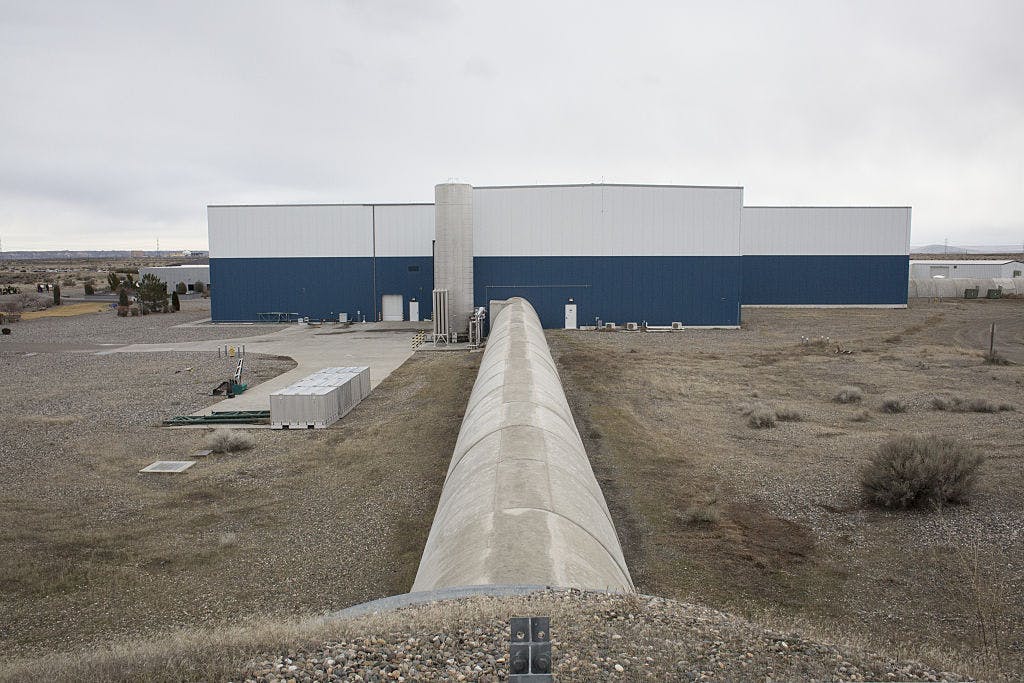
Scientists may have detected the first tantalizing hint of primordial black holes, which are thought to have formed in the initial moments after the Big Bang.
Live Your Best Retirement
Fun • Funds • Fitness • Freedom
The excitement centers on a cosmic gravitational-wave signal recorded on November 12, 2025, when the LIGO/Virgo/KAGRA (LVK) network issued an automated alert for an unusual event. Unlike the hundreds of black hole and neutron-star mergers routinely observed since 2015, this signal appeared to involve at least one object far too light to be any known stellar remnant.
Ordinary black holes form when massive stars collapse, and neutron stars also arise from stellar cores; both types of objects have masses roughly equal to or greater than the Sun. The November 12 signal instead pointed to a sub-solar-mass compact object, something astrophysics cannot easily explain.
This has led to speculation that the lighter component might be a primordial black hole, a long-theorized relic born directly from density fluctuations in the ultra-hot plasma of the early universe — long before stars existed. These exotic objects could span a huge mass range: from far lighter than a paperclip to hundreds of thousands of solar masses.
If they exist, primordial black holes could influence cosmic evolution and even account for dark matter, the mysterious invisible substance that makes up most of the universe’s mass but does not interact with light.
The scientific reaction, however, remains cautious. LIGO member Christopher Berry highlighted the event as a potential subsolar source but emphasized the possibility of a false alarm. For an event this unusual, the estimated false-alarm rate — about once every four years — is too high to claim a discovery. Noise artifacts often mimic faint or atypical gravitational-wave signals. Researchers are searching for any accompanying electromagnetic flash, but the localization region spans an enormous patch of sky, making such follow-up nearly impossible.
Even so, the possibility is captivating because primordial black holes have never been observed despite decades of theoretical work. Some could have evaporated through Hawking radiation early in cosmic history, while larger ones might survive today. A merger between two such objects would produce exactly the kind of signal LIGO and Virgo detected. Yet without additional events, scientists may never be certain whether S251112cm was real or merely a glitch.
Experts say the best path forward is to wait for more detections — something future upgrades to LIGO, Virgo, and KAGRA are expected to enable. If similar signals appear, they could provide the first direct evidence for primordial black holes and offer crucial clues to the nature of dark matter.
What's Your Reaction?
 Like
0
Like
0
 Dislike
0
Dislike
0
 Love
0
Love
0
 Funny
0
Funny
0
 Wow
0
Wow
0
 Sad
0
Sad
0
 Angry
0
Angry
0

I am just an average American. My teen years were in the late 70s and I participated in all that that decade offered. Started working young, too young. Then I joined the Army before I graduated High School. I spent 25 years in, mostly in Infantry units. Since then I've worked in information technology positions all at small family owned companies. At this rate I'll never be a tech millionaire. When I was young I rode horses as much as I could. I do believe I should have been a cowboy. I'm getting in the saddle again by taking riding lessons and see where it goes.
























Comments (0)