

Supreme Court Justices Hear Street Preacher Who Challenged Speech Restriction After Pleading No Contest to Breaking It
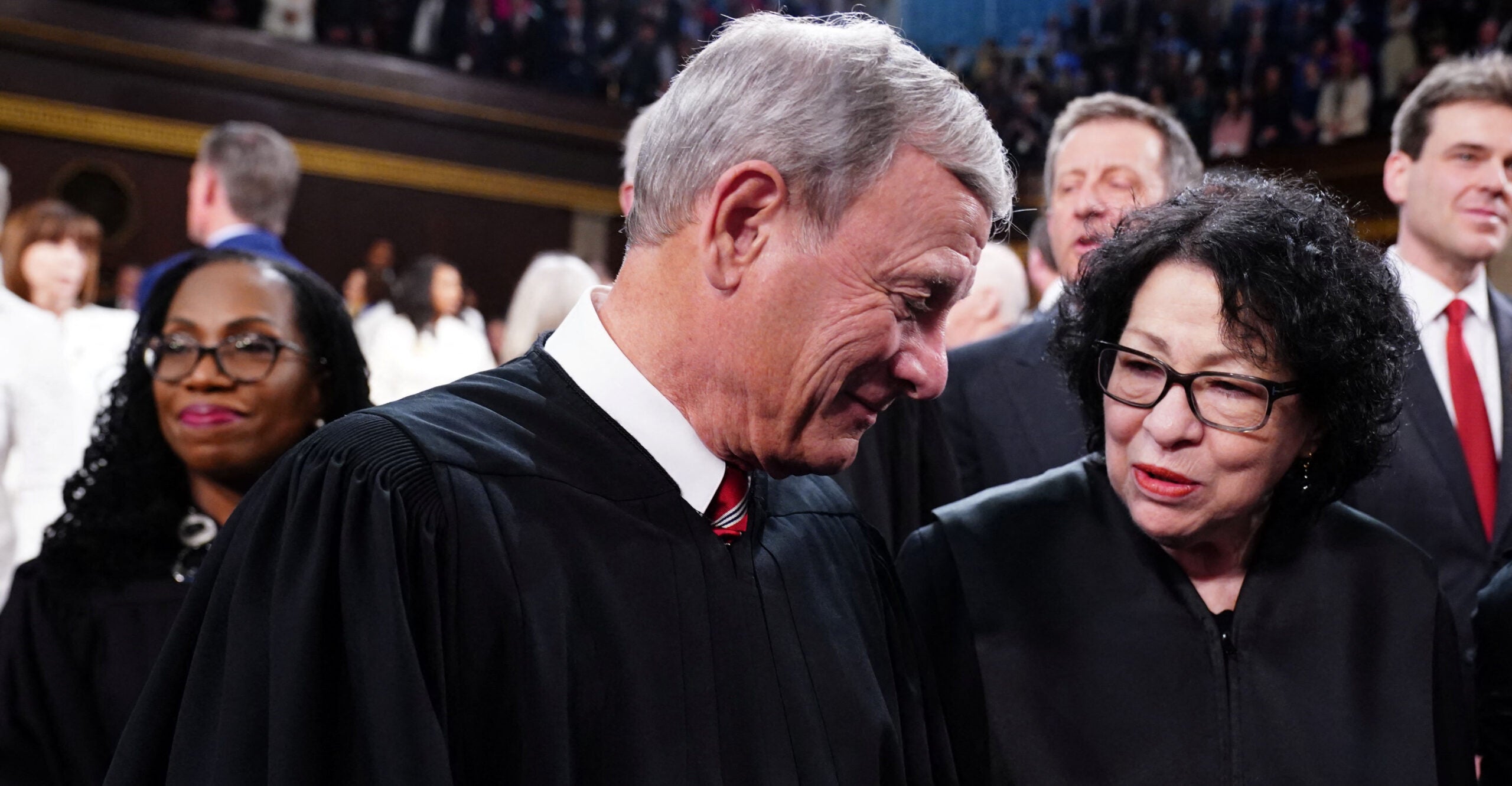
Justices didn’t seem to break along predictable lines Wednesday, when they presented critical questions to both sides in a case regarding a Christian pastor’s free speech challenge to a Mississippi city ordinance.
Live Your Best Retirement
Fun • Funds • Fitness • Freedom
In Olivier v. City of Brandon, the U.S. Supreme Court is weighing whether someone convicted under a law has standing to challenge the constitutionality of the law to prevent its future enforcement without nullifying a prior conviction for violating that law.
Brandon, Mississippi, adopted a city ordinance regulating protests around the city’s amphitheater. Pastor Gabriel Olivier preached outside a designated “protest zone” even after police warned him not to do so. He pleaded no contest to violating the ordinance but now wants to prevent future enforcement.
“I am grateful to have had my case heard by the U.S. Supreme Court—an opportunity few others in my situation have ever had,” Olivier said in a statement released by First Liberty, the religious freedom law firm that represents him, after the oral arguments concluded. “I pray this case results in a decision that allows others to be able to fight for their First Amendment rights in court.”
Doors Olivier ‘Chose Not to Enter’
During his opening arguments, G. Todd Butler, representing Brandon, said Olivier had multiple opportunities to challenge the law and his conviction in state courts. Butler scoffed at the argument that “courthouse doors are closed” to Olivier.
“That argument ignores the countless doors the petitioner chose not to enter,” Butler told justices. “What this case is about is the petitioner’s preferred door, one that offers a favored venue, and an opportunity for attorneys fees.”
Olivier shared his Christian faith near the amphitheater in May 2021. Police told him he was required to speak only in the designated “protest zone.”
Olivier first did as requested, but later argued the designated area was too isolated. So, he returned to his original location and was arrested for violating the city’s ordinance.
Had he challenged his arrest, it would have been less murky legal territory, since he would clearly have standing as someone harmed or affected by the law. However, in June 2021, Olivier made a no-contest plea, which is not admitting guilt but not disputing charges. He received a fine and a suspended 10-day sentence.
Olivier wanted to return to preach at the amphitheater area again, so to avoid another arrest, he challenged the constitutionality of the city’s ordinance in federal court.
Supreme Court Arguments
During arguments, Justice Neil Gorsuch asked about “collateral consequences” of challenging the law but not the conviction, and how that could affect the enforcement of the terms of future convictions that might be challenged in a similar manner.
Allyson Ho, volunteering pro bono with First Liberty to represent Olivier, replied that past court rulings determined it “would not automatically, or even permissibly preclude the state” from enforcing the conditions of the conviction.
Along those same lines, Chief Justice Roberts asked, “What about a requirement that the individual show up for probation meetings?”
Absolutely, your honor, because, again, the only effect that the federal judgment has is forward looking,” Ho replied. “It is a prospective relief. It prohibits the enforcement of the ordinance against him on a forward-looking basis. It does not reach back.”
The district court and the 5th Circuit U.S. Court of Appeals determined Olivier could not challenge the Brandon ordinance even if its future enforcement would violate his constitutional rights. It based the dismissal on the Supreme Court case Heck v. Humphrey (1994). The high court ruled in Heck that a person can’t bring a civil rights lawsuit if success in the lawsuit would imply the conviction is invalid—unless that conviction has already been reversed through appeal or clemency.
Justice Sonia Sotomayor said the plaintiffs’ call for only looking forward without challenging the previous conviction was unusual.
“By definition, a win by you, or win by a third party, would call the prior convictions into question,” Sotomayor said. “It will be used by you and others to try to go back in other proceedings and get those expunged or otherwise set aside. You may or may not win. But it will call it into question.”
Ho disagreed, and said the high court has used only “two buckets” in applying the Heck precedent. Neither, she said, would apply to Olivier, since he was never incarcerated.
“The first bucket are claims where the federal relief would result in immediate or faster release from confinement,” Ho said. “The second bucket is damages resulting from past confinement.”
Questions for Butler
Justice Ketanji Brown Jackson pressed Butler, the city’s attorney, “about your initial litany of doors” for Oliver.
“Were they all state forums, all state remedies, that you discussed? Is there any other federal remedy?” Jackson asked. “If we agree with you, this person ends up with no federal remedy, and that just seems odd.”
Butler replied, “My laundry list of things were state court remedies.” But he said the Heck precedent was in part about steering plaintiffs to resort to state litigation.
Roberts pressed the city’s attorney about whether this meant an automatic arrest and jail time if Olivier preaches again at the amphitheater outside the protest zone.
“When you commit a crime, a particular one, and you’re convicted, you undertake not to commit further violations of that provision,” Roberts said. “Now, if he does, is he subject to reincarceration? Certainly, that’s a big part of the probation in this particular case.”
Butler suggested Olivier may go to jail if he violates the ordinance again.
“If he violated the ordinance, he would immediately not pass go and go straight to jail for 10 days, because he was under the suspended sentence,” Butler said. “And that constitutes custody under this court’s jurisprudence.”
The city passed the ordinance in question in 2019, in response to what it considered a hardship for local police to control protesters that showed up in the area.
The Trump administration is siding with Olivier, as U.S. Solicitor General John Sauer filed a friend-of-the-court brief in the case, and Assistant Solicitor General Ashley Robertson gave a brief argument to justices, as well.
The post Supreme Court Justices Hear Street Preacher Who Challenged Speech Restriction After Pleading No Contest to Breaking It appeared first on The Daily Signal.
What's Your Reaction?
 Like
0
Like
0
 Dislike
0
Dislike
0
 Love
0
Love
0
 Funny
0
Funny
0
 Wow
0
Wow
0
 Sad
0
Sad
0
 Angry
0
Angry
0

I am just an average American. My teen years were in the late 70s and I participated in all that that decade offered. Started working young, too young. Then I joined the Army before I graduated High School. I spent 25 years in, mostly in Infantry units. Since then I've worked in information technology positions all at small family owned companies. At this rate I'll never be a tech millionaire. When I was young I rode horses as much as I could. I do believe I should have been a cowboy. I'm getting in the saddle again by taking riding lessons and see where it goes.






Comments (0)