

The American dream lives where people still choose to build
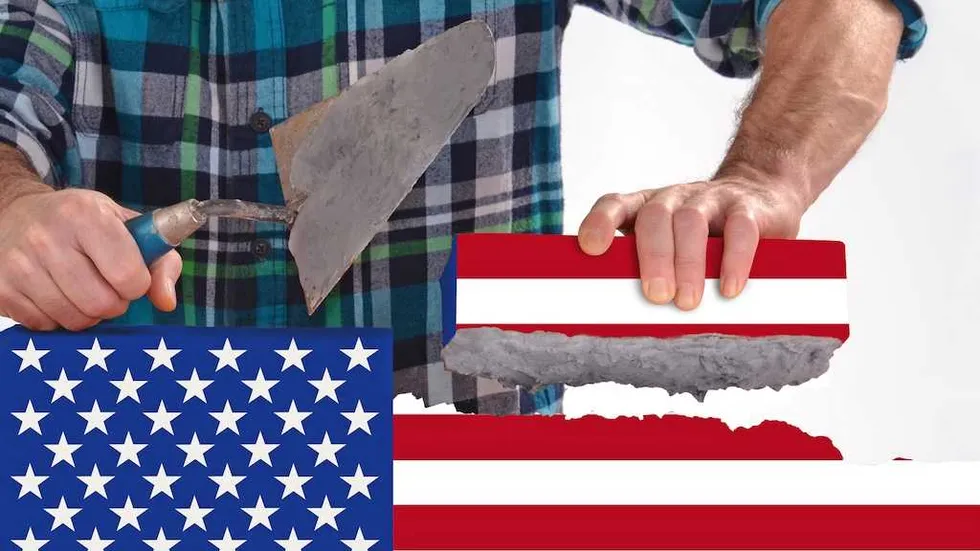
“For many, the American dream has become a nightmare,” Sen. Bernie Sanders (I-Vt.) has said, capturing a sentiment that has become common on the political left and across modern culture.
Live Your Best Retirement
Fun • Funds • Fitness • Freedom
That line now travels far beyond politics. Scroll social media for five minutes, and you’ll see the same message repeated in endless variations: Owning a home is impossible. Raising a family is irresponsible. Work doesn’t pay. The system is rigged. The future is closed.
The American dream was never a promise of ease or comfort by age 25. It was an invitation to build something meaningful over time through responsibility and perseverance.
This message is everywhere, and it is doing real damage.
Harder lives, false conclusions
Life has become harder in tangible ways. Housing costs have surged. College has grown bloated and expensive. Inflation punished families already living close to the margins. Young adults feel delayed, uncertain, and anxious about the future.
Those frustrations are real. The conclusion being pushed alongside them is not.
The lie is not that things are harder. The lie is that effort no longer matters.
That lie spreads quickly online because it feels validating. A 30-second video declaring the system broken beyond repair asks nothing of the viewer except agreement. Building a life requires patience, sacrifice, and time. One goes viral. The other happens quietly.
Much of this shift comes from where young Americans now form their beliefs. For many in Generation Z, ideas about money, marriage, and the future are no longer shaped primarily by parents, churches, employers, or local communities. They are shaped by algorithm-driven platforms like TikTok and X, where extremity is rewarded with attention.
In those spaces, online figures routinely dismiss the American dream as a scam and portray starting a family as a trap rather than a source of meaning or stability. Cynicism is marketed as realism. Detachment is framed as wisdom. A generation looking for guidance is taught to expect failure before it ever tries.
Why despair is profitable
This narrative didn’t arise by accident. It feeds on real pain, but it’s also profitable. Political movements gain leverage by convincing voters that only sweeping control from the top can fix a hopeless system. Media companies thrive on pessimism because fear keeps people watching. Online grievance entrepreneurs build massive followings by telling young people that nothing they do will ever be enough.
If Americans stop believing they can build a future, someone else will gladly build power over them.
History keeps disproving this story.
Tell the generation that survived the Great Depression that the American dream was dead. Tell the men who returned from World War II, many wounded and broke, who used the GI Bill to buy homes and start families, that the climb was too steep. Tell the children of factory workers who grew up without air conditioning, college degrees, or safety nets — but still built middle-class lives through work and sacrifice — that the odds were unfair.
Tell the families of the 1950s and 1960s who lived modestly, saved slowly, and delayed gratification for decades that life was easy. Tell the Americans who endured oil crises, layoffs, and double-digit inflation in the 1970s and early 1980s that the system was designed for their comfort.
The dream was never easy
Life has never been easy. The climb has always been steep. The American dream was never built on convenience. It was built on resilience.
The truth is less dramatic — and far more hopeful. The American dream didn’t disappear. It changed shape.
It was never a promise of ease or comfort by age 25. It was an invitation to build something meaningful over time through responsibility and perseverance. For generations, it rested on a simple foundation: Work hard, form families, contribute locally, and invest in something bigger than yourself.
That path was never easy. What changed is not the dream, but our tolerance for effort and our patience for delayed reward.
The quiet math of real life
Despite the noise, the American dream remains visible in places social media rarely celebrates. It shows up in the quiet math of real life.
Research from the Institute for Family Studies finds that stably married Americans approaching retirement hold, on average, more than $640,000 in household assets, compared with roughly $167,000 for divorced or never-married adults — even after accounting for age, education, and race. That gap reflects decades of shared sacrifice, income pooling, planning, and commitment.
These stories don’t trend online. They play out quietly every day.
Ironically, many of the loudest voices declaring the dream dead are doing quite well selling that message. Entire online brands are built on telling people that life is impossible — while generating substantial revenue and influence in the process. Despair has become an industry.
RELATED: Christmas is worth celebrating, even if your family is fractured
 Chris Ratcliffe/Bloomberg via Getty Images
What truly threatens the American dream is not capitalism, competition, or even inequality. It’s a culture that encourages permanent adolescence. A culture that treats commitment as a burden, delays adulthood indefinitely, and then wonders why people feel anxious and untethered.
The American dream doesn’t die because life is hard. It dies when people are convinced that hard things aren’t worth doing.
Too many young Americans are told that marriage can wait, children are optional, faith is outdated, and roots are restrictive. They’re promised freedom through detachment and fulfillment through endless choice — then wake up years later with more options than ever and less meaning than expected.
Builders still have the advantage
This isn’t a policy argument. It’s a cultural one. No law can manufacture purpose. No program can force optimism. But a nation that teaches its citizens the dream is dead shouldn’t be surprised when fewer people try to live it.
The American dream has always belonged to builders of families, businesses, and communities. It never belonged to those waiting for perfect conditions or guaranteed outcomes.
The American dream isn’t dead. But telling Americans that it is has become fashionable, profitable, and politically useful.
The question is whether we continue to accept that story — or choose, once again, to build.
What's Your Reaction?
 Like
0
Like
0
 Dislike
0
Dislike
0
 Love
0
Love
0
 Funny
0
Funny
0
 Wow
0
Wow
0
 Sad
0
Sad
0
 Angry
0
Angry
0

I am just an average American. My teen years were in the late 70s and I participated in all that that decade offered. Started working young, too young. Then I joined the Army before I graduated High School. I spent 25 years in, mostly in Infantry units. Since then I've worked in information technology positions all at small family owned companies. At this rate I'll never be a tech millionaire. When I was young I rode horses as much as I could. I do believe I should have been a cowboy. I'm getting in the saddle again by taking riding lessons and see where it goes.











Comments (0)