

The day my father handed me the gun
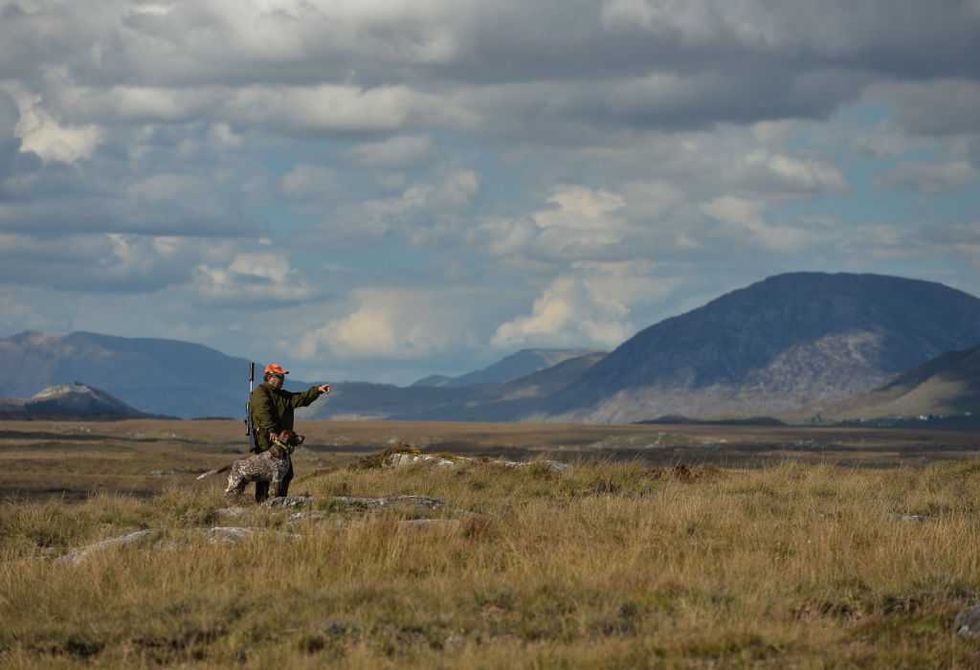

I grew up measuring time by the turn of seasons. Autumn meant schoolbooks and shorter days. Winter meant stripped fields, wind off the Atlantic, and weekend mornings beside my father in the wild stretch of Connemara, County Galway. Stone walls, peat bog, and low mountains framed the years that shaped me.
Live Your Best Retirement
Fun • Funds • Fitness • Freedom
We hunted game birds — wing shooting, as my father called it. Pheasants burst from hedgerows in a clatter of bronze feathers. Woodcock came tearing through trees like pilots who had misplaced their maps. Snipe flickered over the marsh, determined to test the dignity of anyone aiming at them. Over time, you learned the land — and with it the humbling truth that even a bird with a walnut-sized brain could make you look foolish.
There was a burst of snarling, then a sound I still hear nearly 20 years later. Two badgers were below.
Nothing about it was hurried. We walked for miles. We watched the wind. We read the ground. We spoke softly, and often not at all.
My first gun
My first gun came later than I wanted and earlier than my mother preferred. I fired my first shot at 13. I still remember the weight of it, the kick, the sudden understanding that I was holding something that demanded respect. I also remember missing completely and nearly falling backward from the recoil. My father didn’t laugh. He checked my stance, corrected my grip, and only then allowed himself a small smile that said "you’ll learn."
And I did.
At first, like any boy, all I wanted was to pull the trigger and fire into the sky. But my father had other ideas.
Learning to shoot, he insisted, was an art. Cheek firm to the stock. Follow through. Don’t rush. Breathe steadily. Safety first, always. A gun was never waved about, never pointed without purpose, never treated as a toy. It was a tool, and tools required competence.
No waste
The first time I hit a clay target, a surge of triumph swept over me. The first time I brought down a pheasant cleanly, I felt pride — and with it a sober awareness of what the shot meant. A life had ended, and I understood my part in it. My father insisted that we retrieve every bird and carry it home. Waste wasn’t tolerated. Nothing was done carelessly.
In those early years, the hunting extended beyond birds. Foxes came too close to the farm in lambing season. They took what they could. When that happened, the task fell to us. I was younger then, and I didn’t relish it, but I understood it. This wasn’t sport but protection. The lambs were vulnerable. The farm depended on them. Badgers, powerful and stubborn creatures, could maim or kill a sheep if they set upon it.
One afternoon, when I was about 15, we brought our two terriers to a sett we had been watching. They were small, fearless dogs — my father’s pride and joy — bred to go to ground and drive out whatever lay beneath. We waited above the hole, listening.
What came back up wasn’t what we expected.
Brief and brutal
There was a burst of snarling, then a sound I still hear nearly 20 years later. Two badgers were below. The fight was brief and brutal. When it ended, both terriers were dead.
The silence afterward felt unnatural. My father said little. He knelt beside the dogs, his hands steady, his face set in a way I had never seen. That day left its mark on both of us.
Within a week, he had tracked the badgers’ movements. He watched their runs, noted their patterns, and returned at dusk when they emerged. He shot them cleanly. I remember the way I looked at him then — not simply as my father, but as someone I deeply admired. Our dogs were gone, and he had set things right.
RELATED: Fishing with my dying father
 Tim Graham/Getty Images
A simple nod
After that, our trips to Connemara changed. I was less a child tagging along and more a companion. We walked side by side, reading the land together. He asked what I saw and waited for the answer.
I recently flew back to Ireland to hunt with my father again. Dawn came slowly over the Twelve Bens, washing the valley in a soft silver light.
We walked as we always had. Now in his early 60s, he moved more slowly, but his eye remained sharp. A pheasant burst from cover. I swung, fired, and missed. He said nothing. Another bird rose minutes later. This time the shot landed true. He nodded once — which, from him, amounted to high praise.
There is a caricature of gun culture that reduces it to aggression — the love of noise, the love of power. That was never my experience. Hunting with my father gave me a vocabulary that didn’t rely on words. Approval showed itself in the briefest of looks. Correction came with a hand on the stock. Trust arrived in small responsibilities — carrying the gun, crossing a wall safely, judging distance and wind.
We ended the day as we always did: muddy boots, cold hands, birds cleaned and hung, and a couple of pints at the local pub. Outside, evening settled. Inside, there was warmth and a quiet satisfaction.
What's Your Reaction?
 Like
0
Like
0
 Dislike
0
Dislike
0
 Love
0
Love
0
 Funny
0
Funny
0
 Wow
0
Wow
0
 Sad
0
Sad
0
 Angry
0
Angry
0

I am just an average American. My teen years were in the late 70s and I participated in all that that decade offered. Started working young, too young. Then I joined the Army before I graduated High School. I spent 25 years in, mostly in Infantry units. Since then I've worked in information technology positions all at small family owned companies. At this rate I'll never be a tech millionaire. When I was young I rode horses as much as I could. I do believe I should have been a cowboy. I'm getting in the saddle again by taking riding lessons and see where it goes.






Comments (0)