

The four Americans who just restored my faith in 'customer service'
“Yes, Mister Josh, I understand your concern and assure you that I will offer the highest-quality service to resolve your problem.”
Live Your Best Retirement
Fun • Funds • Fitness • Freedom
At least, I think that’s what “Lakshmi” said in her thick Indian accent. But what does it matter? Every company that hires Bangladeshi call centers to “serve” American customers is really only saying one thing — and it isn’t “thank you, come again.”
I was hearing a young-middle-age American female voice with the pleasant but not obsequious tone I haven’t heard in customer service since 1999.
It’s not Lakshmi’s fault. She’s just doing her job, and she’s just a normal person trying to get paid. But I don’t want to hear her singsong, robotic repetition of an unctuous phone script. I want what I paid for, without excuses and without having to battle an AI phone tree and then strain to understand someone who barely speaks English.
But this article is actually about the blessed, wondrous competence of American workers, so let me put the bitterness away and tell you what happened.
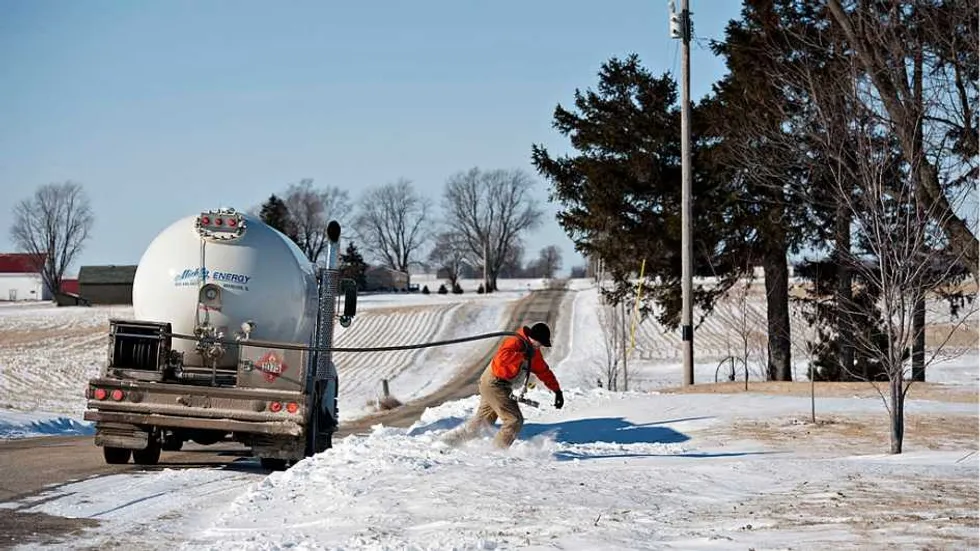
Susan and Jennifer happened. And thank God, because I was at the end of my tether in a freezing-cold house trying to convince someone on the Indian subcontinent that possible propane leaks in a Vermont winter were serious business.
Spoiler: There was no leak, but we’ll get to that.
Mousetrap
Last week I thought there was a dead animal in the house. That smell must have been a mouse corpse that one of the cats snagged but never ate. Surely it was under the bed or under the chest of drawers. That’s where Mina the tabby was racing around at night, yowling, with her claws scrabbling on the wood floors.
She’s an excellent mouser, and it’s a good thing, because country houses have critters. This is the beginning of my third year living on a dirt road in the sticks after a lifetime of city living. Those first few years teach citified boys like me a lot of lessons about what nature and the real world are like outside “comfy” urban areas. You better keep your well pump in good order, or you don’t drink or wash. Better have water backup for when the power goes out.
After hours of pulling out furniture and crawling around with a flashlight, I couldn’t find the dead varmint. But I did find out that the rotten-egg smell was coming from the valve joint in the copper pipe that feeds propane into my cast-iron heat stove.
Propane users, you’re going to laugh, I know. But I assumed quite reasonably that this meant I had a leak. After shutting off the tap on the outdoor tank and closing the valve indoors, I called the nationally known brand-name fuel company that I use.
That’s when Lakshmi “entered the chat.” Imagine my irritated surprise when my call to the American company — it has a transfer station and local drivers right across the river; I can see it from my back yard — got routed to Bangladesh.
Subcontinental shuffle
No, you cannot reach the local people directly. Yes, I have tried. You must call the national number and get transferred to Bangladesh, which then acts as an intermediary. Only the call center can know the local phone number, apparently. If you do find a local number and call it, and it’s after hours or a weekend, you get a robot lady telling you how sorry she is and how you’ll have to call the 800 number. You guessed it: Back to Bangladesh.
The company’s phone script claims to take possible leaks seriously. It claims to be “sending an emergency technician right away.” But you can’t really know this. You just have to trust that Rohan or Lakshmi really did call the people who are located 500 yards from your house, that those people know who you are, and that they really will come to your house.
No, you may not have the contact number. No, they will not guarantee you that the driver or tech will call you with an ETA. You just have to “trust” them.
One hour goes by. Two. Three. Four. Five. Every hour, I call the company back and work hard to keep my voice pleasant and groveling enough that they’ll deign to continue speaking to me. Give these people one excuse, and they’ll leave you stranded and freezing. And with every call, I have to repeat the same “verification procedures” of reciting my name, address, billing address, phone number, and last four of my SSN just to get these people to be willing to talk to me.
“We have dispatched someone,” said Lakshmi/Rohan every time I called. They won’t tell me who. They won’t tell me an ETA. They don’t actually care that I’m starting to freeze my backside off.
But Susan cared.
RELATED: Pizza Hut Classic: Retro fun ruined by non-English-speaking staff, indifferent customer service
 Photo by Blaze News
Sweet competence
On the fifth call to the national number, I thought I must have been dreaming. “Hi there, thanks for calling Nationally Known Fuel Company. I’m Susan. How can I help you today?”
“Are you really a live person?” I asked. I thought it was a trick. I was hearing a young-middle-age American female voice with the pleasant but not obsequious tone I haven’t heard in customer service since 1999.
“Yes,” Susan laughed.
I thanked her for being human and explained the situation. She was immediately riled.
“Are you serious? It’s been five hours since you first called us?” she asked, sounding genuinely incredulous. “That is not acceptable. It’s winter there, and I’m from Vermont. Hold on. I’m going to call the local dispatch manager personally.”
I almost cried over the competence of it. That interaction used to be common. If you’re 50 or older, this is the customer service you remember for most of your life. But it’s as rare as hen’s teeth today.
Voice of America
True to her word, Susan called the local dispatch manager, Jennifer. In a few minutes, Jennifer was calling me. And then everything got better.
“I am so sorry you’ve been waiting so long,” Jennifer said. I could tell she was my age, and from her particular American accent, she sounded just like the gals I went to high school with. Solid, no-nonsense Gen X.
It turned out that Jennifer had a much worse day than I did. She had been up all night alone in the dispatch office due to short staff. Between getting a snooze on the cot, she was trying to get propane trucks out to freezing customers who ran out. The main local truck broke down, leaving the rookie delivery guy stranded. She couldn’t find the emergency technician.
Jennifer told me all this to explain why everything was FUBAR, but she didn’t tell me in order to excuse the problem. She focused on getting me back up and running, but wanted me to know that if she had her way, none of her customers would have had to go through the hassle.
It gets better. Jennifer explained to me that I almost certainly did not have a propane leak. The odor, she explained, happens because fuel companies add an offensive odorant to the propane as a safety measure and a supply alert. When a propane tank runs low, the odorant that settles to the bottom of the tank vaporizes and becomes very apparent around the appliance. Yeah, technically, that means something is “leaking,” but in such tiny amounts that no one is getting poisoned.
“When you smell that, it almost always means your tank is about to give out. I regularly stop techs from running out to people, because it’s never a leak; it’s a delivery problem.”
Jennifer and I decided I didn’t need a tech (I already knew I was safe, having shut off all valves and airing out the house as precaution), but just a delivery.
“I’m looking at your account, and you’re due for a fill tomorrow. It was so cold in December, you probably went through it faster like everyone else. I’m gonna get Dickie out to you this afternoon.”
Neighborly help
She was right. Dickie got here, and my tank was on fumes. He laughed at me good-naturedly because I thought I had a leak, but I told him this was a first-time city-boy-goes-country lesson for me.
But it gets even better. Paul, another local, called me later to apologize for the delay and frustration. I told Paul that Jennifer had explained what happened and that I felt just as bad for all of them with the troubles they were having.
Paul insisted on giving me a $300 tank of propane for free as an apology. Wow.
Here’s the lesson for American companies. I nearly canceled my contract with this nationally known company. If they want to shunt American customers to a call center drone around the world, then they don’t want my business. There are plenty of other companies I can use.
But I’m sticking with them for now because of Susan, Jennifer, Dickie, and Paul. All of these people are Americans, and they’re local to me. I probably pass them in the grocery store in Montpelier. They know what winters are like, and they treated me as they would want their families treated in a situation like this.
Those four competent, pleasant Americans are the reason I’m going to stay a customer, at least for now. I want them to keep their jobs. My decision to remain a customer is not unconditional. If I have to deal with Lakshmi again in an emergency, I’m done. I can walk into five local, family-owned fuel dealers any day of the week and actually speak to an American who is my neighbor.
“Globalization” is a con job by corporations who see themselves as “global corporate citizens” because it pays them more to treat their customers like trash than it does to provide good service. So far, we American customers haven’t found a way to make the market punish them into better behavior. I wish I knew how we could.
No cheap prices are worth the aggravation of living in this fantasy world where we pretend a Hindi speaker across the globe is just as capable of keeping my Vermont house warm as someone who lives here. God bless those local Americans.
What's Your Reaction?
 Like
0
Like
0
 Dislike
0
Dislike
0
 Love
0
Love
0
 Funny
0
Funny
0
 Wow
0
Wow
0
 Sad
0
Sad
0
 Angry
0
Angry
0

I am just an average American. My teen years were in the late 70s and I participated in all that that decade offered. Started working young, too young. Then I joined the Army before I graduated High School. I spent 25 years in, mostly in Infantry units. Since then I've worked in information technology positions all at small family owned companies. At this rate I'll never be a tech millionaire. When I was young I rode horses as much as I could. I do believe I should have been a cowboy. I'm getting in the saddle again by taking riding lessons and see where it goes.






















Comments (0)