

The ICE Walkouts Prove My Generation Wasn’t Taught How Government Works
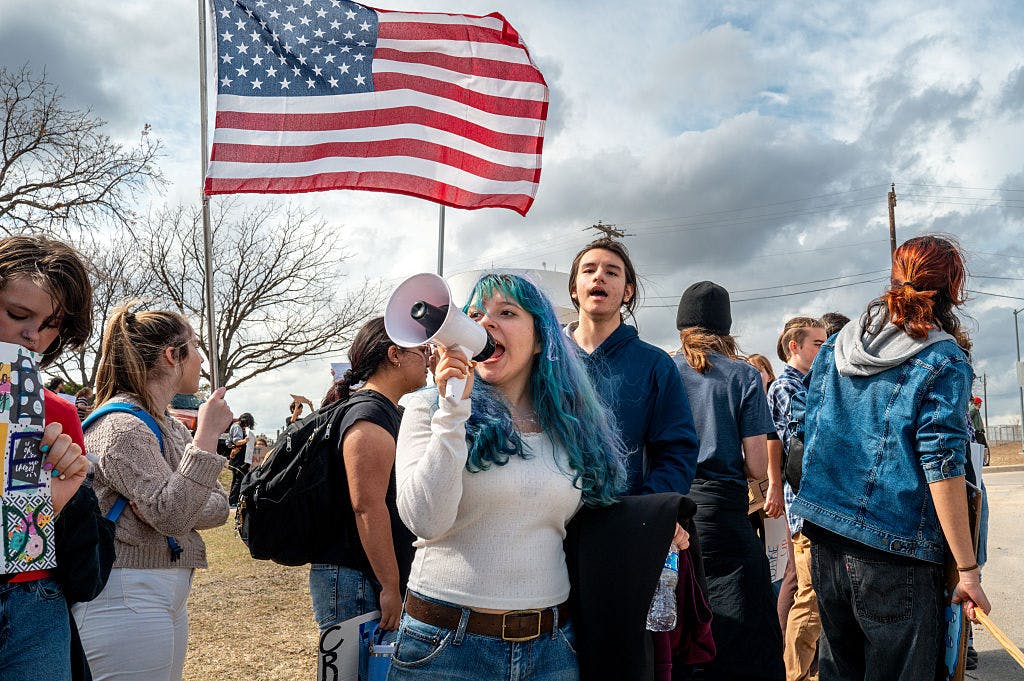
When hundreds of students across the country walked out of class last week to protest ICE, the scene felt uncomfortably familiar. The chants, the certainty, and the urgency to declare a side reflected a pattern my generation repeats during nearly every political moment: strong emotion paired with limited understanding. Watching it unfold as a high school student, the issue appeared larger than a single protest. The walkouts exposed an education system that failed to teach students how the government functions — or how federal law enforcement actually operates.
Live Your Best Retirement
Fun • Funds • Fitness • Freedom
From Georgia to California, students are walking out of class demanding that ICE be “removed” from their communities. In practice, for many of my peers, these walkouts function less as political statements and more as an excuse to miss class. At Lakeside High School in Georgia — where many of the protest videos originated — approximately 1,500 of the school’s roughly 2,200 students participated in an organized walkout protesting ICE. That would suggest that more than half the student body is so politically engaged that they are willing to sacrifice instructional time for a policy cause — an assumption undermined by the fact that fewer than 40% of Americans ages 18-19 vote.
For the small minority of students who genuinely care, the protests offer an opportunity to join a cause they assume is morally righteous. For all participants, however, these walkouts rest on an incomplete — and often incorrect — understanding of what ICE actually does and who holds authority over immigration policy.
The collapse of civic education in K–12 schools has produced widespread confusion about how the federal government functions. Many students believe ICE writes immigration law rather than enforces statutes passed by Congress. Others assume a president can simply suspend laws at will, or that public outrage alone can override the legislative process and reshape federal policy.
What no one has taught my peers is that Congress — not ICE, and not the White House — writes immigration law. Every administration, including President Trump’s, is obligated to enforce the laws Congress passes.
This confusion among students is not a failure of intelligence. It reflects an education system that avoids political controversy at all costs. Teachers are warned not to “take sides,” administrators steer clear of any topic that might provoke backlash, and students grow up believing that discussing the law or governance is dangerous. Instead of learning how the government functions, students learn how to talk around it.
This silence shapes how my generation engages with politics. Only a few miles from my Long Island high school, Generation Z played a decisive role in electing a socialist mayor in America’s most capitalist city. Many of those voters were never taught about the historical consequences of socialism — the collapse of economies, the erosion of democratic institutions, and the human suffering that follows. Those lessons are treated as too political for classrooms. The result is a generation making political choices without understanding the ideas being supported.
Students are not avoiding dialogue because of apathy. They avoid it because schools have trained them to fear disagreement. When issues such as immigration, abortion, or Israel arise, classrooms go quiet — not from a lack of opinion, but from concern over social and academic consequences.
Before becoming a nationally syndicated columnist, I hesitated to speak openly in classrooms. I rewrote comments, withheld arguments, and waited for safer moments to share my views. Now, I voice those perspectives in front of millions of readers, fully aware of the consequences. But even with all the pushback, my openness has not only sharpened my passion for politics but produced an impact far greater than I ever anticipated.
The danger of silence becomes clear during moments like these walkouts. When students protest without understanding what they want to change or how change occurs, it reveals how unprepared they are for civic participation. Informed activism cannot exist without civic knowledge.
Restoring serious civic education remains the only path forward. Students should learn not only which policies exist, but why they exist. They should understand how Congress, the courts, and federal agencies interact. Schools should encourage substantive debate rather than discourage it. Avoiding discomfort leaves students unprepared for the responsibilities of citizenship — and for the world they are about to enter.
* * *
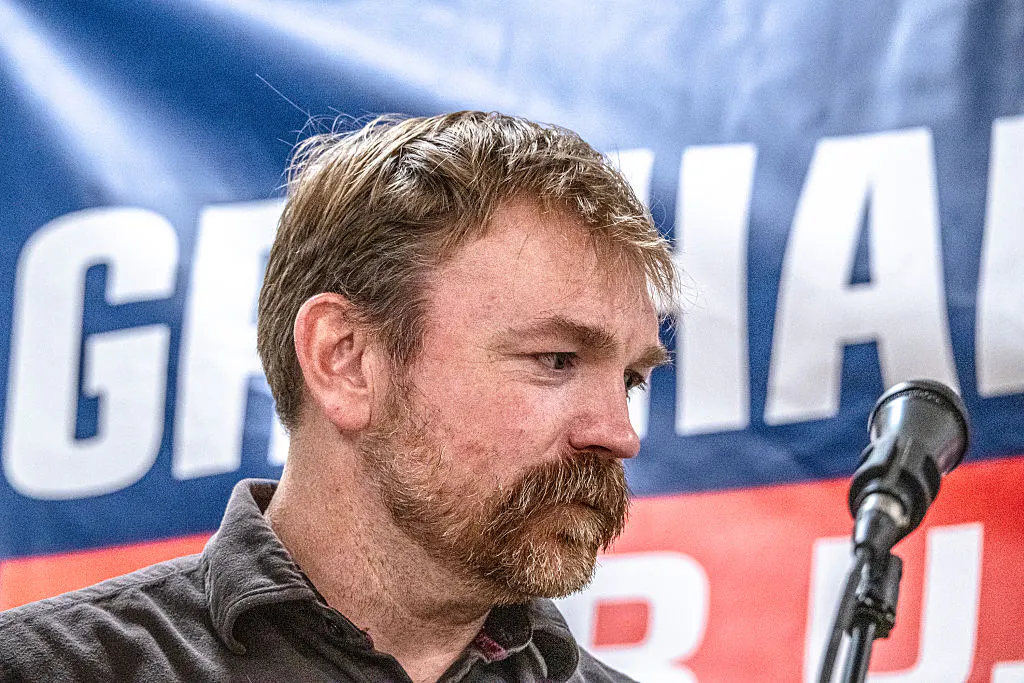
Gregory Lyakhov is a nationally syndicated columnist and podcast host, regularly appearing on national television to discuss education policy, U.S. politics, and public affairs.
The views expressed in this piece are those of the author and do not necessarily represent those of The Daily Wire.
What's Your Reaction?
 Like
0
Like
0
 Dislike
0
Dislike
0
 Love
0
Love
0
 Funny
0
Funny
0
 Wow
0
Wow
0
 Sad
0
Sad
0
 Angry
0
Angry
0

I am just an average American. My teen years were in the late 70s and I participated in all that that decade offered. Started working young, too young. Then I joined the Army before I graduated High School. I spent 25 years in, mostly in Infantry units. Since then I've worked in information technology positions all at small family owned companies. At this rate I'll never be a tech millionaire. When I was young I rode horses as much as I could. I do believe I should have been a cowboy. I'm getting in the saddle again by taking riding lessons and see where it goes.









Comments (0)