

The Pill Revolt — Why Millennial Women Like Me Are Rethinking Hormonal Birth Control
This article is part of Upstream, The Daily Wire’s new home for culture and lifestyle. Real human insight and human stories — from our featured writers to you.
Live Your Best Retirement
Fun • Funds • Fitness • Freedom
***
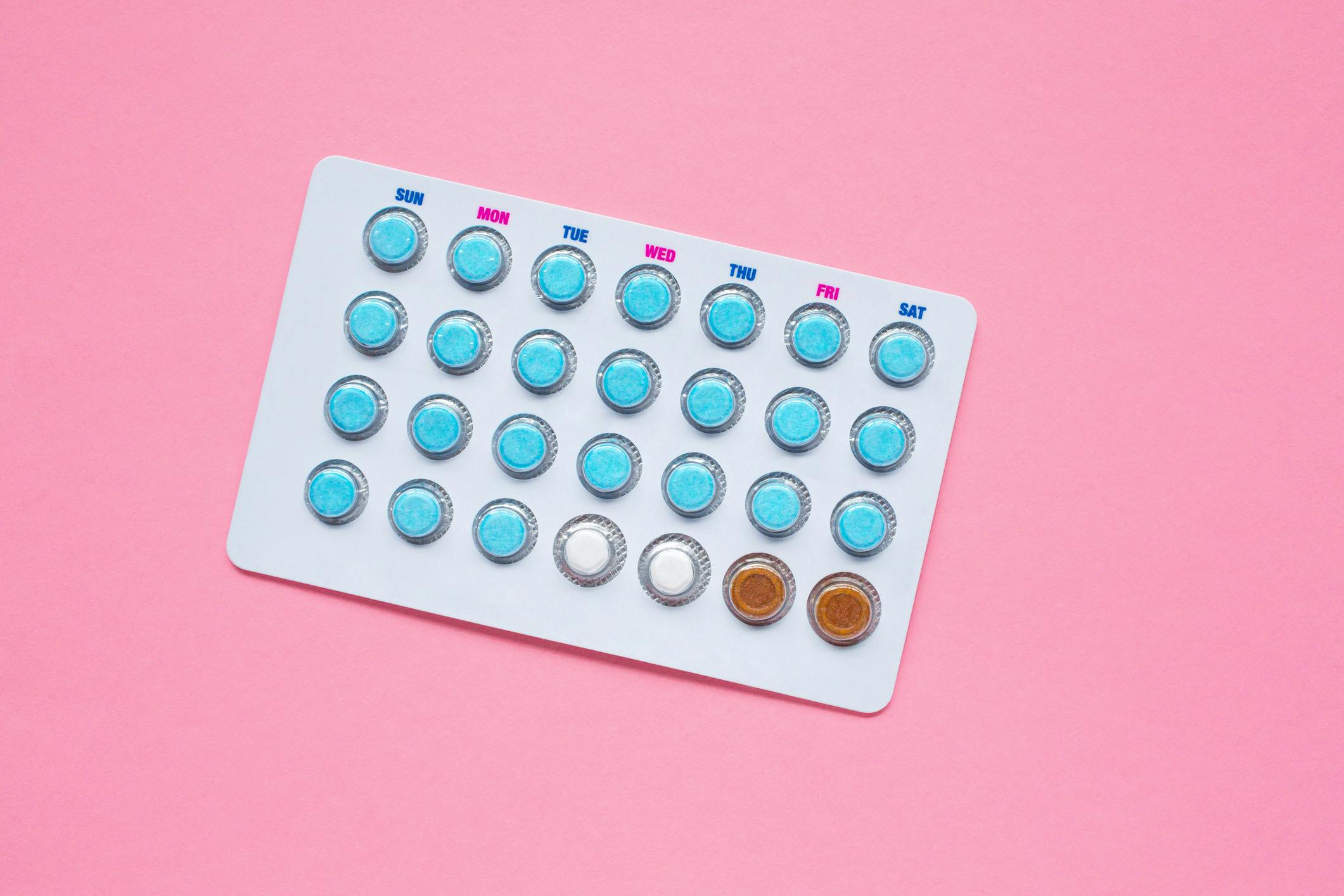
Perhaps the most common feature of the flurry of articles about young women rejecting hormonal birth control is the claim that their concerns are fueled by “misinformation” or based on “unfounded theories.” I’m a younger millennial. I’ve never used hormonal birth control, and I don’t plan to. But what these writers and doctors fail to grasp is how fed up women are of being told their pain is normal and prescribed a pill at 13, only to be told they have “unexplained infertility” and need IVF at 30.
It doesn’t take a medical degree to hypothesize that women’s healthcare has gone terribly wrong. It is almost entirely structured around either suppressing or bypassing the female reproductive system altogether. When journalists and doctors claim women like me are misinformed, they reject an opportunity to help make women healthier.
For 60 years now, the standard of care for women in the United States has been a protocol that seeks not to understand and work with the female body, but to inhibit and short-circuit it. It’s no surprise that the women who watched their mothers and grandmothers unquestioningly swallow the pill and continue to suffer are now demanding a better way.
The increased rejection of hormonal birth control also comes amid a tectonic shift in medical treatment for minors. Several major medical associations recently issued statements against pediatric gender transition in the wake of the Fox Varin lawsuit, which held medical providers responsible for performing a double mastectomy on a minor. Sex-rejection treatments and surgeries involve medicating children with puberty blockers and hormone therapies, among other things. And yet many adolescent girls, some as young as 11, are prescribed hormone therapy in the form of the hormonal birth control pill or an IUD, despite their long-term effects being largely unknown.
Of sexually active 15 to 19-year-olds, almost half are prescribed some form of hormonal birth control. This, despite the fact that there are no large randomized controlled trials on the effects of synthetic hormones during girls’ pubescent years. Some research on this cohort has shown reductions in bone mass and density, which is itself concerning. But little exists on long-term effects to adolescent brain or cardiovascular health, both of which actively require sex hormones for development. Animal studies show that exposure to hormonal contraceptives during adolescence has persistent effects on the female brain and behavior, though it’s unclear how this translates to humans.
Your response to women rejecting hormonal birth control will almost certainly depend upon your answer to one question: What is medicine? The same ideology that undergirds the transgender movement forms the foundation of women’s health, too: “My body, my choice.” But making your body in your own self-image is not medicine. It’s choice theory applied to the human body. And the philosophy of choice will always be insufficient because it inherently rejects the bounds of reality.
What if women’s health was actually about making women healthy instead of maximizing choice? The solution to America’s health problem is the same as the solution to transgender ideology: Respect reality, recognize that our bodies bound us and we can’t make ourselves into whatever we choose to be, and accept that women’s bodies are different from men’s. That’s not only okay but also good. Women’s bodies were made to bear children; blaming the patriarchy or raging about the system will not change that fact. Let medicine be about restoring the body’s natural function, not trying to change it. When we become unfocused on what the practice of medicine is in principle, people get hurt, even when medical professionals have the best intentions.
As a woman who has been on the receiving end of so-called “women’s healthcare,” it seems as though there is little will to understand the potentially negative effects of hormonal birth control, or the positive effects of working with rather than against the female body’s natural function. After all, birth control is convenient and perhaps even something of a sacrament to the feminized, sexually evolved West.
“Women have been taking the pill for decades,” I was told by a pushy doctor at an Ivy League research hospital, who wouldn’t let me leave his exam room without a prescription for the minipill for the extreme cramps I was having in my early 20s. When I asked for a hormone panel to help diagnose a potentially underlying health condition, fearful I’d be unable to conceive later in life, he said, perhaps revealing more about himself than intended, that a hormone panel wouldn’t tell him anything.
But not all women’s health practitioners are so unimaginative. Dr. Naomi Whittaker is a board-certified OBGYN and surgeon focused on women’s restorative reproductive medicine. She’s also the founder of RRM Academy, which employs both conventional medicine and the latest in restorative reproductive techniques. “Working with the female body rather than against it is the cornerstone of what I do,” she said. “I see hormones not as a nuisance to suppress, but as a language the body uses to communicate.” She calls restoring the body’s natural function “the spirit of restorative reproductive medicine.”
Even still, the establishment offers these doctors no help. Medical associations and education do not teach the kind of medicine Dr. Whittaker practices, and they are deeply skeptical of it. The American College of Obstetricians and Gynecologists and the American Society for Reproductive Medicine have issued statements and held congressional briefings against restorative reproductive medicine. After all, it is a competitor to the medical status quo at a time when the government has expressed more interest in women’s health and fertility. It seems as though the medical establishment is vying for a cut of a much-hoped-for government check.
Regardless, women continue rejecting the status quo. And this rejection comes amid an explosion of so-called “fem-tech” companies marketing devices (usually wearables, such as rings or watches) to assist women in either avoiding or achieving pregnancy naturally.
These devices use sensors to track temperature, sleep, and heart rate, among other things, to pinpoint ovulation or even underlying health conditions. Natural Cycles, which uses an AI algorithm adjusted to each individual user, became the first app to be cleared by the Food and Drug Administration as birth control in 2018. And Oura, whose sensor-laden rings have become something of a status symbol in Washington, is aiming higher than transforming women’s healthcare: It is purporting to change the face of American healthcare altogether.
Wearables such as the Oura ring are not only designed for tracking menstrual cycles, though they can do that. They are also designed to help wearers know more about their bodies (sleep quality and blood oxygen, activity, or stress levels, for example) and to help alert them to potential illness. Only a few months ago, an older-style wearable — the Fitbit — alerted me that my heart was in arrhythmia and told me to go to the emergency room. At 31, I am not the usual candidate for atrial fibrillation, and the ER doctor assumed the device had been faulty. After performing an EKG, he was amazed to find the watch had been right. Untreated heart arrhythmias are the most common cause of sudden cardiac death in the world.
American medicine has long suffered from being reactive rather than proactive. We treat symptoms and diseases rather than teaching people how to avoid them. After all, symptom and disease management is where all the money is, and healthcare, like all businesses, needs money to survive. But wearables may be a sign that’s changing. After all, Oura’s market valuation of $11 billion dollars is more than four times greater than it was just three years ago.
As women continue rejecting the pill, those beholden to the medical status quo will probably continue blaming women for falling prey to misinformation. That’s a lazy response. They’d do well to look a little closer: Women may be the early adopters of a new age of American medicine, rejecting pills and their unintended side effects in favor of preventative and restorative approaches, with wearables at the helm. American women seem to be ahead of the curve in heralding a return to true medicine. The only question is: Will the medical establishment get on board?
***
Katelyn Walls Shelton is a visiting fellow at the Ethics and Public Policy Center’s Bioethics, Technology, and Human Flourishing Program and a 2025 Robert Novak Journalism Fellow.
The views expressed in this piece are those of the author and do not necessarily represent those of The Daily Wire.
What's Your Reaction?
 Like
0
Like
0
 Dislike
0
Dislike
0
 Love
0
Love
0
 Funny
0
Funny
0
 Wow
0
Wow
0
 Sad
0
Sad
0
 Angry
0
Angry
0

I am just an average American. My teen years were in the late 70s and I participated in all that that decade offered. Started working young, too young. Then I joined the Army before I graduated High School. I spent 25 years in, mostly in Infantry units. Since then I've worked in information technology positions all at small family owned companies. At this rate I'll never be a tech millionaire. When I was young I rode horses as much as I could. I do believe I should have been a cowboy. I'm getting in the saddle again by taking riding lessons and see where it goes.

























Comments (0)