

Trump Blasts Somali Immigrants
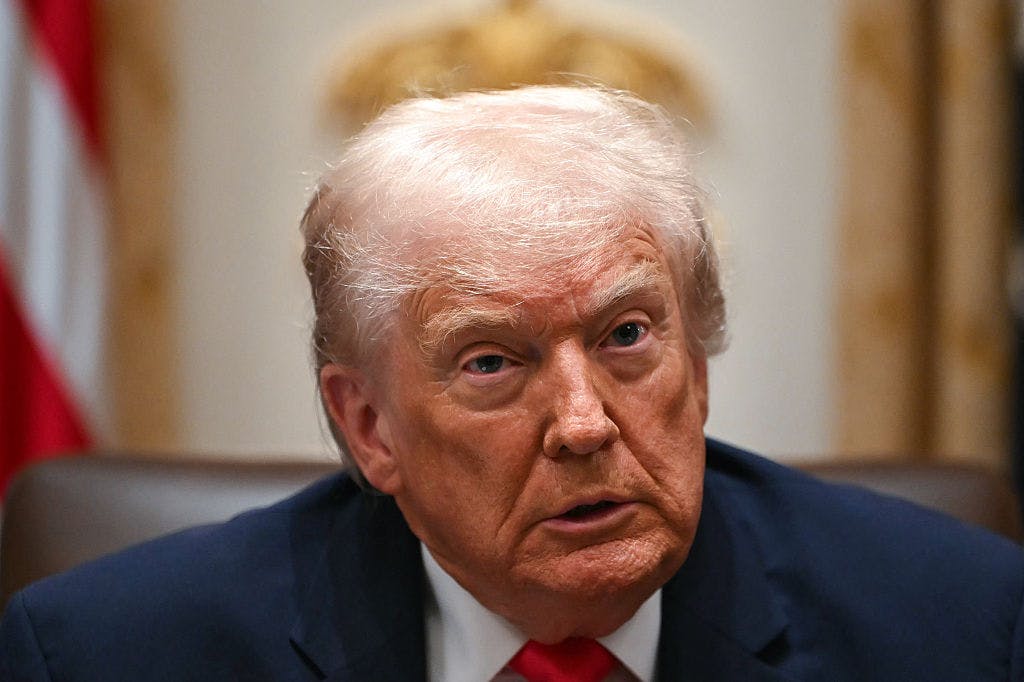
President Trump is now activating Immigration and Customs Enforcement to go after Somali illegal immigrants in Minneapolis. This follows the reports about large-scale Somali welfare fraud, including the attempt by many members of the Somali community to defraud the federal and state governments during the pandemic. A lot of that money ended up going in remittances back to Somalia.
Live Your Best Retirement
Fun • Funds • Fitness • Freedom
On Tuesday, President Trump’s overall take was that the United States needs to radically limit immigration from places like Somalia.
That is correct, because not all countries are going to be equally useful as sources of migrants to the United States. The people who come from many of these countries do not have any sort of cultural habits that mesh well with the United States.
The president stated that he doesn’t want Somalis in the United States, saying:
I hear they ripped off — Somalians — ripped off that state for billions of dollars, billions every year, billions of dollars, and they contribute nothing. The welfare is like 88%. They contribute nothing. I don’t want them in our country. I’ll be honest with you. Somebody will say, ‘that’s not politically correct,’ I don’t care. I don’t want them in our country. Their country’s no good for a reason.
When the president says, as a general point, that he does not want Somalis in the country, that they’re coming from a culture that does not mesh well with the United States, is he wrong about that? As a general rule, is that wrong?
On Tuesday, the administration unveiled a new regulation that would prevent immigration applications from citizens of 19 countries already covered by President Trump’s travel bans. Right now, there’s a travel ban that says if you’re coming from Iran, Venezuela, or Haiti, you’re not going to get a travel visa. Now he’s extending that into a pause on all immigration applications from those 19 countries.
All of this raises the question as to whether the United States ought to block immigration from third-world countries. According to the Migration Policy Institute, from 2015 to 2019, Somalis, of all sub-Saharan African immigrants, had the lowest levels of educational attainment. Only 14% held a bachelor’s degree or higher. Of all immigrants from sub-Saharan Africa, Somali-headed households were the poorest immigrants who came into the United States, and had the lowest median income at $32,000. Somalis in the United States had a 37% poverty rate. Extremely poor, extremely uneducated. Somalis had the highest rates of being uninsured in terms of health insurance: 18%. Somalis had the highest naturalization rate of any of these groups.

So they come here extremely poor, extremely uneducated, with a low income and wealth trajectory. And then they get naturalized at a super-high rate because they want to stay, which anyone would want. This is an amazing country. That, however, does not mean we have an obligation to take in everybody.
When they do earn money, a huge percentage of that money gets sent back to Somalia. And some of that money goes to terrorist groups like al-Shabaab.
This is what President Trump is railing against. You may not like his language. You may think that it’s colorful or purple or whatever, and that’s fine. Anyone can be critiqued for the language that they use.
But his general point, that the United States cannot afford to take in waves of extremely poor immigrants who do not cohere with the American system, that we cannot afford to bring in hundreds of thousands of people with actual allegiances to war-torn countries like Somalia, who then take a disproportionate share of our welfare dollars, is true.
So when you hear the argument that this is a country of immigrants, well, yes, it is certainly true that this was a country of settlers, and then it was also a country of immigrants. But the kinds of immigrants you take in help define your country, and the systems that they meet here help define your immigrants.
The reason so many people have left their home countries over the course of centuries to come to the United States is because the United States was a place that guaranteed opportunity, but it did not guarantee a gigantic welfare system that actively prevented assimilation.
We changed our own immigration system. We changed our own incentive structure. And then we were surprised when different people came.
The current argument being made is as though we are welcoming people from Eastern Europe or Italy or Ireland or Germany circa 1903, when there were no robust federal welfare systems in the United States. The income tax wasn’t even constitutional at that point. There were no robust welfare systems, even at the state level. There was no real attempt by the government to get involved in propping up people who were wildly poor, to the tune of not having to assimilate or get a job.
And so that drew a different kind of person. Yes, it drew people who were desperate, but the people who were desperate recognized that their path forward lay in embracing Anglo-American legal ideas, lay in embracing Biblical values , and embracing and assimilating to American rights and responsibilities, because that was the social safety net.
The social safety net was that you join a community, you come here, you join a church, your friends and your family help you out. But then it is your job to learn English. It is your job to go out and get a job. It is your job to put your kids in the local public school and make sure that they get educated the way Americans ought to be educated.
That is why the assimilated project in the United States was extremely successful up until the welfare era.
And then the welfare era began, and everything changed. And it doesn’t mean that we didn’t have extreme conflict over immigration prior to the welfare system. There was huge controversy over the levels of Chinese and Jewish immigration in the early part of the 20th century, and before that, huge levels of ire over Irish immigration in the 1840s, 1850s.
Immigration has always been a real hot point in American politics, because when new people come to a country, the question is, are they going to become part of the system or are they going to tear down the system from within?
The great guarantor that people were going to assimilate was the fact that they didn’t have a choice. The incentive structure drove them toward assimilation. It drove them toward participation in the American Dream.
And then came the welfare system and an incentive structure that said, “Come here and we give you free stuff; we demand nothing of you; you can do basically whatever you want in terms of employment; you can send all your money back home; you don’t have to actually try to get involved in the Anglo-American project.”
And we were surprised when we drew a different type of immigrant? That’s ridiculous.
It’s the same thing as saying, “I have a donut shop, and my donut shop is a prestige donut shop. You come in here, you can get the best of the best donuts. We go in the back every morning, and we handcraft our donuts. They’re amazing.”
The constituency drawn to that kind of donut shop is going to be of one particular sort of clientele. But then you decide that you’re going to change your policy, and you just hang a sign in the front window that says “free donuts.” Who do you think is going to show up? It’s going to be a very, very different constituency. Pretending otherwise is silly.
This is not the fault of the people attempting to come to the United States. This is the fault of our authorities. This is the fault of the elite in our society who claimed that you could change the entire incentive structure, taking people from cultures that have nothing in common with the United States, and somehow those two things could logically coexist within a similar project.
It’s ridiculous. And then, of course, if you point this out, you are bigoted or racist.
No, it’s not bigoted or racist to say that if people come from a place that does not have anything in common with the United States, and there is no actual incentivization toward assimilation, they’re not going to assimilate.
What's Your Reaction?
 Like
0
Like
0
 Dislike
0
Dislike
0
 Love
0
Love
0
 Funny
0
Funny
0
 Wow
0
Wow
0
 Sad
0
Sad
0
 Angry
0
Angry
0

I am just an average American. My teen years were in the late 70s and I participated in all that that decade offered. Started working young, too young. Then I joined the Army before I graduated High School. I spent 25 years in, mostly in Infantry units. Since then I've worked in information technology positions all at small family owned companies. At this rate I'll never be a tech millionaire. When I was young I rode horses as much as I could. I do believe I should have been a cowboy. I'm getting in the saddle again by taking riding lessons and see where it goes.














Comments (0)