

Trump’s New National Security Strategy Holds China’s Feet to the Fire
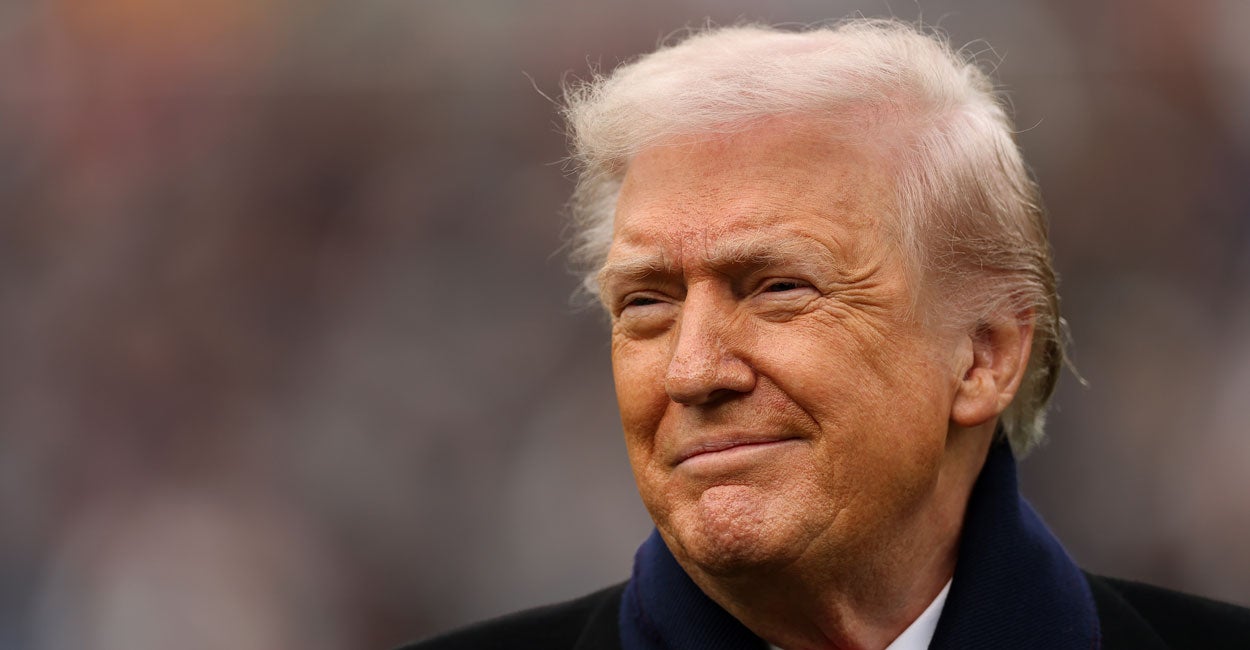
Editor’s note: This is a lightly edited transcript of today’s video from Daily Signal Senior Contributor Victor Davis Hanson. Subscribe to our YouTube channel to see more of his videos.
Live Your Best Retirement
Fun • Funds • Fitness • Freedom
Hello, this is Victor Davis Hanson for The Daily Signal. Recently, the Trump administration, as most administrations do at the beginning of their four-year term, issued a National Security Strategy—I guess we would call it a white paper—outlining the approach of the administration to foreign affairs and the protection of the security in the United States.
It’s written in a different style than past reports, different than the first term. And it has a lot of emphasis, as most do, on sections of the world. But what has caused the most controversy are two things.
Abroad, the report tells Europe that it’s experiencing “civilizational erasure,” and gives advice to the Europeans about what they must do to correct that, but in a manner of brotherly love or help, which the Europeans, of course, will see as condescending and interference into their internal affairs, except they want us to do it in the NATO part of the equation, but not the EU part. And that’s caused a lot of controversy.
The other is, the critics feel that it’s not critical enough of Russia and China. But if you read it very carefully, the whole point of its Pacific discussion is to bolster the alliances of Japan and South Korea, and to warn China to keep away from Taiwan and Australia.
And then, when we get to the economic domestic aspects of the National Security Strategy, it’s all aimed at China. It’s all aimed at China. It just says that we cannot be a successful, dominant power in the world, and we don’t want any other power to be dominant. And by inference, that’s Russia and China. But on matters of trade, under matters of natural resources, under matters of the South China Sea, it’s aimed at China.
And it does say explicitly that the old paradigm that previous, both Republican and Democratic, presidencies had adhered to, namely, the more money you invest from us and put it over there in China, and the more that you import their products here, even though you’re dealing with an asymmetrical trade system—and I think the report uses the word that it’s free but not fair—don’t kid yourself. That ensuing prosperity will not create a huge consumer class who desires freedom and liberty and then will become a force for the democratization of China. That’s not gonna happen.
Instead, that foreign exchange extravaganza will be put into the largest ship-building—and I mean military ship-building—the largest aircraft production, and the largest small arms and major arms industry in such a short time that we’ve ever seen. And that’s what China’s doing. And that is outlined.
The other controversy is: Why didn’t the National Security Strategy be more condemning of Russian President Vladimir Putin? It says that the Europeans have promised to spend 2% of their gross domestic product on military matters and have promised to increase that to 5%, which would be extraordinary.
And of course, the paper says that they should and they must be watched to keep their promises, but it doesn’t really condemn Vladimir Putin in the strongest of terms.
Basically, it is saying that the Ukraine war must come to an end. But why is that controversial? It’s the largest war on the European continent since World War II. The dead now exceed Stalingrad. The Ukrainian military’s average age is approaching the late 30s, maybe even 40s. Ukraine has probably lost 300,000 dead, wounded, and killed. The Russians are probably at 1.3 million.
So, the inference of the strategic assessment is that war should end before Ukraine is overwhelmed, unless the Europeans suddenly get religion and they wanna spend 5% immediately, and they want to pour sophisticated weapons systems, without restrictions, into Ukraine. But I don’t think the assessment sees correctly that that’s gonna happen. So, it’s pretty common sense. Do you wanna have an ongoing, bleeding Stalingrad or Verdun or Somme right on the borders of Europe?
The other subtext is, they want some type—the people, the authors, it’s pretty clear by inference that they would like Russia to be strategically calculated as a foil to China and vice versa.
That’s getting back to Henry Kissinger’s we’re gonna be no better friend, no worse enemy to China than it is to Russia, than to Russia, than it is to China. A triangular type of strategic relationship that does not allow those two powers—one with 6,000 to 7,000 nuclear weapons and a huge amount of oil, the other with 1.4 billion people and probably the largest conventional military, other than our own, in the world—to combine, strategically, along with their subsidiaries like North Korea and Iraq.
Finally, two things, very quickly. It puts a lot of emphasis on the Monroe Doctrine, the new Monroe Doctrine. And it basically says, why have we allowed Panama to be colonized—the Panama Canal—by the Chinese? Why do we have Russians and Chinese and Iranians involved in narco-terrorism, in the case of Venezuela, maybe Colombia, maybe some other South American illiberal, totalitarian governments? Why are we allowing the Chinese to assemble products in Mexico to evade our tariffs, when Mexico is supposedly a friend, hand in glove is helping the Chinese cheat on tariffs when they’re running $171 billion trade surplus with us, $63 billion in remittances? Probably $20 billion in additional cartel revenues from human trafficking and fentanyl.
And then, of course, the main concern of the strategic assessment in the Western Hemisphere is, they’re killing 75,000 Americans a year. A year. And it’s not just a bunch of people who it’s their own fault, why are they taking drugs? It’s a lot of these drugs that are fentanyl and dangerous opiates are laced to look like prescription drugs and, you know, recreational drugs.
So, if you have a daughter or son who goes to a party and someone says, “Take a Valium,” that could be fentanyl and kill them. And that’s by intent, on the part of the Chinese.
So, it wants to rectify the presence of China, stop the narco-terrorism that’s sponsored by or occurs with the help of Russia and China. And in that matter, it’s a new Monroe Doctrine.
And then, finally, very quickly, it says we can’t do any of this if we don’t have a fast-growing economy with plenty of affordable energy that is not dependent on rare earth and other precious minerals and resources being imported by our enemies. And we need a low inflationary, high GDP economy, and we’re going to do that by deregulation, tax reductions, measured reciprocal tariffs, and, of course, much more oil and gas.
And the result of that, they feel, will be that the United States, being much more careful not to intervene explicitly—it says in the assessment not to intervene on the ground and get into a Middle East war. And that’s a reaction to $1.3 trillion spent in Iraq, another trillion-plus spent in Afghanistan 20 years later to the most illiberal government in the world, with some of its expatriates shooting and killing Americans here in the United States. And in the hands of the Taliban was what the Afghan misadventure ended up as, as we saw under the Biden administration in 2021, that terrible August.
And finally, the Iraqi misadventure, we don’t know how that will end up. It’s probably better than Saddam Hussein.
But the question is, we lost a lot of wonderful Americans, we spent a lot of money, and we don’t wanna repeat that. So, it’s not Fortress America in isolation. It’s Fortress America, much better to help its friends and hurt its enemies and be the dominant power in the world today.
We publish a variety of perspectives. Nothing written here is to be construed as representing the views of The Daily Signal.
The post Trump’s New National Security Strategy Holds China’s Feet to the Fire appeared first on The Daily Signal.
What's Your Reaction?
 Like
0
Like
0
 Dislike
0
Dislike
0
 Love
0
Love
0
 Funny
0
Funny
0
 Wow
0
Wow
0
 Sad
0
Sad
0
 Angry
0
Angry
0

I am just an average American. My teen years were in the late 70s and I participated in all that that decade offered. Started working young, too young. Then I joined the Army before I graduated High School. I spent 25 years in, mostly in Infantry units. Since then I've worked in information technology positions all at small family owned companies. At this rate I'll never be a tech millionaire. When I was young I rode horses as much as I could. I do believe I should have been a cowboy. I'm getting in the saddle again by taking riding lessons and see where it goes.






Comments (0)