

Vance 2028 Buzz in SCOTUS Arguments During Campaign Spending Limits Case
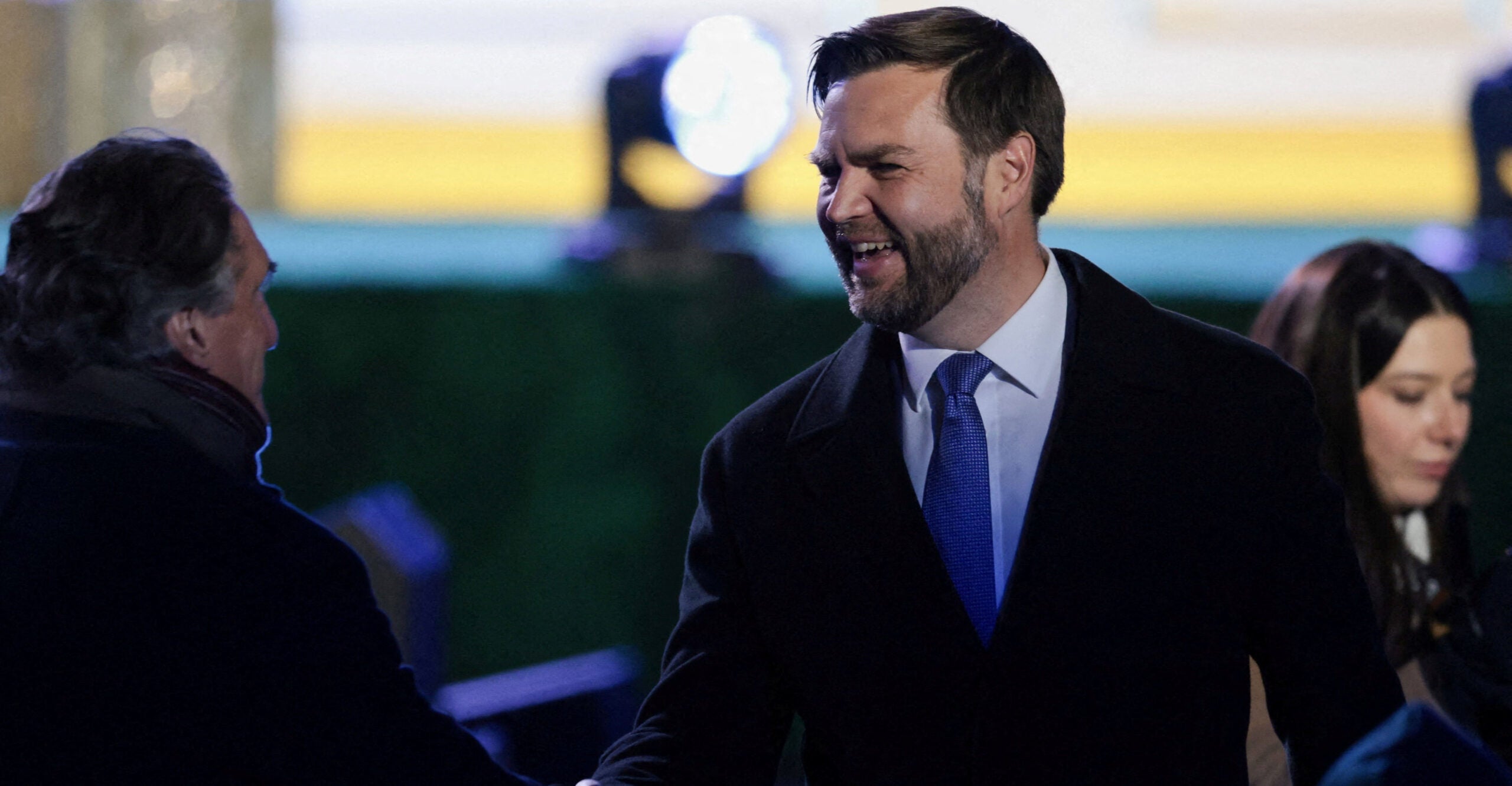
Supreme Court arguments about campaign spending limits included open talk of a JD Vance 2028 presidential campaign, in a case first launched by the vice president when he was running for U.S. Senate.
Live Your Best Retirement
Fun • Funds • Fitness • Freedom
In National Republican Senatorial Committee v. Federal Election Commission, the Trump administration is not defending the current federal law, which prohibits political parties from coordinating with candidates on how they spend campaign funds. If the Supreme Court sides with the Republicans, it would mean candidates can accept funding directly from a political party and also discuss with party officials how to use the funds.
The case emerged in 2022, when plaintiffs including then-Ohio U.S. Senate candidate Vance, as well as then-Rep. Steve Chabot, R-Ohio, sued the Federal Election Commission, contending that coordinated expenditure limits violate the First Amendment.
In lieu of the government’s defense, the Democratic National Committee has intervened to argue in favor of upholding the restriction, enlisting the party’s super lawyer Marc Elias. Elias said the DNC, the NRSC, and other political committees “are given a special privilege, to make millions of dollars of in-kind contributions to candidates.”
“These limits on income contributions are called coordinated expenditures, but they do not pose any meaningful burden on party speech,” Elias argued before the court. “In fact, the vast majority of them hardly involve speech at all. The practical effect of petitioners’ case would be to convert the political parties into mere paymasters, to set invoices on campaign vendors.”
When passing the law, members of Congress defended the restriction as necessary to prevent the potential laundering of bribes through a political party. Noel Francisco, the lawyer representing the Republican committee, said this would note be possible. He pointed out that contributions to parties are limited to $44,000, while contributions to political action committees are unlimited.
“A would-be briber would be better off just giving a massive donation to the candidate’s favorite super PAC,” Francisco said. “That’s why no one has identified a single case in which a donor has actually laundered it or bribed to a candidate.”
Vance’s Future Plans?
Proponents for keeping the law in place argued that the case is moot and plaintiffs lack standing because the Trump administration is unlikely to enforce it.
Francisco contended there is no reason Vance would take that chance.
“There’s no evidence that the vice president has abandoned his intention to run for federal office in 2028,” Francisco said. “At least 15 of the last 18 vice presidents have gone on to run for the presidency, and regardless of the current executive’s views of the First Amendment, it would be insane for Vance or the committees to knowingly violate this law, since it is a criminal statute with a five-year statute of limitations.”
However, Roman Martinez, whom the justices appointed to argue for upholding the 6th Circuit Court of Appeals‘ ruling to keep the law in place, stressed that the plaintiffs lacked standing because Vance is not a candidate.
“Vice President Vance has repeatedly denied having any concrete plan to run for office in 2028,” Martinez noted.
Chief Justice John Roberts asked what happens if Vance did run for another office, and didn’t want to follow the law banning coordinated expenditures.
“If the vice president came to you and said, ‘I want legal advice on whether or not I can violate these limits, because I’ve heard that somebody said, ‘Don’t worry about it, they’re not gonna be enforced,’’ would you tell him to ‘Go ahead?’” Roberts asked. “Maybe one thing would you tell him to do is, ‘We ought to be careful, because maybe somebody else will be in the White House next term. They may decide to prosecute this.’”
Martinez said he would advise Vance to consult the FEC for an opinion.
“Any person can go to the FEC and request an advisory opinion about whether their conduct is lawful, and if the FEC says, ‘Yes, it’s lawful,’ as they obviously would here because they [the administration] think the conduct is lawful, then there is a statutory safe harbor that would provide total relief, total protection to the vice president,” Martinez said.
Evidence of Bribe Laundering?
Justice Sonia Sotomayor said evidence of bribery inspired campaign finance laws in the 1970s. The dairy industry appeared to have laundered money to the 1972 Nixon campaign through the Republican National Committee. The dairy industry received a government bailout.
“Was that a quid pro quo? It appears,” Sotomayor said.
“If there’s no direct evidence, it’s because our umbrella is working,” Sotomayor added. “You now want to take that umbrella completely away.”
Francisco responded that there are no state examples of bribes laundered through parties.
“We actually have 28 states in this country that impose no limits on a party’s ability to coordinate with its candidates, none. We don’t have any examples from those 28 states,” Francisco said.
Likely Verdict?
The court did not appear inclined toward one side or the other, since justices on both sides had tough questions for lawyers, said former FEC Commissioner Hans von Spakovsky, now a senior legal fellow at The Heritage Foundation. But he said the NRSC has a 60% chance of prevailing, based on the arguments.
“Noel Francisco made a strong case as to why the Supreme Court should throw out the restrictions on First Amendment and on associational rights,” von Spakovsky told The Daily Signal.
“Marc Elias, despite the fact that he has huge amounts of money and organizations behind him, has gotten pretty much a losing record in court,” von Spakovsky added.
The post Vance 2028 Buzz in SCOTUS Arguments During Campaign Spending Limits Case appeared first on The Daily Signal.
What's Your Reaction?
 Like
0
Like
0
 Dislike
0
Dislike
0
 Love
0
Love
0
 Funny
0
Funny
0
 Wow
0
Wow
0
 Sad
0
Sad
0
 Angry
0
Angry
0

I am just an average American. My teen years were in the late 70s and I participated in all that that decade offered. Started working young, too young. Then I joined the Army before I graduated High School. I spent 25 years in, mostly in Infantry units. Since then I've worked in information technology positions all at small family owned companies. At this rate I'll never be a tech millionaire. When I was young I rode horses as much as I could. I do believe I should have been a cowboy. I'm getting in the saddle again by taking riding lessons and see where it goes.












Comments (0)