

Voter Integrity Win: Supreme Court Affirms Standing To Challenge Extended Ballot Counting
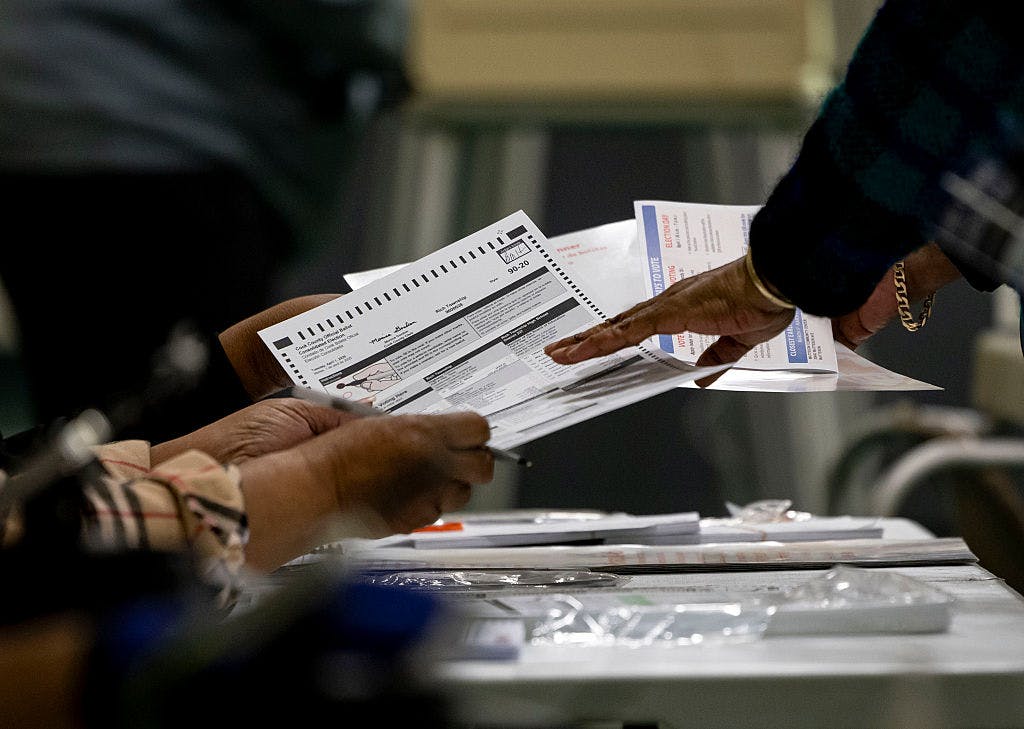
In a 7-2 decision that had resounding import for election integrity, the Supreme Court reversed the lower court ruling that Congressman Michael Bost and two other candidates lacked standing to challenge the Illinois law that allows election officials to count mail-in ballots postmarked by Election Day if they are received within 14 days thereafter.
Live Your Best Retirement
Fun • Funds • Fitness • Freedom
Bost and the two other plaintiffs argued that the process of an “extended” counting period violates federal statutes (2 U.S.C. §7 and 3 U.S.C. §1), which establish a single “Election Day” as the Tuesday after the first Monday in November. The District Court and the Seventh Circuit dismissed the case, concluding that the petitioners lacked standing under Article III because they could not prove the rule would cause them to lose or significantly harm their campaigns.
But the Supreme Court held that a candidate for office has standing to challenge the rules governing their own election based on their unique status and interest in the process.
Chief Justice Roberts wrote the majority opinion, which invoked a standing rule for candidates, emphasizing that they are not “mere bystanders” in the electoral process. The Court argued that while voters have a general interest in election integrity, a candidate’s interest is “different in kind.” Candidates spend vast resources seeking to represent the people and have a concrete stake in ensuring the results accurately reflect the people’s will.
Roberts noted that rules undermining election integrity also undermine the winner’s political legitimacy. For an elected official, a loss of public confidence — even if they win — is a “reputational harm” which constitutes a classic Article III injury. The Court refused to require candidates to prove they would likely lose in order to gain standing. Roberts argued that forcing candidates to wait until an election is close or finished to sue would lead to “late-breaking, court-ordered rule changes” that cause voter confusion and undermine democratic stability.
The Court warned that requiring proof of a “substantial risk of loss” would turn judges into “political prognosticators,” a role outside their judicial expertise.
What's Your Reaction?
 Like
0
Like
0
 Dislike
0
Dislike
0
 Love
0
Love
0
 Funny
0
Funny
0
 Wow
0
Wow
0
 Sad
0
Sad
0
 Angry
0
Angry
0

I am just an average American. My teen years were in the late 70s and I participated in all that that decade offered. Started working young, too young. Then I joined the Army before I graduated High School. I spent 25 years in, mostly in Infantry units. Since then I've worked in information technology positions all at small family owned companies. At this rate I'll never be a tech millionaire. When I was young I rode horses as much as I could. I do believe I should have been a cowboy. I'm getting in the saddle again by taking riding lessons and see where it goes.














Comments (0)