

What’s Next After Trump Voids Biden Autopen Orders?

The Trump administration could have a tough time making all of former President Joe Biden’s autopen actions “null and void,” which likely means he will face litigation, legal experts warn.
Live Your Best Retirement
Fun • Funds • Fitness • Freedom
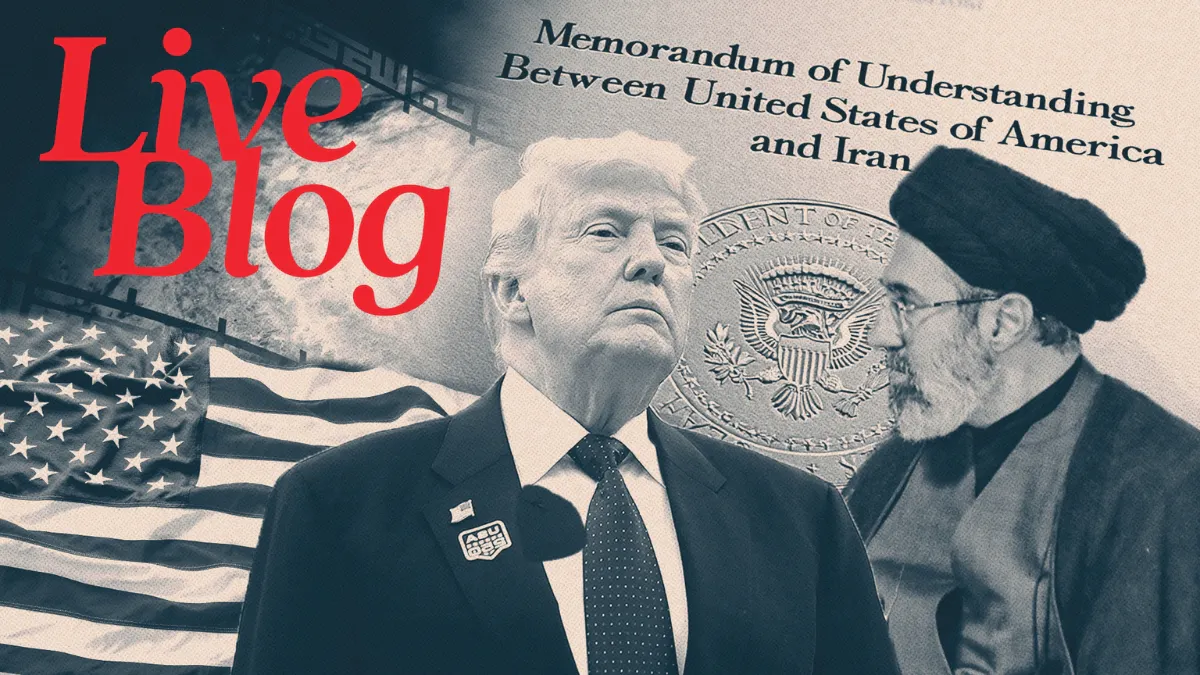
On Tuesday, President Donald Trump posted on Truth Social, “Any and all Documents, Proclamations, Executive Orders, Memorandums, or Contracts, signed by Order of the now infamous and unauthorized ‘AUTOPEN,’ within the Administration of Joseph R. Biden Jr., are hereby null, void, and of no further force or effect. Anyone receiving “Pardons,” “Commutations,” or any other Legal Document so signed, please be advised that said Document has been fully and completely terminated, and is of no Legal effect.”
Clemency may be the only question, since Trump can overturn any Biden executive order whether the president signed it personally or by autopen.
“The autopen is only the instrumentality of fraud,” Mike Howell, president of the Oversight Project, told The Daily Signal. The Oversight Project began analyzing and investigating Biden’s use of the autopen while he was still in office.
“The president has caught the ball and is pushing as hard as possible,” Howell added. “The Department of Justice is the last missing link to take action. This could be an important step in meeting the promise for more accountability.”
The office of Joe Biden did not respond to a request for comment.
Here are three keys to know what’s next.
1. ‘Proving That Biden Didn’t Know’
When matters are litigated, the burden will be on the Trump administration to prove Biden was unaware of actions taken in his name, warned Stewart Whitson, director of federal affairs for the Foundation for Government Accountability, a watchdog group.
“The challenge for the Trump administration is going to be proving that Biden didn’t know,” Whitson told The Daily Signal. “That could be proven through eyewitness testimony. It could also be proven through accessing documents, such as emails, that might suggest the president didn’t know.”
A strong starting point for the Justice Department to gain search warrants and compel testimony would be the evidence obtained by the House Oversight and Government Reform Committee, Whitson said.
In October, the committee issued a report titled, “The Biden Autopen Presidency: Decline, Delusion, and Deception in the White House,” based on interviews with 14 senior Biden White House staffers.
The investigation found that senior Biden staff exercised presidential authority or facilitated executive actions without direct authorization from President Biden himself, including through misuse of the autopen.
The committee found instances where executive actions were executed without clear record of the president’s approval. The committee also identified questions surrounding the issuance of pardons and commutations during the final days of the Biden presidency. This included pardons for Biden family members where the autopen was used without confirmed presidential authorization.
Former White House Chief of Staff Jeff Zients told the committee he didn’t know who was in charge of the autopen.
“Without sufficient recordkeeping, it is impossible to verify that the autopen was used properly,” the oversight committee report says. “Further, recently uncovered documents and witness testimony indicate that even when a verbal decision was ‘memorialized’ in an email, it does not prove that President Biden had made the decision himself.”
2. Clemency ‘Easiest to Undo’
During his Biden’s four years in office, the White House issued 4,245 acts of clemency. That’s more than the previous record of 3,796 held by Franklin D. Roosevelt. Of those, 96% were granted between Oct. 1, 2024, and Jan. 20, 2025.
These included pardons of five Biden family members, along with pardons for former National Institutes of Health official and former White House advisor Dr. Anthony Fauci, former Chairman of the Joint Chiefs Gen. Mark Milley, and House members on the Select Subcommittee to Investigate the January 6th Attack on the United States Capitol.
A Biden Justice Department attorney raised concerns about what he called “highly problematic” pardon review process for what the White House characterized as nonviolent offenders.
Biden’s own words during a New York Times interview published in July, reveal that he was aware of “categories” of people with clemency, but not individuals. He did say he was aware of some pardons for Milley and the Jan. 6 committee members.
Biden’s comments to the Times should make the clemency “the easiest to undo,” said Howell of the Oversight Project.
“You don’t need to take the Oversight Project’s word for it. Biden told The New York Times after the Oversight Project forced him out of the basement, that he authorized broad categories for pardons, and the staff picked the names. So that was definitely not done by Biden,” Howell explained.
It could depend on the definition of categories, said Paul Kamenar, counsel for the National Legal and Policy Center, a watchdog group.
“If Biden told someone ‘pardon everybody on the January 6 Committee,’ that’s a broad category but it’s also finite,” Kamenar told The Daily Signal. “To say, ‘all or most nonviolent drug offenders’ would be more of a problem.”
3. What Will Litigation Look Like?
To reverse the pardons, the Justice Department would have to act, and then courts would resolve the question, legal experts said.
“If Biden never authorized it, it’s an invalid pardon anyway,” Kamenar explained. “The way this gets settled is if Adam Schiff or someone pardoned gets arrested, and he comes back to say, ‘I was pardoned.’ The government could then come back and produce evidence that, ‘No, Biden didn’t authorize the pardon.’”
Schiff, now a California Democrat senator, was previously a member of the House Jan. 6 committee.
Other clemency issues will be more difficult to litigate if it means reincarceration or returning old penalties, said John Malcolm, director of the Meese Center for Legal and Judicial Studies at The Heritage Foundation.
“This is totally unprecedented territory,” Malcolm told The Daily Signal. “Normally pardons and grants of clemency, for example, are not subject to challenge since a president’s pardon power is plenary.”
“Here, the issue will be litigated when Trump takes some action that runs contrary to what Biden did–such as seeking to reincarcerate someone who was pardoned or granted clemency or setting an execution date for one of the 37 death row inmates whose sentences Biden commuted–and then we’ll see what a court does,” Malom added.
Trump’s move is a key first step, said Whitson of the Foundation for Government Accountability.
“The bigger threat that President Trump has brought to the public’s attention is the idea of unelected staffers exercising power they don’t have,” Whitson told The Daily Signal. “It could be at the behest of a well-funded organizations or even foreign funding pushing unelected bureaucrats to act.”
The post What’s Next After Trump Voids Biden Autopen Orders? appeared first on The Daily Signal.
What's Your Reaction?
 Like
0
Like
0
 Dislike
0
Dislike
0
 Love
0
Love
0
 Funny
0
Funny
0
 Wow
0
Wow
0
 Sad
0
Sad
0
 Angry
0
Angry
0

I am just an average American. My teen years were in the late 70s and I participated in all that that decade offered. Started working young, too young. Then I joined the Army before I graduated High School. I spent 25 years in, mostly in Infantry units. Since then I've worked in information technology positions all at small family owned companies. At this rate I'll never be a tech millionaire. When I was young I rode horses as much as I could. I do believe I should have been a cowboy. I'm getting in the saddle again by taking riding lessons and see where it goes.







Comments (0)