

When institutions close ranks, history intervenes
I live in Madison County, Montana. Long before cable panels debated corruption and accountability, this place learned a hard lesson about what happens when government goes bad.
Live Your Best Retirement
Fun • Funds • Fitness • Freedom
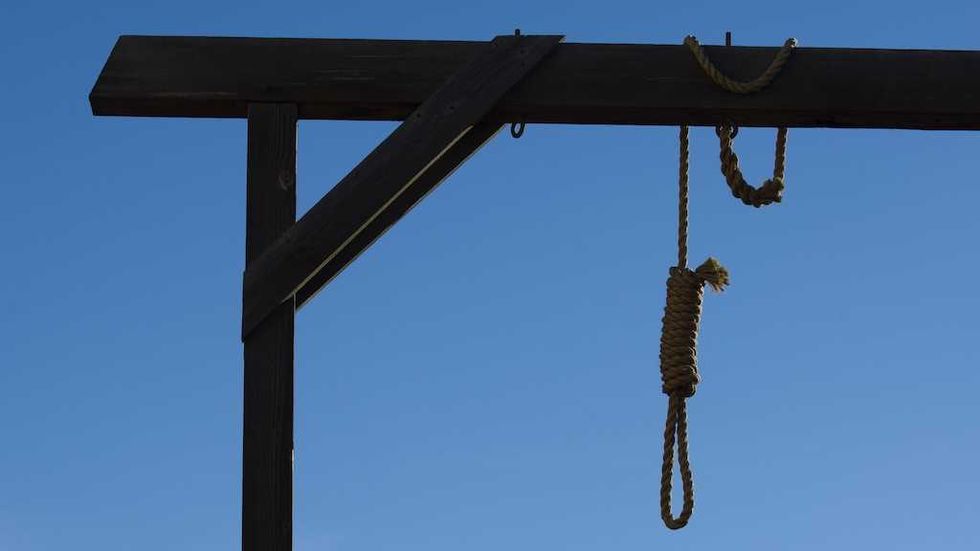
In the 1860s, Bannack served as the territorial capital of Montana. Henry Plummer was its elected sheriff. He wore the badge, swore the oath ... and built the gallows.
Healthy institutions correct themselves. Unhealthy ones protect themselves. Madison County learned that lesson the hard way. Minnesota is confronting it now.
And according to many who lived here at the time, he also ran the crime.
Plummer and his deputies were accused of leading a gang of road agents who robbed and murdered travelers hauling gold through these mountains. Stagecoaches were ambushed. Men vanished. Fear became routine. Complaints led nowhere. The law appeared to be shielding the very violence it existed to stop.
So the citizens acted.
In 1864, a vigilance committee arrested Plummer and two of his deputies. No formal trial followed. No appeals. The man who built the gallows was hanged on them.
Historians still debate Plummer’s guilt. They do not debate why the vigilantes emerged. People believed government had become part of the threat rather than the safeguard. When authority no longer restrained crime, citizens concluded that authority itself required restraint.
That story unsettles. It should. But it is real, and it matters now.
The distance between frontier Montana and modern Minnesota is not as wide as we might like to think.
Minnesota is now reckoning with one of the largest public-assistance fraud scandals in American history. Billions of taxpayer dollars intended to feed children and support vulnerable families were siphoned through nonprofits that faced minimal oversight and little urgency to address obvious red flags.
Warnings surfaced early. Audits flagged problems. But the payments continued anyway.
It was a prolonged, systemic failure, not a single clever con.
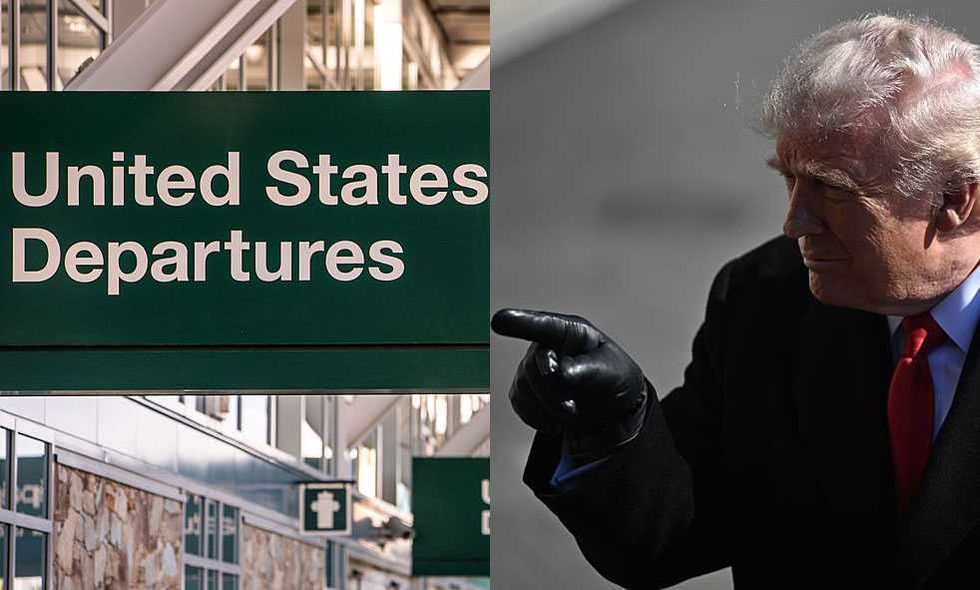
RELATED: Trump has the chance to end the welfare free-for-all Minnesota exposed
 Photo by Mandel NGAN / AFP via Getty Images
As the scope became clearer, more voices spoke up. Questions multiplied. The alarms grew louder. Yet the machinery kept moving. Oversight failed to halt the flow of money in real time. Accountability arrived only after exposure, not before.
For many watching, the most disturbing fact was not that warnings existed but that raising them changed nothing.
Imagine a medical provider entrusted with managing a patient’s pain. The patient is vulnerable, dependent, unable to advocate fully. Now imagine discovering that the provider has been siphoning the medication, not to heal, but to feed a personal addiction.
The first problem is theft.
The deeper problem is betrayal.
The most dangerous problem involves everyone who noticed and did nothing.
That provider violates something fundamental. So does a government that tolerates corruption while presenting itself as a caretaker.
This summer, America turns 250. There will be speeches, reenactments, and familiar lines from the Declaration of Independence. We will hear again about equality, liberty, and the pursuit of happiness. Those words deserve their place.
But Americans have developed a habit of quoting the Declaration selectively.
“All men are created equal” fits neatly on a bumper sticker. The context Thomas Jefferson supplied fits less comfortably. He warned about power, corruption, and the responsibility citizens bear when government betrays its charge.
The founders did not merely announce ideals. They warned about consequences.
They wrote that governments exist to secure rights and that “whenever any Form of Government becomes destructive of these ends, it is the Right of the People to alter or to abolish it.” That sentence is often cited. The one that follows rarely is: “Prudence, indeed, will dictate that Governments long established should not be changed for light and transient causes.”
These were not men eager for upheaval. They understood that stability is precious and easily lost.
But they continued, warning that when “a long train of abuses and usurpations” reveals a consistent design toward despotism, resistance becomes not merely permissible but necessary.
The prophet Jeremiah put the problem bluntly: “The heart is deceitful above all things, and desperately sick; who can understand it?” (Jeremiah 17:9).
RELATED: ‘Shameful revisionist history’: America250 faces scrutiny after posting ‘progressive propaganda’
 Photo by Heather Diehl/Getty Images
That realism about human nature runs through both scripture and the Declaration. The framers carried it forward into the Constitution. They assumed power would be abused. They assumed ambition would seek advantage. They assumed virtue would require reinforcement.
So they divided authority, erected checks and balances, and made corruption harder rather than trusting leaders to be better.
Vigilance was the price of liberty. When a people become absorbed in the pursuit of happiness and neglect the pursuit of accountability, history intervenes.
In this Montana county, the story of Sheriff Plummer serves as a reminder of what happens when authority receives blind trust and accountability arrives too late.
The lesson does not praise vigilantism. Vigilantism signals collapse, not health. When citizens feel forced outside lawful systems, failure has already occurred upstream.
Unchecked corruption creates pressure that does not dissipate on its own. Healthy institutions correct themselves. Unhealthy ones protect themselves.
Madison County learned that lesson the hard way. Minnesota is confronting it now. America itself may be closer than we care to admit.
Every summer, tourists pass through this county on their way to Yellowstone National Park. In Virginia City, students retell the story of Sheriff Plummer, often dressed in Old West attire, offering visitors a taste of frontier drama.
The story feels safely distant. A relic of a rougher age.
But news from Minnesota sounds less like reporting and more like repetition.
A century from now, what story will students tell about Minnesota?
Then, as now, theft was dismissed. Warnings were minimized. Institutions protected themselves rather than correcting themselves. Trust eroded quietly before it collapsed publicly.
Corruption ignored does not remain contained. Betrayal tolerated becomes precedent. Institutions that refuse correction eventually lose consent.
History shows what follows. When authority protects itself instead of the public, legitimacy erodes quietly, then collapses suddenly. By the time citizens reach for drastic remedies, lawful ones have already failed.
Madison County learned that lesson in blood and with rope. Minnesota is learning it through audits and indictments. The difference is only the stage of decay.
History does not repeat itself as theater forever. When its warnings go unheeded, it returns as judgment.
What's Your Reaction?
 Like
0
Like
0
 Dislike
0
Dislike
0
 Love
0
Love
0
 Funny
0
Funny
0
 Wow
0
Wow
0
 Sad
0
Sad
0
 Angry
0
Angry
0

I am just an average American. My teen years were in the late 70s and I participated in all that that decade offered. Started working young, too young. Then I joined the Army before I graduated High School. I spent 25 years in, mostly in Infantry units. Since then I've worked in information technology positions all at small family owned companies. At this rate I'll never be a tech millionaire. When I was young I rode horses as much as I could. I do believe I should have been a cowboy. I'm getting in the saddle again by taking riding lessons and see where it goes.





















Comments (0)