

7 Significant Legal Matters From 2025 That’ll Have Impacts Far Beyond the New Year
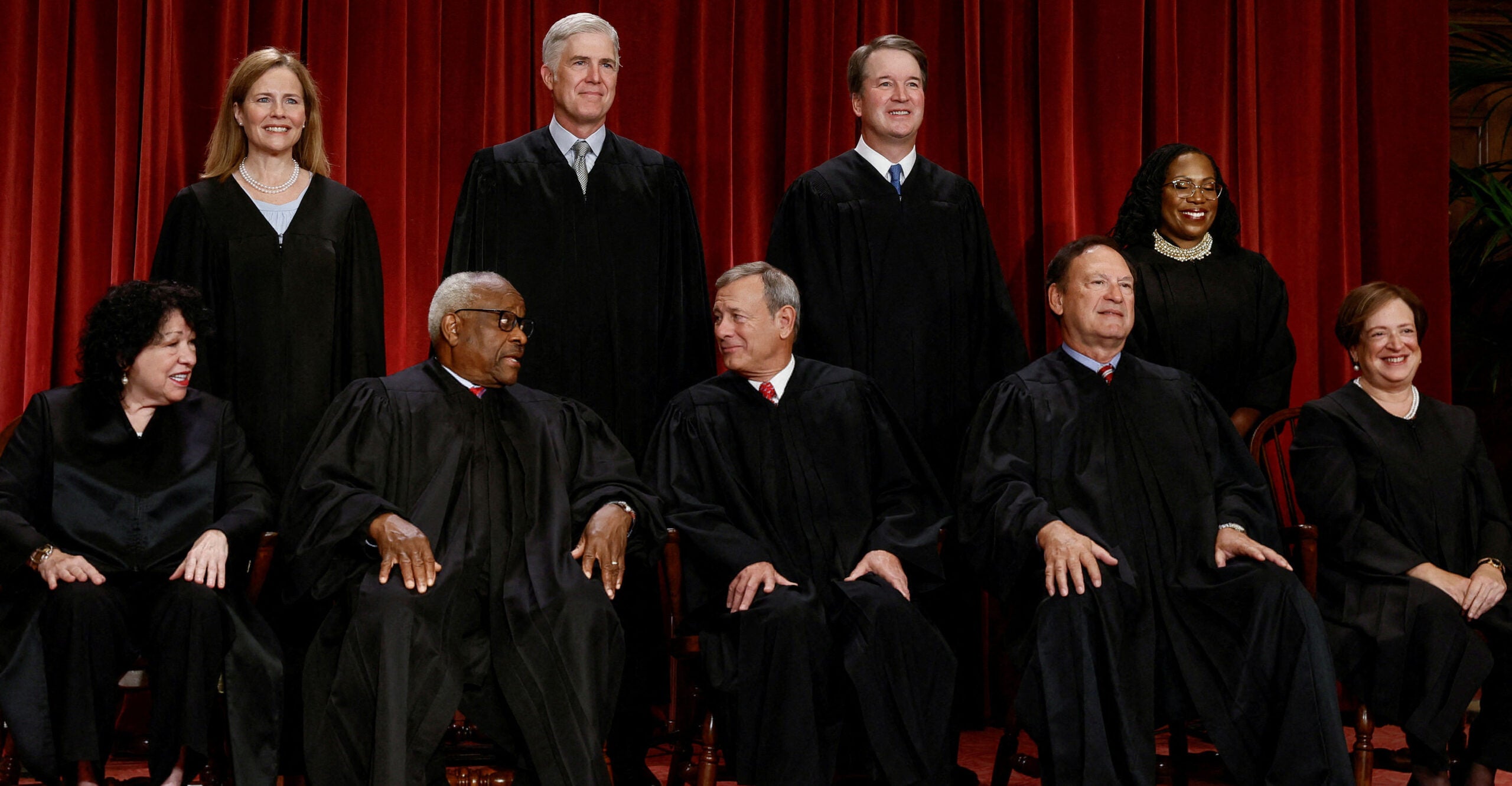
The year has been jam-packed with consequential legal rulings likely to have long-lasting impact on matters such as parental rights and religious liberty.
Live Your Best Retirement
Fun • Funds • Fitness • Freedom
The Supreme Court—often known for ideological divisions—reached unanimous rulings on two contentious issues.
On other fronts, personal legal cases against President Donald Trump have fallen away, even amid skyrocketing litigation challenging his administration’s policies.
Here’s a look at the biggest legal matters to emerge from 2025.
1. Fate of Anti-Trump Lawfare Cases
The Biden administration’s Justice Department and state prosecutors launched a barrage of investigations and indictments against Trump and allies during the 45th and 47th president’s four years out of office.
In late 2024, the Justice Department dropped special counsel Jack Smith’s case against then-President-elect Trump. Smith had secured grand jury indictments against Trump regarding his challenge to the 2020 election outcome. A federal court in Florida had already dismissed the case accusing Trump of mishandling classified information.
Almost a year into the second term, in late November, Georgia Judge Scott McAfee agreed to dismiss a racketeering conspiracy case against Trump and various Trump allies from the challenge to the 2020 election.
“His criminal exposure is effectively over,” Paul Kamenar, counsel for the National Legal and Policy Center, told The Daily Signal. “That was a big victory for Trump personally.”
Democrat Fulton County District Attorney Fani Willis charged Trump in the conspiracy case. After Willis was disqualified from handling the case, it passed to Peter Skandalakis, the executive director of the Prosecuting Attorneys Council of Georgia, who asked the judge to dismiss the case.
In August, a New York appeals court tossed out a $500 million civil fraud judgment against Trump. New York Attorney General Letitia James, a Democrat, previously won a judgment against Trump, alleging that he exaggerated the value of his property.
The appeals panel determined the lower court judgment was “excessive,” but narrowly still found that Trump exaggerated his wealth.
One case remains live: Trump’s appeal of a 2024 criminal conviction emerging from the alleged hush money to former porn star Stormy Daniels. New York Judge Juan Merchan sentenced Trump to an “unconditional discharge,” meaning no jail time or fine. However, Trump has appealed the guilty verdict to clear his name.
2. Loss for Trans Agenda for Minors
In June, the Supreme Court, by a 6-3 vote, upheld state bans on sex changes for minors in United States v. Skrmetti.
The court determined that Tennessee—one of about 20 states that have similar bans—did not violate the 14th Amendment’s equal protection clause.
Chief Justice John Roberts wrote the majority opinion, noting the case “carries with it the weight of fierce scientific and policy debates.” He said the court’s purview was only to decide if the Tennessee law violates the U.S. Constitution and “we leave questions regarding its policy to the people, their elected representatives, and the democratic process.”
3. Opting in for Parental Rights
In Mahmoud v. Taylor, the high court ruled 6-3 in favor of Maryland parents who wanted to opt their children out of exposure to school books with explicit LGBTQ+ content.
Parents of various faith backgrounds—Muslim, Protestant, Catholic, and Jewish—sought a temporary injunction to opt their children out of instruction in Montgomery County Public Schools.
“These cases have something in common. The transgender surgery case [in Tennessee] was very significant because it was about protecting children,” Hans von Spakovsky, former senior legal fellow for The Heritage Foundation, told The Daily Signal. “It’s also protecting kids by upholding parental rights [in the Maryland case] against state and local governments.”
4. Rolling Back Nationwide Injunctions
The Supreme Court’s 6-3 decision narrowing the scope of nationwide injunctions from federal judges was likely the “most consequential” this year, according to Thomas Berry, director of the Robert A. Levy Center for Constitutional Studies at the Cato Institute.
Under the old precedent, “a single district court judge can determine something is unconstitutional and strike it down for the entire nation rather than for plaintiffs right in front of them,” Berry told The Daily Signal.
Such judicial rulings had been weighing down Trump’s agenda.
In June, in the case of Trump v. Casa, the high court scrapped a lower court injunction that blocked Trump’s executive order on birthright citizenship. This decision, however, only concerned whether a district court can make a rule that affects the entire nation. The justices ruled that universal injunctions likely exceed the authority that Congress has given to federal courts.
The problem is that district judges have gotten creative in circumventing the high court ruling, von Spakovsky said.
“It did no good,” von Spakovsky said. “The federal rule limits national injunctions to class actions. Now judges are just willy nilly certifying class-action lawsuits. The Justice Department needs to challenge a class certification, and the Supreme Court needs to lay out rules for class certification.”
5. State Porn Laws on Age Verification
The Supreme Court upheld a Texas law requiring pornographic websites to verify viewers are age 18 or older in a 6-3 ruling.
In Free Speech Coalition v. Paxton, a porn industry trade group sued Texas Attorney General Ken Paxton.
The ruling could impact at least 19 other states with similar laws. The Texas statute applies to entities that knowingly post material on the internet “more than one-third of which is sexual material harmful to minors.”
The porn industry group had argued that the law created a burden on adults.
6. Unanimous on Establishment Clause
In a rare 9-0 ruling, the high court in Catholic Charities Bureau, Inc. v. Wisconsin Labor and Industry Review Commission reversed the Wisconsin Supreme Court ruling on the establishment clause of the First Amendment.
Justice Sonia Sotomayor, writing for the court, asserted, “There may be hard calls to make,” on religion and state issues, “but this is not one.”
Wisconsin requires employers to contribute to the state’s unemployment compensation program, but it exempts various entities, including religious ones.
Wisconsin’s Labor and Industry Review Commission concluded the Catholic Charities Bureau didn’t qualify for a religious exemption, deeming the work as mostly secular since it did not only serve Catholics.
7. Discrimination and ‘Majority Groups’
In another unanimous ruling, the court determined someone who belongs to a “majority group” can sue for discrimination. Justice Ketanji Brown Jackson wrote the opinion.
In Marlean Ames v. Ohio Department of Youth Services, the high court rejected the “background circumstances” rule recognized by the 6th U.S. Circuit Court of Appeals, which restricts protections for members of majority groups.
Jackson wrote that federal civil rights law “draws no distinctions between majority-group plaintiffs and minority-group plaintiffs.”
The Ohio Department of Youth Services hired Ames in 2004 as an executive secretary and promoted her to program administrator a decade later. When Ames applied for another post in 2019, she didn’t get the job. Worse for her, she was demoted to a job paying half the hourly rate.
The department filled both posts with gay employees. Ames sued, alleging the state agency discriminated against her because of her sexual identity.
The post 7 Significant Legal Matters From 2025 That’ll Have Impacts Far Beyond the New Year appeared first on The Daily Signal.
What's Your Reaction?
 Like
0
Like
0
 Dislike
0
Dislike
0
 Love
0
Love
0
 Funny
0
Funny
0
 Wow
0
Wow
0
 Sad
0
Sad
0
 Angry
0
Angry
0

I am just an average American. My teen years were in the late 70s and I participated in all that that decade offered. Started working young, too young. Then I joined the Army before I graduated High School. I spent 25 years in, mostly in Infantry units. Since then I've worked in information technology positions all at small family owned companies. At this rate I'll never be a tech millionaire. When I was young I rode horses as much as I could. I do believe I should have been a cowboy. I'm getting in the saddle again by taking riding lessons and see where it goes.

















Comments (0)