

Can computers really make up for everyone getting dumber?
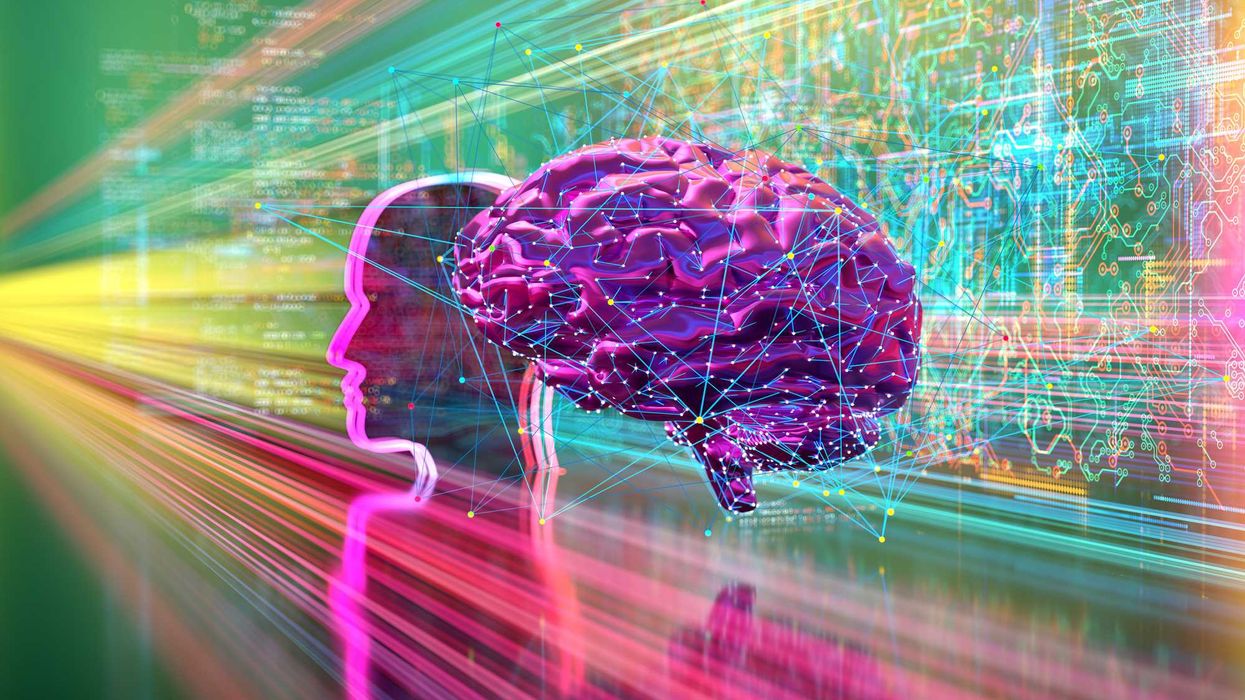
We have recently seen a renaissance of the terminal, a return to a mode we thought we had left behind.
Live Your Best Retirement
Fun • Funds • Fitness • Freedom
Tech is associated with perpetual progress. What explains this seeming regression?
In computing, the new is usually synonymous with the sleek and the visual. The resurgence of the command-line interface, the text-based terminal with its blinking cursor on a monochrome screen, is therefore a development both unexpected and revealing. Developers who spent decades in the comfortable, pixelated embrace of graphical user interfaces are turning to minimalism. This turn is not merely a retreat into nostalgia or a quirk of programmer preference; it is a shift in the cognitive geography between human and machine under the influence of AI.
We find ourselves in a 'man-computer symbiosis.'
The heart of this revival is the emergence of CLI-based AI agents. These are harnesses for large-language models capable of processing language, writing code, and executing tasks. They have transformed the terminal from a niche tool for the specialist into a versatile assistant for the layman.
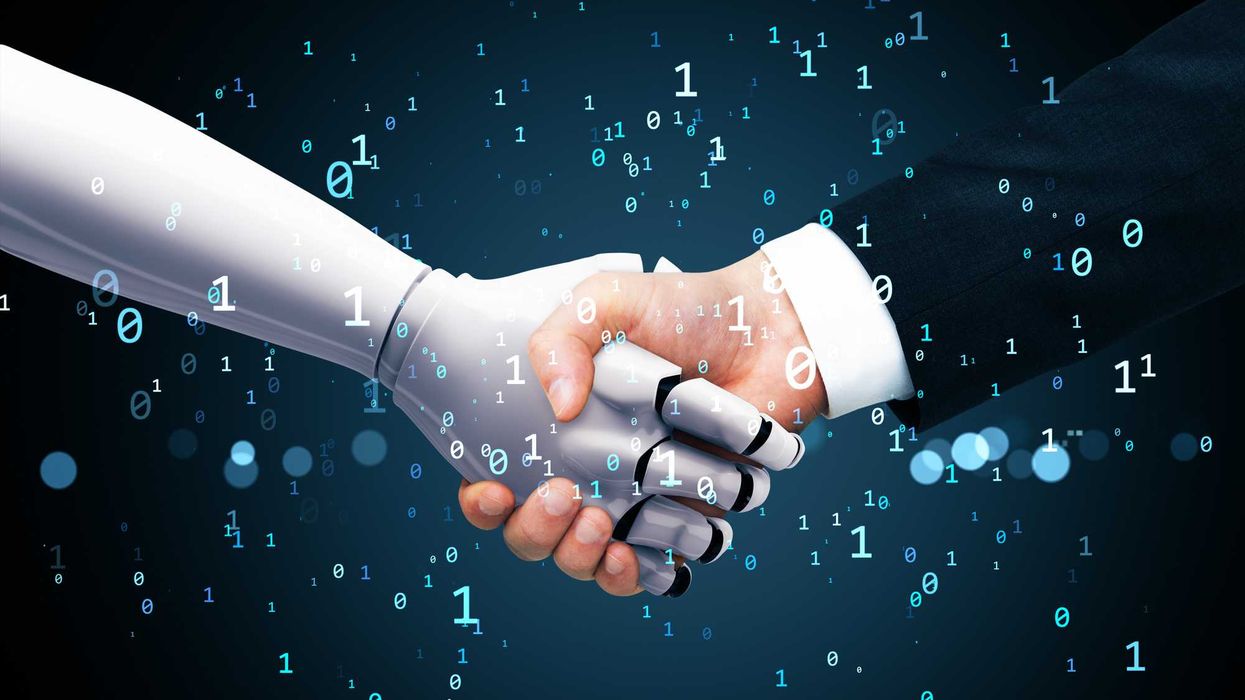
The CLI is quite a different medium from the GUI. While a GUI is spatial and image-driven, the terminal is rooted in language and sequence. We issue commands to achieve practical ends, a mode of thought that encourages a logical, sequential engagement with the world. We find ourselves in a “man-computer symbiosis,” as J.C.R. Licklider imagined in the 1960s, a partnership where the computer frees human intelligence from the drudgery of mundane tasks. The new AI agents handle the keystrokes and complex syntax, allowing a user to manipulate data as if using a “second brain” integrated directly into his workflow.
Sound familiar?
The dream of the automated servant is as old as myth. In the "Iliad," Homer describes the “golden handmaidens” of Hephaestus, endowed with movement and perception, who assisted the god at his forge. Aristotle speculated on a world in which the shuttle might weave without a hand to guide it, eliminating the need for human servitude. For most of history, these possibilities remained fantasies. When computers finally arrived in the mid-20th century, they were indeed programmable servants but esoteric ones, requiring punch cards or green-and-black text terminals.
By the late 1980s, the mouse-and-icons paradigm of Apple’s Macintosh and Microsoft Windows increased the accessibility of computing. The GUI was more intuitive, an interface that did not require you to memorize arcane commands. The general public grew accustomed to clicking buttons, and the terminal was relegated to the realm of system administrators and developers. The comeback of the terminal in the mid-2020s is therefore significant. The terminal has become the stage where an AI that writes and runs code could operate with freedom. We are returning to Aristotle’s vision: Every user now potentially has a digital apprentice.
LLMs are designed to handle text, and the terminal presents the computer’s functions in exactly that form. The CLI is a universal interface, a lingua franca that allows an AI to interact with digital tools without the difficulty of navigating pixel-based GUIs meant for human eyes. Command-line tools possess a Lego-like composability; they can be chained and piped together in ways that GUI applications rarely allow.
An AI agent residing in the terminal benefits from a unified environment with low friction, with no need to hunt through menus; it calculates, types, and executes. Developers are moving away from previously dominant integrated development environments to these command-line agents. Whether OpenAI’s Codex CLI, Anthropic’s Claude Code, or community-driven projects like OpenCode, these platforms share a core mechanism: a conversational command-line where the AI interprets instructions and takes actions on the user’s behalf.
RELATED: Digital BFF? These top chatbots are HUNGRIER for your affection
 peshkov / Getty Images
The effects are immediate and striking. Tasks that once required specialized training, such as querying databases, deploying websites, and analyzing logs, are now performed by marketing teams and graphic designers who simply ask the agent to do it. Natural language has become a new programming language for the many. There is a rise in “conversational computing” with a “text-first” ethos, a digital minimalism that values the intentionality of a text window over the cacophony of apps and notifications. The terminal also becomes a learning environment: Because the AI explains the commands it generates, a novice can pick up understanding that a closed GUI would hide.
Outsourcing problems
Yet this shift brings its own set of concerns. When AI tools handle the details, what do we lose? We face the risk of simulated competence in which people “seem to know much, while for the most part they know nothing,” as Socrates described those reliant on writing. Just as writing externalized memory, these agents externalize problem-solving. There is the danger of de-skilling, of losing the ability to troubleshoot or understand underlying concepts, if the AI always mediates the complexity.
The hope, of course, is that these tools will let us transcend previous limitations. By automating the drudgery, they might unleash more creativity. The terminal is less anthropomorphic than a voice assistant; it remains a text-based workspace in which the human and the computer engage in a loop of iterative help. The CLI renaissance suggests that looking back to older paradigms, such as text over graphics, can better move us forward. Language is the universal interface of knowledge and may now become the universal interface for action. Whether we use this return to cultivate deeper skills or merely as a productivity hack will shape the society we make. We are left to decide whether we will be sedated by convenience or inspired by new frontiers of art and knowledge.
What's Your Reaction?
 Like
0
Like
0
 Dislike
0
Dislike
0
 Love
0
Love
0
 Funny
0
Funny
0
 Wow
0
Wow
0
 Sad
0
Sad
0
 Angry
0
Angry
0

I am just an average American. My teen years were in the late 70s and I participated in all that that decade offered. Started working young, too young. Then I joined the Army before I graduated High School. I spent 25 years in, mostly in Infantry units. Since then I've worked in information technology positions all at small family owned companies. At this rate I'll never be a tech millionaire. When I was young I rode horses as much as I could. I do believe I should have been a cowboy. I'm getting in the saddle again by taking riding lessons and see where it goes.






















Comments (0)