

From Open Encyclopedia To Ideological Weapon: Wikipedia’s Hidden War On Truth
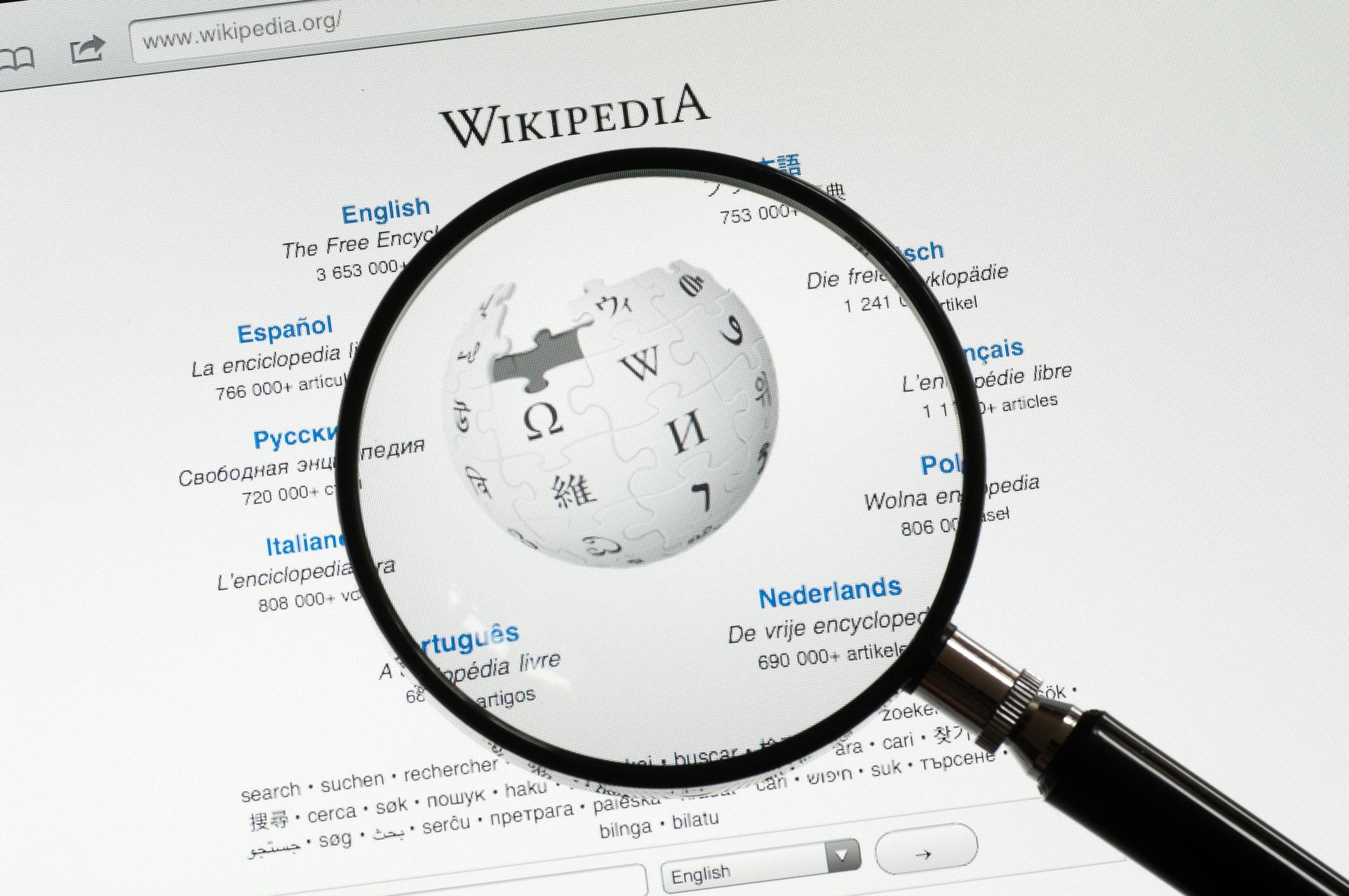
For most of its existence, Wikipedia has been hailed as a marvel of the digital age: a sprawling, collaborative encyclopedia written by anyone and corrected by everyone. An open marketplace of knowledge. A monument to the democratization of information.
Live Your Best Retirement
Fun • Funds • Fitness • Freedom
But democracies — political or epistemic — rarely collapse in an instant. They erode from within. And what my team at the Media Research Center (MRC) has uncovered about how Wikipedia operates, and how carefully it conceals that machinery, should alarm anyone who believes a self-governing society depends on an open, honest information sphere.
Our recent investigation shows that Wikipedia and its educational partner, Wiki Education, have developed a vast, little-known system for shaping, and increasingly weaponizing, the content millions of Americans rely on every day. What we found is not simply concerning; it reveals the quiet architecture of an ideological project. It is also possible that, in attempting to hide its operations, Wikipedia has crossed legal lines that could carry serious consequences.
Wikipedia’s co-founder, Larry Sanger, has said openly that the platform no longer reflects its original mission of neutrality. It has become a curator of political narrative, amplifying the messaging of the left rather than serving as an impartial arbiter of knowledge.
The Blacklist(s)
Wikipedia is transparent about one thing: it blacklists right-leaning news outlets and conservative non-profits. But even this admission obscures more than it reveals. In reality, Wikipedia maintains three tiers of blacklists — Blacklisted, Deprecated, and Generally Unreliable — each designed to exclude certain publishers from the encyclopedia’s information ecosystem.
The “Blacklisted” category is the most severe. Sources here are blocked entirely; links cannot even be submitted for review. This is Wikipedia’s “do not pass go” list. It includes outlets such as the Heritage Foundation, Breitbart News, and the Washington Examiner. Content from these organizations is not debated or fact-checked, it is simply turned away at the gate.
The second level, “Deprecated,” involves sources that are “generally prohibited.” Users attempting to cite to these sources receive warnings, before Wikipedia’s editors almost always reject the suggestions. LifeSiteNews, Newsmax, The Daily Caller, and Blaze Media fall here. The effect is the same as the first list, exclusion, just with a thin procedural layer.
The third category, “Generally Unreliable,” is essentially a blacklist with a tiny escape hatch. Wikipedia discourages use of these sources and directs contributors to “more reliable” outlets. The Daily Wire is stuck in this purgatory: technically citable, but heavily disfavored.
The disparities this system produces are staggering. The Daily Wire has been cited only 445 times across Wikipedia. The New York Times, by contrast, appears in more than 1.6 million citations — meaning Wikipedia cites the Times nearly 4,000 times for every single Daily Wire reference. Similar gaps exist with Newsweek, Politico, and The Washington Post, which are cited hundreds of times more frequently than their far more reliable conservative counterparts.
More broadly, MRC research shows that Wikipedia cites to left-leaning outlets almost 20 times more often than to right-leaning outlets. Trust in the media is at an all-time low, specifically because of the bias injected into news stories. Wikipedia intentionally magnifies that bias, resulting in gross distortions of reality. We have documented Wikipedia’s smears against many political figures, including President Donald Trump, Secretary Pete Hegseth, and Charlie Kirk.
When gatekeepers designate half the country’s media ecosystem — representing tens of millions of readers — as inherently “unreliable,” the result is not a pursuit of truth. It is a systematic silencing of outlets disfavored by the ideological left. The encyclopedia built on openness now thrives on exclusion.

skynesher. Getty Images.
The Student Army
Yet the core of the MRC’s latest findings lies not in the blacklist itself, but in the machinery feeding content into Wikipedia: Wiki Education, a California nonprofit created as a spin-off of the Wikimedia Foundation, operating with its funding, personnel, and blessing.
Wiki Education recruits college professors to assign Wikipedia editing as coursework. Since 2010, more than 145,000 students have participated, generating over 120 million words of content. On the surface, this could be a civic success story — young people helping build a shared public resource.
But the reality, based on the courses Wiki Education recruits and supports, is far more ideological. Classes such as Queering Religion, Critical Race Feminisms, Queer of Color Critique, Gender and Identity in STEM, and similarly activist-oriented seminars are not fringe exceptions; they are typical of the curriculum Wiki Education promotes.
These disciplines are not merely academic; they are frameworks for political activism. And the content they generate — guided by ideology rather than neutrality — flows directly into Wikipedia. The encyclopedia becomes the final destination for arguments crafted within contemporary left-wing academic theory.
The Taxpayer Foots The Bill
Even more astonishing is that this ideological pipeline is largely underwritten by taxpayers. Because Wiki Education embeds itself in public universities, it leverages state-funded faculty, classrooms, and infrastructure to funnel student labor into Wikipedia. Students believe they are learning digital literacy; in practice, many are producing politicized content for a global platform.
The pattern extends to Wiki Education’s leadership. Every traceable political donation from its senior staff and board flows to Democratic candidates, progressive PACs, and left-aligned advocacy groups. While not illegal, it reveals the institutional alignment shaping the organization’s priorities.
A Potential Legal Problem
This coordinated system — Wikipedia funding Wiki Education, Wiki Education training student editors, students supplying content that reinforces Wikipedia’s ideological filters — creates not only an informational problem but potentially a legal one.
When Wikipedia spun off Wiki Education in 2013, the structural ties between the two organizations remained unusually close. Yet Wikipedia has insisted in court filings, sworn under penalty of perjury, that it is merely an “interactive computer service,” not a “publisher.” It did so to seek the liability protections of Section 230 of the Communications Decency Act.
If Wikipedia effectively controls Wiki Education as an alter ego — training, directing, and financing its editorial labor — then it may have misrepresented its true operations under oath. Filing false statements in court is a crime under state and federal law. Attorneys general in jurisdictions where Wikipedia has invoked Section 230, like the state of Florida, may have ample reason to investigate those claims. And while the U.S. Department of Justice has its hands full unwinding the malfeasance committed during the Biden administration, Attorney General Pam Bondi might be interested in this, too.
Why It Matters
Wikipedia is not just a reference site. It is infrastructure. It consistently dominates Google search results — Google itself being a company that aggressively manipulates search results to push its own ideology. And modern AI systems, including chatbots, draw heavily from Wikipedia’s content pipelines. When Wikipedia’s entries tilt, so does the entire information ecosystem.
Its blacklist system also has downstream economic effects. Being labeled “unreliable” reduces an outlet’s visibility, decreases traffic, and predictably harms ad revenue. The encyclopedia’s judgments ripple outward into media markets and public perception.
Given these stakes, Congress should investigate. So should the Federal Trade Commission. And attorneys general, especially in cases where Wikipedia has defended its corporate structure under oath, should scrutinize whether the organization misrepresented how it operates.
Wikipedia has every right to express ideological preferences. But it does not have the right to cloak them behind false claims of neutrality to donors, to engage in deceptive or anticompetitive practices, or to misrepresent its structure in legal proceedings.
Transparency requires accountability. And it is long past time for the public to understand what Wikipedia has become.
* * *
Dan Schneider is Vice President for Free Speech at the Media Research Center.
The views expressed in this piece are those of the author and do not necessarily represent those of The Daily Wire.
What's Your Reaction?
 Like
0
Like
0
 Dislike
0
Dislike
0
 Love
0
Love
0
 Funny
0
Funny
0
 Wow
0
Wow
0
 Sad
0
Sad
0
 Angry
0
Angry
0

I am just an average American. My teen years were in the late 70s and I participated in all that that decade offered. Started working young, too young. Then I joined the Army before I graduated High School. I spent 25 years in, mostly in Infantry units. Since then I've worked in information technology positions all at small family owned companies. At this rate I'll never be a tech millionaire. When I was young I rode horses as much as I could. I do believe I should have been a cowboy. I'm getting in the saddle again by taking riding lessons and see where it goes.














Comments (0)