

United States v. Hemani: SCOTUS to Hear Arguments in Important Second Amendment Case
Premium domains for sale
Freedom Is Back In Style
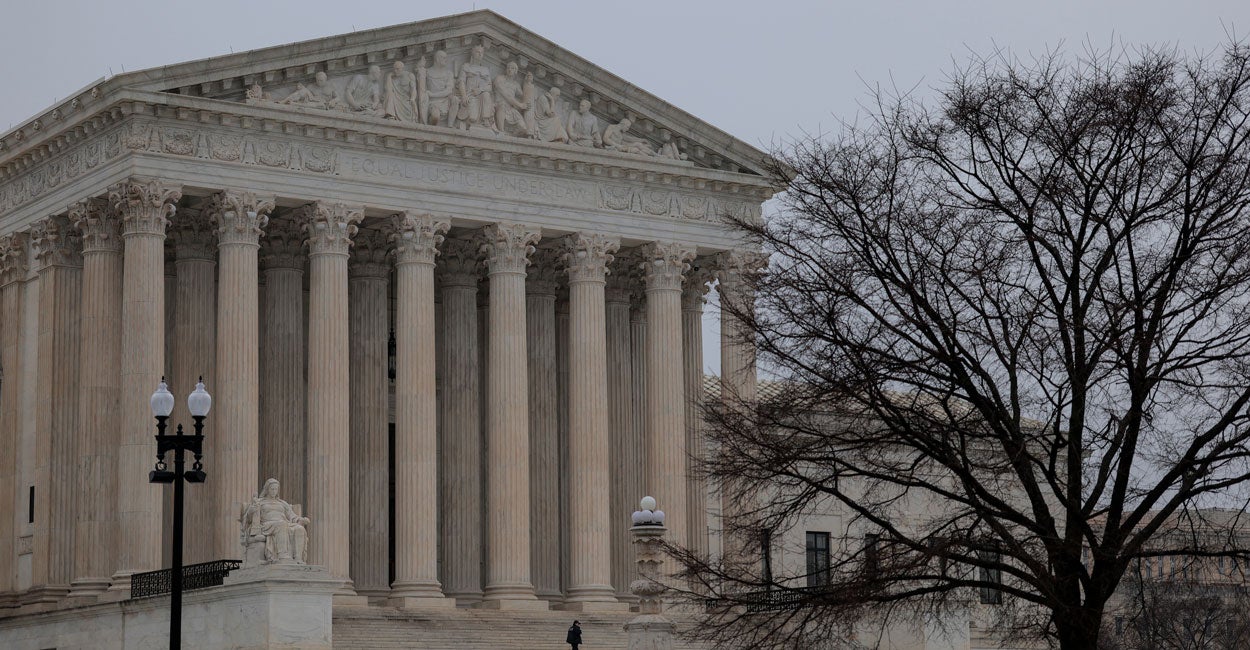
As the Supreme Court returns to hearing oral arguments this week, it will take up a technical—yet consequential—criminal law case.
Freedom Is Back
In Style
Premium domains for sale
Freedom Is Back
In Style
Premium domains for sale
In United States v. Hemani, the Justices will consider whether 18 U.S.C. § 922(g)(3), which bars anyone “who is an unlawful user of or addicted to any controlled substance” from “possess[ing] … any firearm or ammunition,” violates the Second Amendment.
If this provision sounds familiar, it should. That’s because the Justice Department charged Hunter Biden with, and a jury convicted him of, violating it—before his dad pardoned him.
In this case, the federal government charged Ali Hemani with being an “unlawful user” of marijuana—which is a controlled substance—based on his statements that he used it several times a week—though he provided no more details about frequency, quantity, or timing.
While it’s irrelevant to the specific charges at issue here, the government also suspects Hemani, who traveled to Iran to mourn the death of Iranian Revolutionary Guard Corps General Qasem Soleimani, of having terrorist ties and dealing drugs to support and fund his terror-related activities.
Nonetheless, the Fifth Circuit Court of Appeals agreed with Hemani—based on its rationale in a previously decided case—that this statutory provision does violate the Second Amendment. So, the Justice Department asked the Supreme Court to hear the case, which it agreed to do.
In addition to challenging the statute on Second Amendment grounds, Hemani also argues that the statute is unconstitutionally vague because it does not clearly define who qualifies as an unlawful user of a controlled substance who, in turn, is prohibited from possessing a firearm. Is using a controlled substance once a week enough? Once a month? Once a year? Once a decade? Hemani says that no one can know.
As for the Second Amendment arguments, both Hemani and the government point to the Supreme Court’s recent Rahimi decision where the Court upheld a different provision (subsection (8)) of 18 U.S.C. § 922(g), which allows those subject to a domestic violence restraining order to be disarmed while subject to such an order.
There, the Court made clear that to determine whether a certain statutory provision violates the Second Amendment it will look to history and tradition to help make that determination. Moreover, the Court said that while an exact “historical twin” is not required for the provision to comport with the Constitution, there must be an adequate “historical analogue.” This prompted disputes among the Justices about the level of generality—or how close—a historical practice must be to qualify as a historical analogue and the role that post-ratification practices should play in the Court’s evaluation.
Here, the government argues that founding practices—such as criminal vagrancy laws, civil commitment, and sureties—designed to deal with habitual drunkards provide the appropriate historical analogues.
It also argues that post-ratification history supports its position by noting that illegal use of controlled substances did not become a problem until the late 19th or early 20th centuries. And once states took notice of it, most passed legislation to temporarily disarm those who used or abused those substances.
Finally, the government notes that even if the Justices agree with all of Hemani’s arguments, 18 U.S.C. § 925(c) provides a mechanism for a person to ask the Attorney General to essentially declare that he is not prohibited from possessing a firearm. And if the Attorney General denies the application, the person can seek judicial relief.
For many years, this process was practically unavailable because the Attorney General had delegated authority to the ATF to review these applications. And Congress had passed appropriations’ riders to prohibit funds from being used for this purpose. But AG Pam Bondi has withdrawn the delegation and has reinstituted the review process.
For his part, Hemani, of course, disagrees with all the government’s assertions.
It’s also notable that this case has scrambled the usual ideological alliances with deep blue states such as California and Illinois filing an amicus brief in support of the Trump Justice Department’s position and other entities, who are usually supportive of the Trump Administration’s polices (though not all are), filing briefs in support of Hemani.
Regardless, two things are certain: This will be a consequential case no matter what the Justices decide, and it will be yet another important marker along the way where the Justices will elaborate how history and tradition should be used by courts to inform their constitutional decisions.
The post United States v. Hemani: SCOTUS to Hear Arguments in Important Second Amendment Case appeared first on The Daily Signal.
What's Your Reaction?
 Like
0
Like
0
 Dislike
0
Dislike
0
 Love
0
Love
0
 Funny
0
Funny
0
 Wow
0
Wow
0
 Sad
0
Sad
0
 Angry
0
Angry
0

I am just an average American. My teen years were in the late 70s and I participated in all that that decade offered. Started working young, too young. Then I joined the Army before I graduated High School. I spent 25 years in, mostly in Infantry units. Since then I've worked in information technology positions all at small family owned companies. At this rate I'll never be a tech millionaire. When I was young I rode horses as much as I could. I do believe I should have been a cowboy. I'm getting in the saddle again by taking riding lessons and see where it goes.
Premium domains for sale








Comments (0)