

Here Are the Latest Developments in Charlie Kirk Murder Case
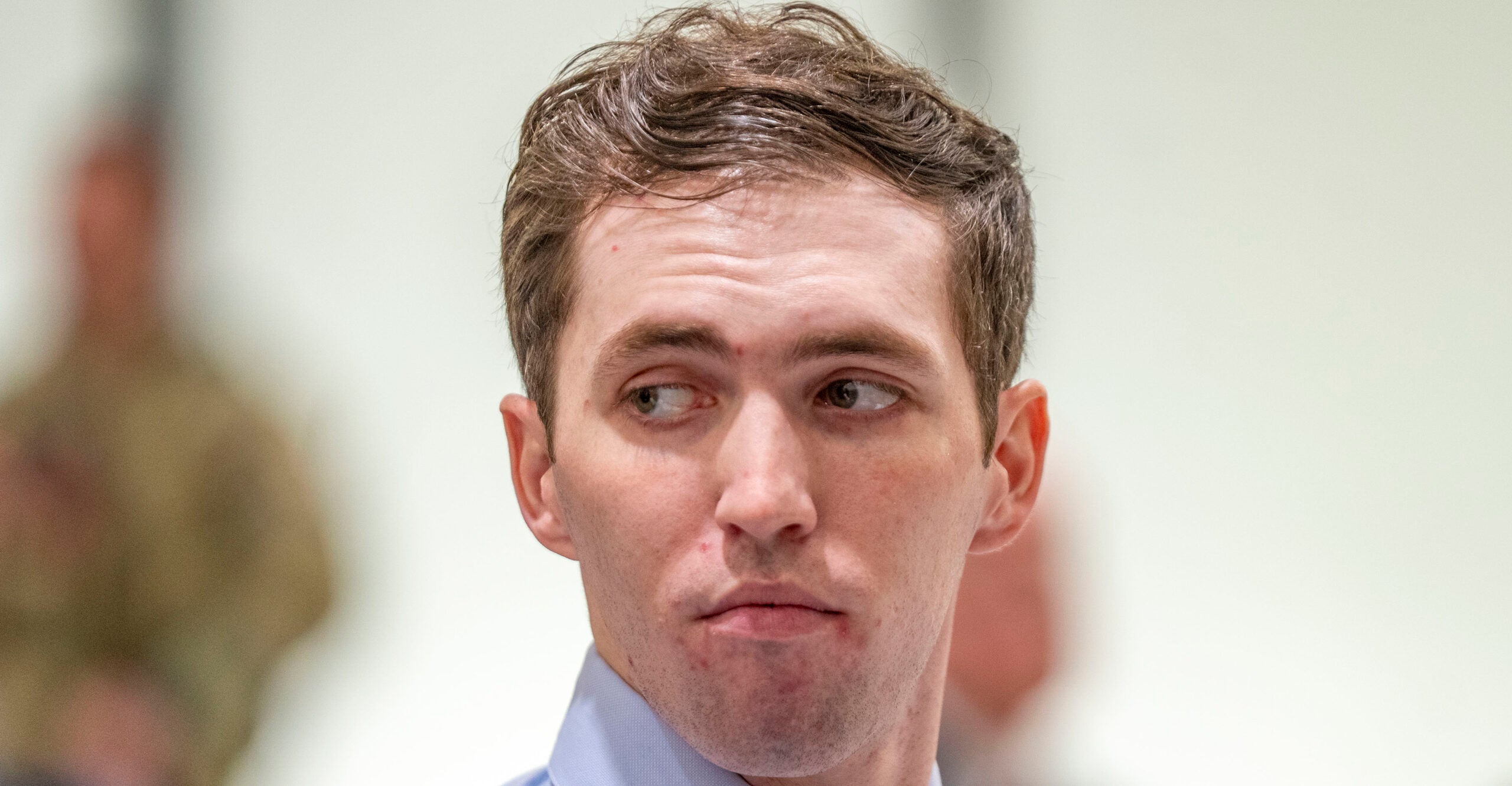
Setting aside all the conspiracy theories about who shot Charlie Kirk, Tyler Robinson stands accused by the State of Utah of committing that heinous crime. And his case had a flurry of pretrial activity and a rare and interesting motion by the defense that could shake up, or at least delay, the trial.
Live Your Best Retirement
Fun • Funds • Fitness • Freedom
The defense filed a motion to recuse the entire Utah County Attorney’s Office from handling the prosecution because one of the deputy prosecutor’s adult children (presumably a teenager or college aged student) was at the Utah Valley University event when Kirk was shot.
Even though the adult child (whom I’ll refer to as “he”) didn’t see the shooting, never saw Kirk after he was shot, nor saw him being evacuated from the crime scene, the defense maintains that the mere fact that he texted his father to say “Charlie got shot” and other non-specific, non-eye witness comments, means that not only should the deputy prosecutor be recused from the case, the entire Utah County Attorney’s Office should be ordered off of the case.
In response to the defense’s creative motion to recuse, the prosecution claims that the adult child was positioned 85 feet away from Charlie Kirk and out of the field of vision of the shooter when Kirk was shot. The adult child was looking at the audience, “heard a loud sound, like a pop,” then heard someone yell “he’s been shot.” He never looked back at Kirk and did not see his wound nor did he see Kirk carried from the scene. He texted his father, a deputy prosecuting attorney who was with the elected County Attorney Jeff Gray at a conference in Ogden.
After news of the shooting, both the deputy prosecutor and Gray left the conference (at separate times) and drove to the law enforcement command post that had been set up at UVU. The prosecution also claims that although the adult child “was scared at the time,” there has been “no lasting trauma from the event” in a way that has hindered the adult child’s normal activities.
But that wasn’t good enough for the defense. The familial relationship in and of itself between the deputy attorney and his adult child is a legal non-starter.
The defense’s motion to disqualify the Utah County Attorney’s Office was submitted Dec.10, and the opposition to the defense’s motion was submitted Jan. 5. The judge presiding over the case, Judge Tony Graf of Utah’s 4th District Court, decided to hold a hearing on the defense’s motion in a Jan. 16 hearing.
The nearly five-hour hearing was inconclusive on the defense’s motion. The defense questioned Gray, the chief prosecutor, on how much his deputy attorney told him about the adult child who was at UVU the day of the shooting. The court concluded the hearing without a decision and set another evidentiary hearing to Feb. 3. At that hearing, Gray will be further questioned, and very likely the deputy county attorney and his adult child are expected to testify as well.
The thrust of the defense’s argument, which the court took seriously, is this: the adult child’s experience raises an “objective” question as to whether or not the circumstance presents a “significant risk” that the attorney’s “personally family interests may materially limit” his ability to ethically represent the State of Utah.
They also argue that the defense makes a strong claim about the attorney’s inability to separate his role as a father from that of an attorney. They argue that expecting the attorney to “separate his role as a [father] with the wholly natural instinct to protect and shield his [adult child] from past and future harm, from his role in the prosecution of the individual alleged to have caused harm to many—including his [adult child], is not practical and defies common human experience.” They relied on the “harrowing” aftermath of the event for witnesses, and “even those who did not see the shooting as it happened,” combined with a paternal desire to shield a child from harm, as context for this attorney’s conflict of interest.
One of the weaker arguments made by the defense is that since the Utah County Attorney’s Office noticed their intent to seek the death penalty “less than one week after” the attorney’s communications with his adult child on the day of the murder, that may serve as evidence of “strong emotional reactions” from “the county attorney and the entire prosecution team,” who were at that time informed of the attorney’s child’s personal experiences at the UVU.
These are creative arguments and what you would expect from a top-notch defense team.
The government’s response is compelling and to me, a strong argument. There are lots of actual witnesses to the shooting and other forensic evidence tying the defendant to the murder.
The deputy attorney’s child is not a material witness in the case, his observations are not relevant and what he heard amounts to hearsay, and as such he would not offer any meaningful or substantive and necessary testimony as a witness.
Since the adult child is not a witness the government plans to call in the case, the prosecution argues that “any risk that Mr. [deputy attorney’s] representation of the State will be materially limited because of his relationship with his [child] is slim to none.”
As to the assertion that the office filed notice of the death penalty because it was influenced by the adult child through his father to the elected prosecutor, the Utah County Attorney’s Office responded (as you might expect) that their intent to seek the ultimate punishment had nothing to do with the adult child’s presence at the UVU event. They noted that when Gray ran for elected office three years earlier, he ran on a commitment to seek the death penalty in appropriate cases, and he has learned over the years subsequent to his election that waiting to file notice of seeking the death penalty when the evidence is substantial only fuels speculation and misinformation. Those are strong arguments and ones the court will have to grapple with at the next hearing.
If the Utah County Attorney’s Office were to be removed from the case, the preliminary hearing would be delayed, further delaying the case as a new prosecutor would need to be appointed and have time to prepare the case.
One last thing to consider: The Utah County Attorney’s Office is one of the largest in the state, with expertise in cases like Robinson’s. The chief prosecutor for Utah County previously spent years working in the Utah Attorney General’s Office, handling felony appeals, and has argued before the U.S. Supreme Court on state cases. The largest prosecutor’s office in the state is in Salt Lake City.
The hearing on Feb. 3 will certainly be interesting. Expect more creative motions and twists and turns as this case proceeds.
The post Here Are the Latest Developments in Charlie Kirk Murder Case appeared first on The Daily Signal.
What's Your Reaction?
 Like
0
Like
0
 Dislike
0
Dislike
0
 Love
0
Love
0
 Funny
0
Funny
0
 Wow
0
Wow
0
 Sad
0
Sad
0
 Angry
0
Angry
0

I am just an average American. My teen years were in the late 70s and I participated in all that that decade offered. Started working young, too young. Then I joined the Army before I graduated High School. I spent 25 years in, mostly in Infantry units. Since then I've worked in information technology positions all at small family owned companies. At this rate I'll never be a tech millionaire. When I was young I rode horses as much as I could. I do believe I should have been a cowboy. I'm getting in the saddle again by taking riding lessons and see where it goes.




Comments (0)