

Here’s Why a Strong Japan is Key to Peace in East Asia
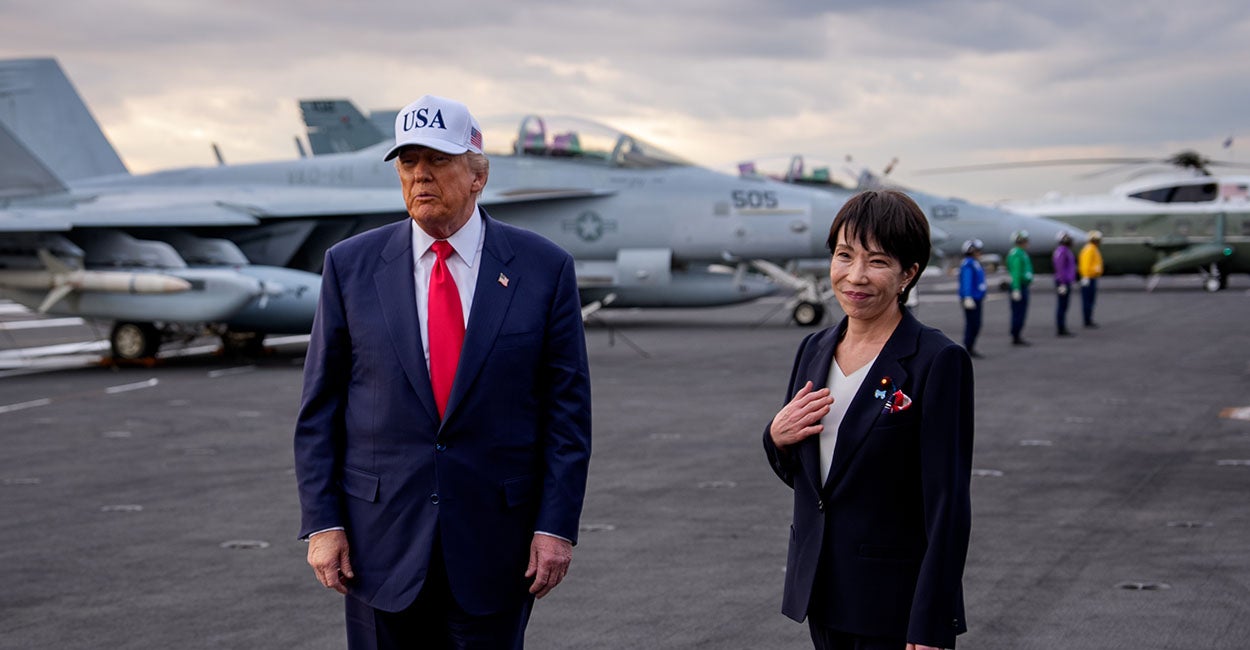
At the Munich Security Conference over the weekend, all eyes were on the global powers.
Live Your Best Retirement
Fun • Funds • Fitness • Freedom
One of the headlines from the conference was a comment made by Chinese Foreign Minister Wang Yi.
Answering a question at the Munich Security Forum, Chinese foreign minister Wang Yi warned Japan against what he called the ghosts of militarism. As the biggest victim of Japan’s wars of aggression in the 19th century, it’s understandable that the Chinese are nervous about Japan rearming.
However, Japan’s current political culture is worlds apart from what it was in the 1930s. Wang’s warnings are less about past grievances and more about modern-day issues. China views Taiwan as a renegade province, and any perceived effort to interfere with reunification is seen as a threat to Chinese security.
While Wang clearly hopes to intimidate Japan, his remarks may backfire and embolden the American ally. The United States should capitalize on this by strengthening its alliances in East Asia.
Japan is still a pacifist country and, despite its recent efforts to rearm, has not expressed interest in wars of aggression or conquest.
Prime Minister Sanae Takaichi’s comments that Japan considers Taiwan’s security to be in its national interest come in the context of repeated threats and incursions by China toward Taiwan. China’s history of threatening neighbors calls into question Wang’s sincerity.
When China threatens Taiwan, the Philippines, India, or any other country, it’s perfectly fine.
When Japan stands up to China’s aggression, it’s dangerous militarism.
A more realistic read into Wang’s comments is that they are meant to intimidate Japan out of intervening in an invasion of Taiwan.
However, China should not be confident that intimidation will be effective. Their recent efforts to admonish Takaichi resulted in the Japanese electorate rewarding her Liberal Democratic Party with a large majority in this month’s election.
Perhaps the Chinese should think twice before threatening the Japanese prime minister.
China’s aggressive diplomacy has proved effective against smaller nations.
Vietnam, the Philippines, and many other nations in the Indo-Pacific have been unable to stop Chinese incursions into their Exclusive Economic Zones.
Why should Americans care about what China does in East Asia?
For starters, the U.S. economy is heavily dependent on Taiwan for the production of advanced computer chips used in various technologies, including military equipment.
While the Trump administration aims to expand chip production in the U.S., it will take years before domestic production can meet demand. In the meantime, the U.S. needs to make sure Taiwan remains free from Chinese conquest.
A strong U.S. alliance in East Asia, highlighted by Japan, would give China second thoughts about making a move on Taiwan.
Another reason why Americans should care about East Asia is how the rest of the world responds if the U.S. fails to act in the case of Chinese aggression. If the U.S. doesn’t uphold commitments to allies in the region, hostile powers in other parts of the world may think the US won’t react to other provocations around the world. Leading to more conflict globally, not less.
A reenergized Japan could band together with smaller nations to push back against Chinese intimidation. A strong Japan allows the U.S. to spread the burden of defense, especially important given American commitments elsewhere.
Takaichi’s goal is to increase military spending and amend the constitution to allow Japan’s military to play a more active role in defending other nations, such as deploying troops to defend Taiwan in case of a Chinese invasion.
The U.S. should consider further sales of military equipment to the Japanese Self-Defense Forces to make sure Japan is prepared to take a larger role in the region.
China has its eyes on Taiwan, as it has for decades. For Wang and the rest of the CCP, taking Taiwan is an imperative. The rise of a strong Japanese government, willing to defend Taiwan, complicates China’s goals.
To ensure the national security of itself and its allies, the United States should assist Taiwan and Japan in their efforts to rearm.
We publish a variety of perspectives. Nothing written here is to be construed as representing the views of The Daily Signal.
The post Here’s Why a Strong Japan is Key to Peace in East Asia appeared first on The Daily Signal.
What's Your Reaction?
 Like
0
Like
0
 Dislike
0
Dislike
0
 Love
0
Love
0
 Funny
0
Funny
0
 Wow
0
Wow
0
 Sad
0
Sad
0
 Angry
0
Angry
0

I am just an average American. My teen years were in the late 70s and I participated in all that that decade offered. Started working young, too young. Then I joined the Army before I graduated High School. I spent 25 years in, mostly in Infantry units. Since then I've worked in information technology positions all at small family owned companies. At this rate I'll never be a tech millionaire. When I was young I rode horses as much as I could. I do believe I should have been a cowboy. I'm getting in the saddle again by taking riding lessons and see where it goes.





















Comments (0)