

How Universities Divert Federal Science Grants To DEI And Administrative Bloat
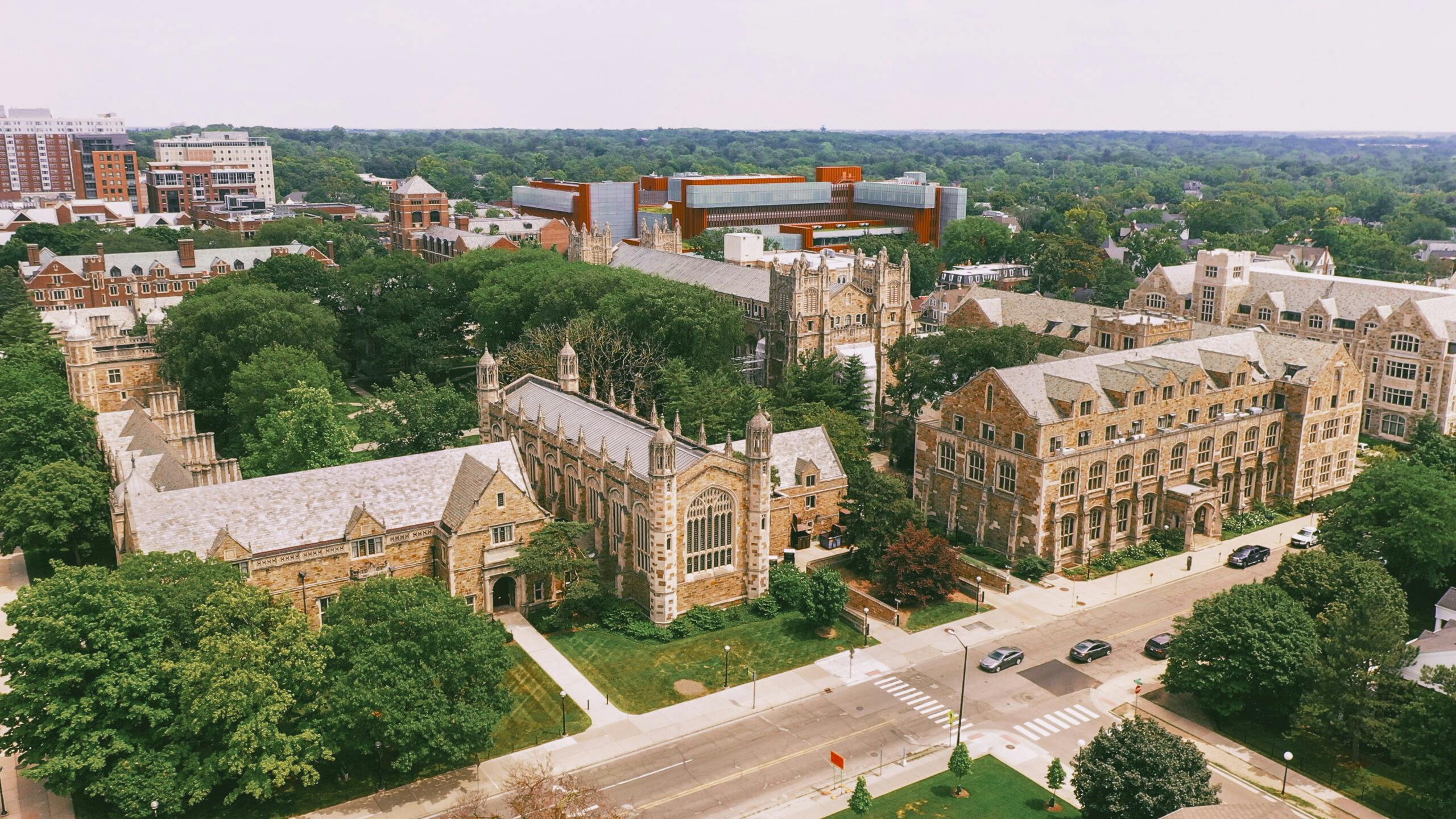
The federal government awards research grants to universities to make scientific breakthroughs, but for every dollar that it has spent on science, up to 70 additional cents is diverted to administrators, a new study found.
Live Your Best Retirement
Fun • Funds • Fitness • Freedom
That allows the universities to essentially extort the federal government by claiming that the funding is necessary for public health, while gobbling up a large portion for DEI, hiring more deans, and unrelated campus programs.
Current policy provides an overhead rate of a whopping 50 to 70%, paid on top of the actual scientific grant, dramatically ballooning the cost to taxpayers and creating a college industrial complex, watchdog group Open the Books said in a new report. The costs are a “black box” that is absorbed by taxpayers, but has no public accounting, the group said.
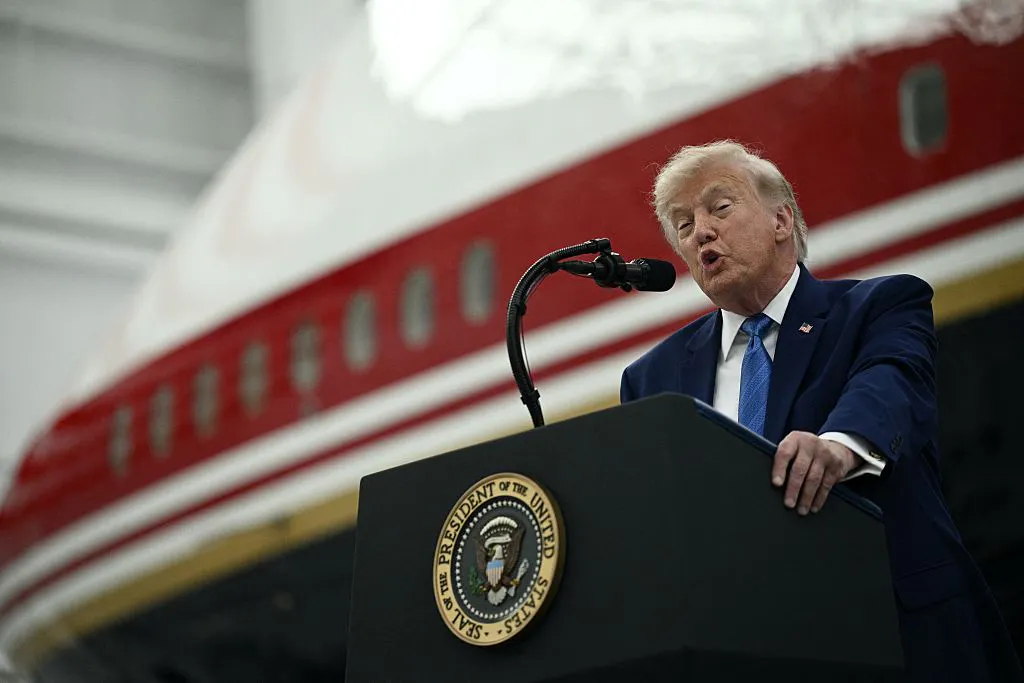
The findings come as the Trump administration seeks to rein in the partisanship of universities and find ways to reduce waste without impacting important scientific research. The Trump administration has proposed reducing the overhead rate to 15%, but the move has been stalled by a court ruling after university groups sued.
The University of Michigan-Ann Arbor, one of four universities that Open the Books examined, had a negotiated overhead rate of 55 to 56%. It received $9.4 billion in federal research funding between 2013 and 2023, up to $2.3 billion of which was siphoned off for “overhead,” the report — first obtained by The Daily Wire — found. During that time, the university’s administrative staff, but not professors, swelled, and DEI staff climbed from 27 to 179.
One grant was for $2.5 million to take a curriculum from the left-wing Southern Poverty Law Center and turn it into a middle school anti-racism program about “white supremacy” and “solidarity.” That project alone brought in a whopping $1,173,910 in additional money for the university thanks to its 56% overhead rate.
Rutgers had an overhead rate as high as 57%. Of $3.8 billion in science grants, as little as $2.4 billion was left for direct costs. Concurrent with the influx of funding, its staff grew by 10,000 — only a quarter of whom were teachers.
The high overhead rates give universities a financial incentive to apply for grants even if the research is not useful or high-quality. Recent reports found that only 46% of 53 cancer studies could be replicated, and most research in psychology journals did not replicate. That means the conclusions are so dubious that when someone else took the same steps, they didn’t get the same results.
Christmas Sale – Get 40% off New DailyWire+ Annual Memberships
A National Association of Scholars report described the perverse incentives: “While scientists pursue research funding for discovery, institutions want research grants to generate revenue. Because scientists are employees, and administrations are employers, administrations’ interests will always have the upper hand. This is the means whereby academic scientists are reduced to being generators of revenue, not agents of discovery.”
That group said that in 2023, the federal government gave universities $60 billion in research grants, $22 billion of which went to overhead. If the overhead rate was reduced to 15%, it would have freed up $14 billion, which could be used on actual research or simply to save taxpayer dollars.
The National Science Foundation spent $7.4 billion in research and development grants in fiscal 2024. Although the Department of Health and Human Services, and its arms like the National Institutes of Health, make more awards to colleges, there is additional bloat in NSF funding because of a congressional requirement, Open the Books found.
Congress, through a bill called the America COMPETES Reauthorization Act of 2010, required those grants to include what it calls “broader impacts” work, requiring scientists to do DEI and public relations work. “These requirements fundamentally transformed universities and their approach to scientific research,” the report said.
For example, a $600,000 grant for a chemistry project called “Unravelling the Nature of Elusive Transition Metal-oxyl Complexes” now included a hidden slush fund, under “broader impacts,” for “recruiting Underrepresented Minority (URM) high school students to STEM fields.” A $1.5 million project to develop a dog-like robot at Rutgers University had a “broader impacts” slush fund to “leverage diversity programs at Rutgers University to recruit and support underrepresented groups.”
University of North Carolina-Chapel Hill received $7.7 billion in science grants over a decade and had an overhead rate of 52-55%. A $510,000 chemistry grant for “vapor deposition techniques” was siphoned off for “promoting LGBTQ+ participation in scientific research and in society as a whole.”
The DEI programming was concealed under line-items that appeared to be for legitimate scientific research. “When critics of Trump’s plan to eliminate NSF discuss funding cuts to science, they don’t mention that funds for actual scientific discovery are already being cut into with Congressionally mandated, ideologically motivated, side projects,” Open The Books said.
Trump has attempted to remove identity-based “broader activity” mandates, but some recent grants have included them nonetheless, Open The Books found.
Universities are fighting the 15% overhead cap. But at a minimum, “universities, which have suffered reputational blows from hard-left campus activism and programmatic activities in recent years, could additionally volunteer to release data on overhead flows and amounts to regain the trust that taxpayer dollars are being put to good use,” the report said.
It is colleges — not the Trump administration — who have been anti-science by diverting limited funds, it concluded, saying “hijacking grant proposal requirements to further ideological goals” is “a secret tax on research and development.”
Related: New Zealand Scrapped All ‘Social Science’ Funding. Trump Could Too.
What's Your Reaction?
 Like
0
Like
0
 Dislike
0
Dislike
0
 Love
0
Love
0
 Funny
0
Funny
0
 Wow
0
Wow
0
 Sad
0
Sad
0
 Angry
0
Angry
0

I am just an average American. My teen years were in the late 70s and I participated in all that that decade offered. Started working young, too young. Then I joined the Army before I graduated High School. I spent 25 years in, mostly in Infantry units. Since then I've worked in information technology positions all at small family owned companies. At this rate I'll never be a tech millionaire. When I was young I rode horses as much as I could. I do believe I should have been a cowboy. I'm getting in the saddle again by taking riding lessons and see where it goes.



















Comments (0)