

All Eyes On The Strait Of Hormuz — Is America About To Move On Iran’s Coastline?
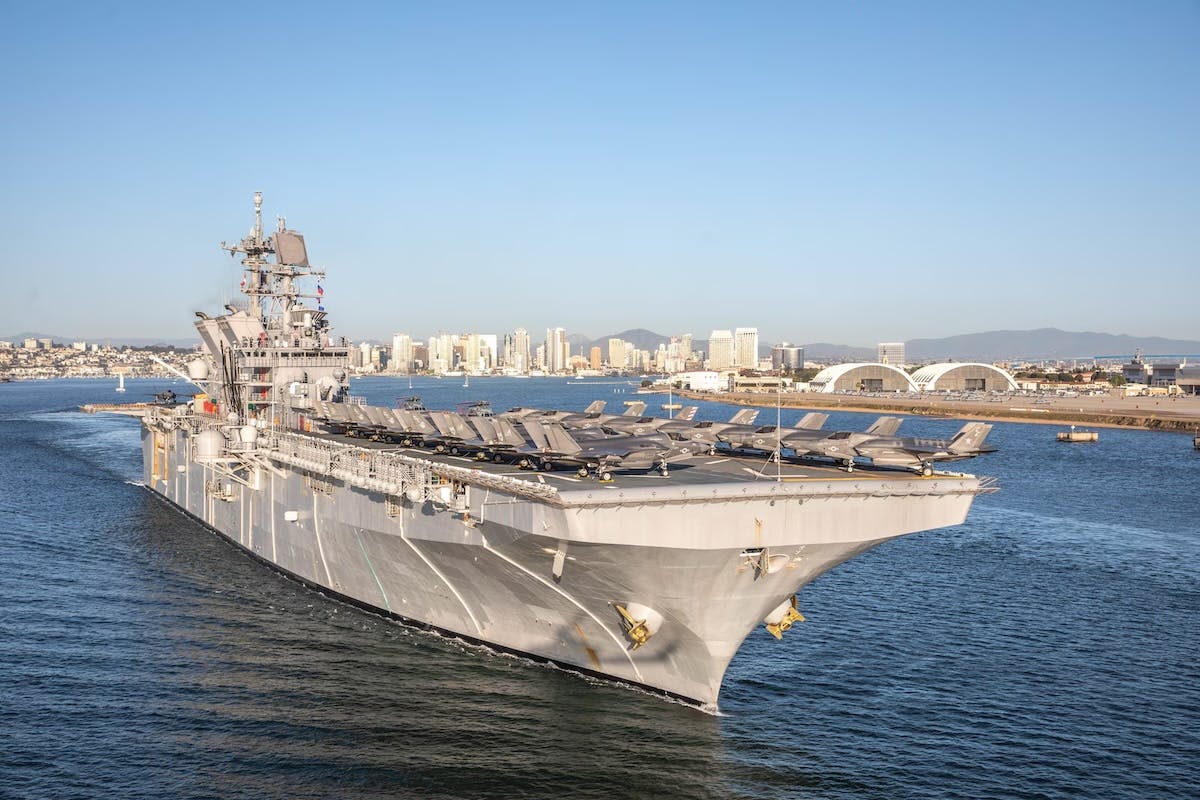
The United States is reportedly expanding its armada in the Middle East, sending warships and thousands of Marines toward the Strait of Hormuz as attacks on commercial vessels disrupt traffic through the critical shipping lane that carries roughly one-fifth of the world’s oil supply.
Live Your Best Retirement
Fun • Funds • Fitness • Freedom
U.S. Secretary of War Pete Hegseth approved a request to deploy an Amphibious Ready Group and an attached Marine Expeditionary Unit consisting of several warships and thousands of Marines and sailors, The Wall Street Journal reported.
An Amphibious Ready Group typically includes an assault ship, two transport docks, and a support vessel carrying an embarked Marine Expeditionary Unit of about 2,200 Marines, along with additional aircraft, according to The War Zone.
At a press briefing on Friday, Hegseth acknowledged the challenges posed by Iranian attacks on ships in the Strait of Hormuz and stated confidently that “we don’t need to worry about the strait.”
“Iran is exercising sheer desperation in the Strait of Hormuz,” Hegseth said. “It’s something we are dealing with and have been dealing with, and we don’t need to worry about the strait.”
According to the report, the Japan-based USS Tripoli and its embarked Marines are heading toward U.S. Central Command’s area of responsibility, which includes the Middle East and the waters surrounding the Persian Gulf.
Photos released March 12 by U.S. Indo-Pacific Command show sailors aboard the USS Tripoli conducting live-fire exercises ahead of the deployment.
The Navy said the training was intended to “sharpen warfighting proficiency and ensure U.S. naval forces remain ready to operate across the Indo-Pacific.”
Sailors aboard the USS Tripoli (LHA 7) conduct a live-fire exercise, March 12, 2026.
Routine live-fire training sharpens warfighting proficiency and ensures U.S. naval forces remain ready to operate across the Indo-Pacific. ????⚓
???? U.S. 7th Fleet AOR
???? MC3 Colten Bradley… pic.twitter.com/JoNx9ICfwN— U.S. Indo-Pacific Command (@INDOPACOM) March 13, 2026
The USS Tripoli is an America-class amphibious assault ship operating alongside the guided-missile cruiser USS Robert Smalls and destroyer USS Rafael Peralta, according to the Navy. Launched in 2017, the ship can carry F-35B fighter jets, MV-22 Osprey aircraft, and helicopters while supporting amphibious assaults and Marine Expeditionary Unit operations.
Military analysts say such a force could be used for a range of missions if tensions escalate, including clearing naval mines, protecting commercial vessels, or conducting operations along Iran’s coastline to stop attacks on shipping.
One possible target frequently discussed by analysts is Kharg Island, Iran’s primary oil export terminal and a critical hub for the country’s energy exports. Located about 16 miles off Iran’s coast, the island serves as the loading point for roughly 90% of the regime’s fuel exports.
Cutting the regime off from Kharg Island would deal a devastating blow to Iran’s economy, though seizing it may require boots on the ground and significant equipment, including air defenses.
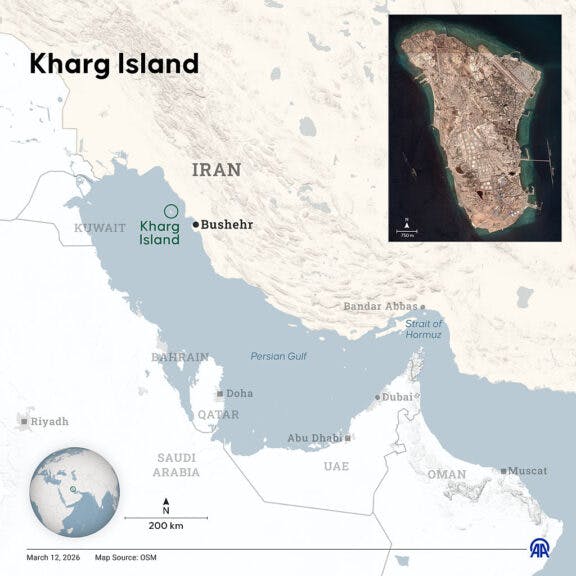
Kharg Island (Photo by Elif Acar/Anadolu via Getty Images)
Despite its importance, Trump told Fox News Radio host Brian Kilmeade on Friday that seizing the Kharg Island was not currently a top priority.
“It’s not high on the list, but it’s one of so many different things, and I can change my mind in seconds,” Trump said.
Others have speculated that a Marine Expeditionary Unit could instead be used to secure sections of Iran’s coastline to prevent further attacks on vessels moving through the strait.
Hegseth pushed back on suggestions that Iran has already mined the waterway, through which roughly one-fifth of the world’s oil supply passes.
“We’ve heard them talk about it, just like you’ve reported recklessly and wildly about it,” he said. “But we have no clear evidence of that.”
Treasury Secretary Scott Bessent also suggested the United States could soon begin escorting commercial vessels through the waterway.
“My belief is that as soon as it is militarily possible, the U.S. Navy, perhaps with an international coalition, will be escorting vessels through,” Bessent told Sky News on Thursday.
He noted that some ships are still passing through the strait despite the tensions.
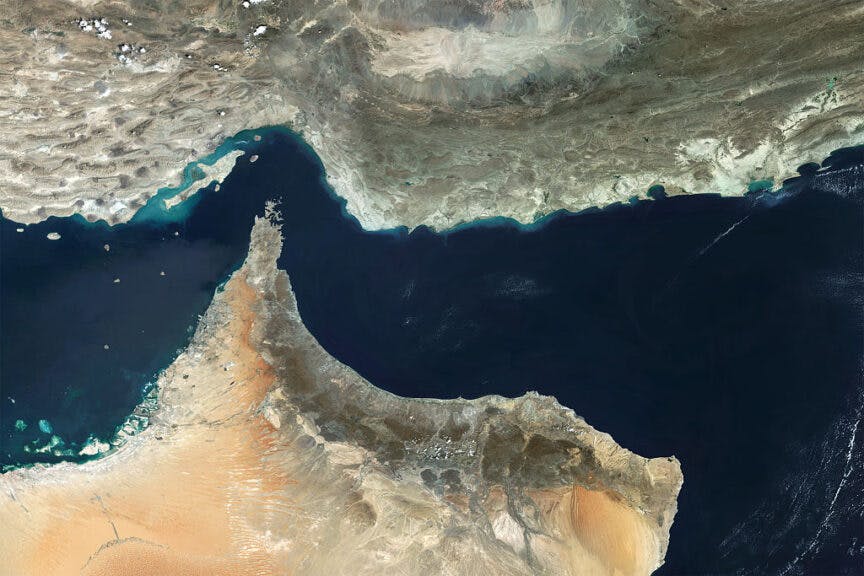
Strait of Hormuz (Photo by Gallo Images/Orbital Horizon/Copernicus Sentinel Data 2025)
“There are, in fact, tankers coming through now — Iranian tankers, and I believe some Chinese-flagged tankers have come through,” Bessent said. “So we know that they have not mined the straits.”
Still, attacks on shipping have disrupted traffic through the critical waterway that is usually responsible for roughly one-fifth of the world’s oil shipments. The New York Times reported that at least 16 vessels have been attacked since the war with Iran, dubbed Operation Epic Fury, began on February 28.
Shipping activity has dropped sharply as companies avoid the increasingly dangerous route. Only 77 ships have crossed the Strait of Hormuz so far in March as the conflict disrupts one of the world’s most vital shipping lanes, according to maritime data cited by AFP.
A Defense Department official declined to comment on the specific mission of the amphibious force.
“Due to operational security, we do not discuss future or hypothetical movements,” the official told The Daily Wire.
What's Your Reaction?
 Like
0
Like
0
 Dislike
0
Dislike
0
 Love
0
Love
0
 Funny
0
Funny
0
 Wow
0
Wow
0
 Sad
0
Sad
0
 Angry
0
Angry
0

I am just an average American. My teen years were in the late 70s and I participated in all that that decade offered. Started working young, too young. Then I joined the Army before I graduated High School. I spent 25 years in, mostly in Infantry units. Since then I've worked in information technology positions all at small family owned companies. At this rate I'll never be a tech millionaire. When I was young I rode horses as much as I could. I do believe I should have been a cowboy. I'm getting in the saddle again by taking riding lessons and see where it goes.























Comments (0)