

Larry Fink Led The Charge For Woke Capital. Why Does Trump Love Him So Much?
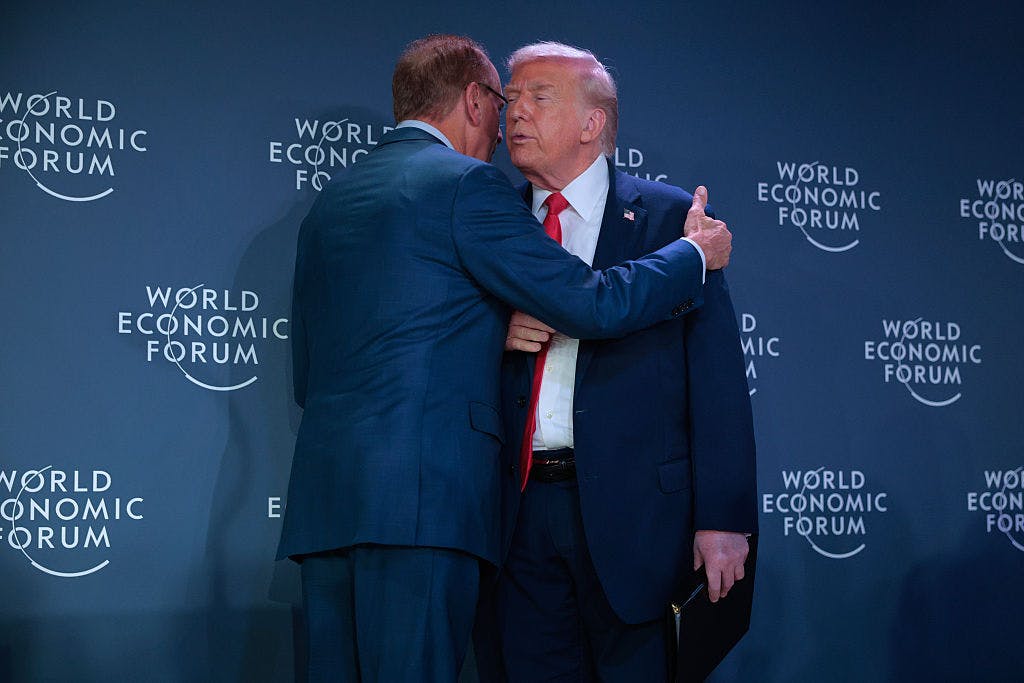
President Donald Trump doesn’t usually heap praise on people who question capitalism and champion carbon reduction efforts.
Live Your Best Retirement
Fun • Funds • Fitness • Freedom
Larry Fink seems to be the exception.
“Everything Larry touches turns to gold,” Trump said of the BlackRock CEO during his Wednesday speech at the World Economic Forum. “He made this [forum] very successful.”
At first glance, it’s not shocking to hear Trump praise Fink. BlackRock was first in line to help President Trump reclaim the Panama Canal, with Fink spearheading the effort himself. And Trump is reportedly considering BlackRock executive Rick Rieder to replace Federal Reserve Chairman Jerome Powell.
But Trump’s affinity for Fink is curious considering the investment titan’s history of supporting exactly the kind of “woke” initiatives the Trump administration opposes.
At the 2020 World Economic Forum, Fink took the stage draped in a scarf stitched with a graphic depicting rising global temperatures over the previous 150 years. He warned that climate change posed an imminent threat to the world and the global financial system.
That message carried into BlackRock’s corporate strategy. In his 2020 annual letter to shareholders, Fink said the world was on the brink of a “fundamental reshaping of finance,” insisting that “every government, company, and shareholder must confront climate change.”
“Behaviors are going to have to change,” Fink said at the time. “You have to force behaviors, and at BlackRock, we are forcing behaviors.”
That leverage, Fink explained, came through voting power.
“I have only one power,” he said. “And I’m going to use that power heavily and that is the power of the vote.”
By managing trillions of dollars in passive retirement and index funds, BlackRock holds outsized ownership stakes across corporate America, giving the firm extraordinary influence over company policies regardless of whether individual investors or voters consent.
In his 2021 letter to shareholders, he asked companies to issue “sustainability reports” detailing not only environmental risks but internal workforce policies.
“As you issue sustainability reports, we ask that your disclosures on talent strategy fully reflect your long-term plans to improve diversity, equity, and inclusion, as appropriate by region,” he said. “We hold ourselves to this same standard.”
He also cautioned companies against drawing “stark lines’ within Environmental, Social and Governance (ESG) frameworks, arguing that issues like climate change and racial inequality are interconnected.
“Questions of racial justice, economic inequality, or community engagement are often classed as an ‘S’ issue in ESG conversations. But it is misguided to draw such stark lines between these categories. For example, climate change is already having a disproportionate impact on low-income communities around the world – is that an E or an S issue? What matters is less the category we place these questions in, but the information we have to understand them and how they interact with each other. Improved data and disclosures will help us better understand the deep interdependence between environmental and social issues.”
Then came the pivot.
In 2024, Fink stunned the financial world by signaling political indifference. He said it “really doesn’t matter” who won the presidential race, arguing that both Donald Trump and Kamala Harris would be “good for Wall Street.”
“At BlackRock, we work with both administrations,” Fink said, adding that the firm was in discussions with both candidates.
Once Trump returned to office, the sense of urgency around climate change appeared to evaporate. By 2025, references to climate change and DEI had vanished entirely from Fink’s annual shareholder letter. In their place was a call for a large-scale investment in nuclear energy. “Wind and solar alone can’t reliably keep the lights on,” Fink wrote.
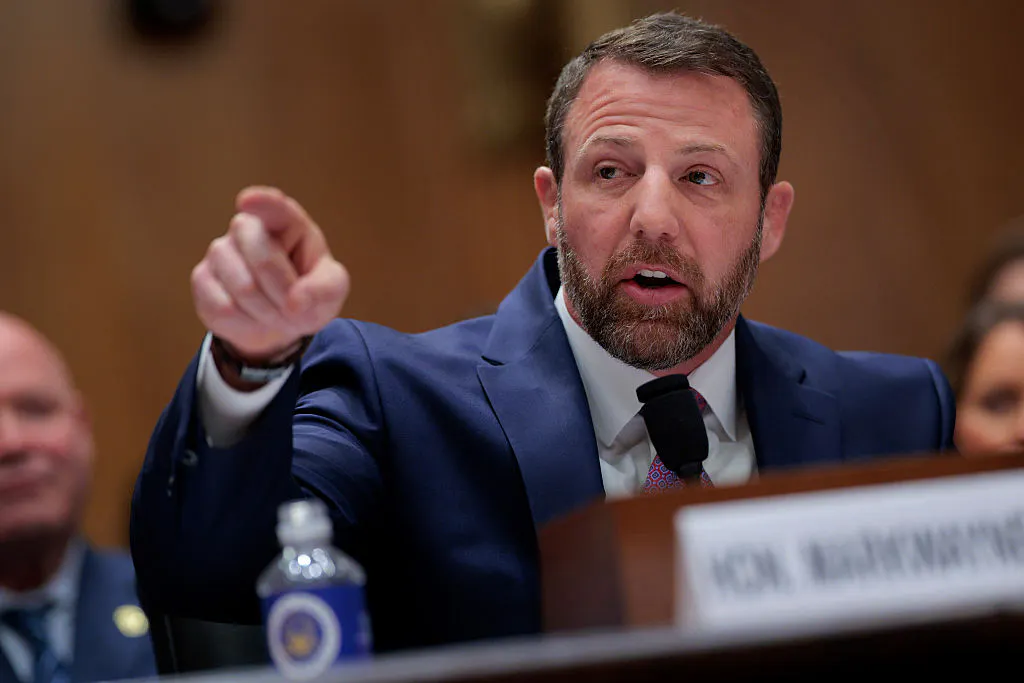
Yet even as Fink appears aligned with Trump, some Republicans remain unconvinced that Fink has fully abandoned his old ways. The White House is reportedly mulling over an executive order that would limit how passive index fund managers like BlackRock participate in shareholder votes. And Rep. Marlin Stutzman (R-IN) has suggested Congress may need to limit BlackRock’s voting power.
“Congress is going to have to play a role to ensure the big three passive firms — BlackRock, Vanguard, and State Street—stop playing politics,” he said.
Securities and Exchange Commission Chairman Paul Atkins echoed the warning, signaling that regulators are prepared to rein in large institutional asset managers that “get out of line.”
“There are two schools of thought within the GOP on BlackRock,” Vice President JD Vance said in 2023. “The old guard thinks they’re creating value and need to be rewarded with tax cuts. I think they’re destroying value and are engaged in illegal and immoral conduct.”
It remains unclear which school of thought will win out in the GOP. For now, Fink seems firmly in Trump’s good graces. But just days before Trump extolled him at Davos, the president’s modern-day Midas offered a glimpse of the old Larry Fink.
“Since the fall of the Berlin Wall, more wealth has been created than at any time prior in human history,” Fink said in his speech kicking off the World Economic Forum. “But in advanced economies, that wealth has accrued to a far narrower share of people than any healthy society can ultimately sustain.”
What's Your Reaction?
 Like
0
Like
0
 Dislike
0
Dislike
0
 Love
0
Love
0
 Funny
0
Funny
0
 Wow
0
Wow
0
 Sad
0
Sad
0
 Angry
0
Angry
0

I am just an average American. My teen years were in the late 70s and I participated in all that that decade offered. Started working young, too young. Then I joined the Army before I graduated High School. I spent 25 years in, mostly in Infantry units. Since then I've worked in information technology positions all at small family owned companies. At this rate I'll never be a tech millionaire. When I was young I rode horses as much as I could. I do believe I should have been a cowboy. I'm getting in the saddle again by taking riding lessons and see where it goes.







Comments (0)