

More States Moving to Close Election Funding Loophole Few Voters Knew Existed
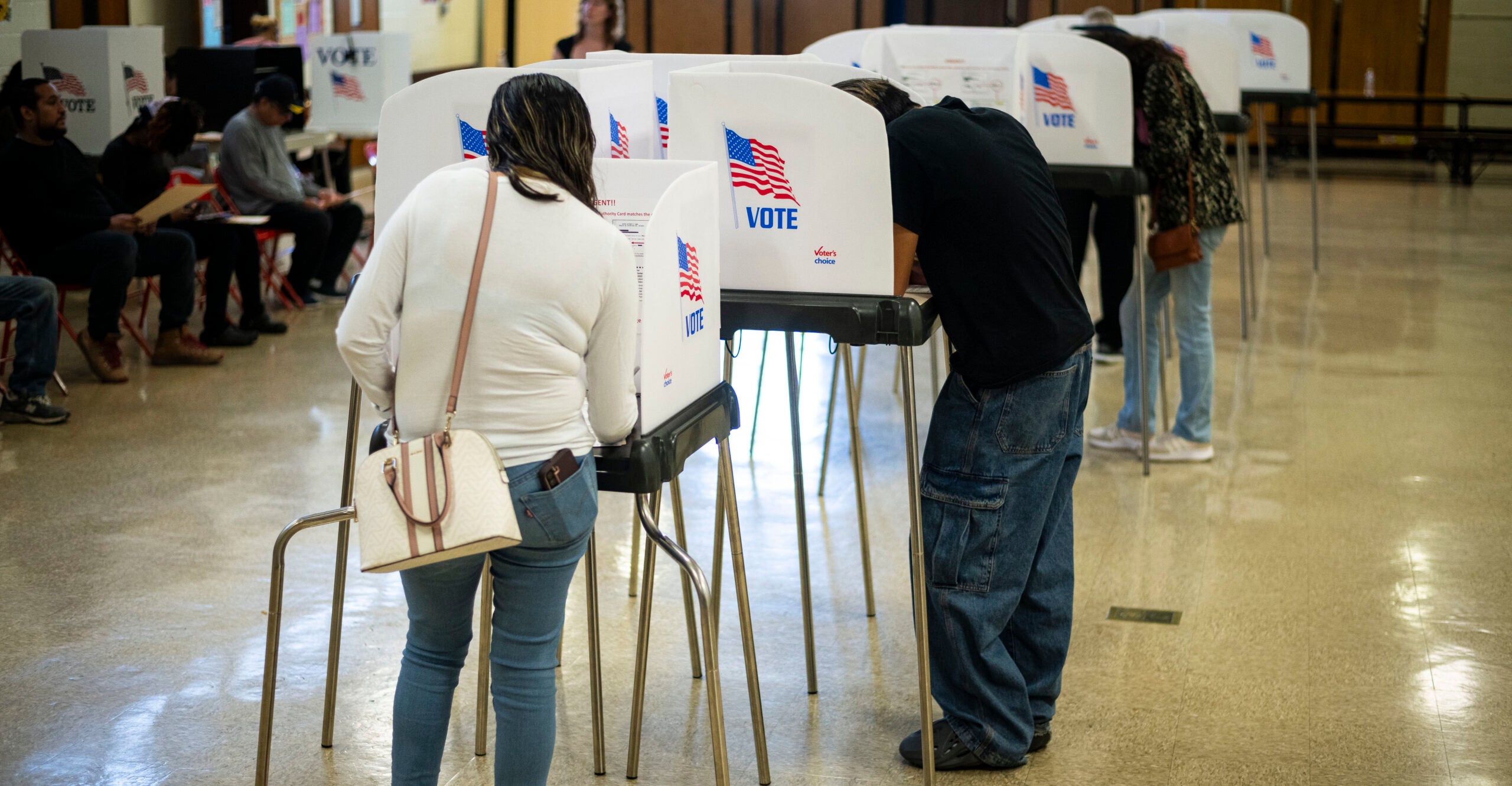
As many as two dozen states could enact legislation this year to ban foreign funding of ballot measures, a trend that gained bipartisan support last year.
Live Your Best Retirement
Fun • Funds • Fitness • Freedom
This follows nine states that have already enacted bans in the last 18 months.
While it’s already illegal for foreign nationals or foreign entitites to contribute to candidates, ballot initiatives have been a longstanding loophole.
“This is gaining momentum all across the country, and states are rejecting foreign funding,” Caitlin Sutherland, executive director of Americans for Public Trust, a conservative-leaning watchdog group, told The Daily Signal.
The APT legislative tracker for 2026 shows that bills have advanced through one chamber in Alabama, Arizona, and Michigan. Meanwhile, an Iowa Senate subcommittee advanced legislation as well.
There is also momentum in Nebraska, Florida, and Georgia, Sutherland said.
By mid-February, legislators in 25 states introduced 64 separate bills that address the issue of foreign individuals or entities contributing to a political campaign, according to Ballotpedia.
The ban on foreign funding of ballot initiatives could itself be a ballot initiative in several states. Lawmakers in Florida, Georgia, Iowa, Massachusetts, Nebraska, Oklahoma, and Wisconsin have introduced such ballot measures, according to Ballotpedia.
Americans for Public Trust and the Honest Elections Project advocated for a comprehensive ban to include no direct foreign contributions, nor indirect contributions, to ballot initiatives. Indirect funding would include instances of wealthy foreign nationals pouring money into a dark money political nonprofit, that would in turn fund a ballot initiative.
While such bans have gained bipartisan support, they have been largely driven by Republican lawmakers and conservative groups, passing in mostly red states. The lawmakers have cited the influence of foreign money in recent state ballot measures advancing abortion and redistricting efforts.
Ohio was the first state to pass a such ban in 2024, followed by Wyoming, Kansas, Kentucky, Missouri, Arkansas, Louisiana, Indiana, and Tennessee in 2025.
One example of a case that was reviewed by federal regulators was a 2021 complaint in Montana.
A 2023 Federal Election Commission ruling dismissed the complaint that Australian mining company Sandfire Resources contributed more than $280,000 to defeat a Montana ballot initiative that would have increased the power of state mining regulators. The FEC determined it lacked jurisdiction, but recommended Congress act to close the loophole.
Although the measures have gained bipartisan backing, there has been litigation in some cases.
After Kansas banned foreign contributions, a group called Kansans for Constitutional Freedom sued, and claimed the law could affect the political activity of U.S. citizens. “There is no reason why a donor should have to provide detailed and confidential information about its own funding sources,” the lawsuit said.
Sutherland said only nine states have a comprehensive ban on foreign money, while others only restrict contributions directly from foreign citizens or entities. She added that not all of the 25 states considering legislation are proposing comprehensive bans.
According to multiple news reports, since 2016, Swiss billionaire Hansjorg Wyss-funded organizations have contributed more than $240 million to the Sixteen Thirty Fund and the New Venture Fund, both of which were part of what was previously known as the Arabella Advisors network.
The Sixteen Thirty Fund spent $97.6 million on state ballot initiatives in 25 states in the past decade, according to an April 2024 report by Americans for Public Trust, a conservative-leaning watchdog group. These included initiatives in battleground states such as Michigan, Ohio, Colorado, and Nevada, the report says.
The Sixteen Thirty Fund, in a statement to The Daily Signal, said Americans for Public Trust “is attacking our organization because it disagrees with our support for progressive causes.”
“Sixteen Thirty Fund is proud to support causes like abortion access and voting rights, and we do so in full compliance with all laws, rules, and disclosure requirements governing our work,” the Sixteen Thirty Fund statement says.
The New Venture Fund did not immediately reply to inquiries for this story.
Neither the Wyss Foundation, nor its lobbying arm the Berger Action Fund, immediately responded to inquiries for this story.
The post More States Moving to Close Election Funding Loophole Few Voters Knew Existed appeared first on The Daily Signal.
What's Your Reaction?
 Like
0
Like
0
 Dislike
0
Dislike
0
 Love
0
Love
0
 Funny
0
Funny
0
 Wow
0
Wow
0
 Sad
0
Sad
0
 Angry
0
Angry
0

I am just an average American. My teen years were in the late 70s and I participated in all that that decade offered. Started working young, too young. Then I joined the Army before I graduated High School. I spent 25 years in, mostly in Infantry units. Since then I've worked in information technology positions all at small family owned companies. At this rate I'll never be a tech millionaire. When I was young I rode horses as much as I could. I do believe I should have been a cowboy. I'm getting in the saddle again by taking riding lessons and see where it goes.
















Comments (0)