

‘NO HUMAN RIGHT TO ABORTION’: What HHS Deputy Secretary Told the March for Life
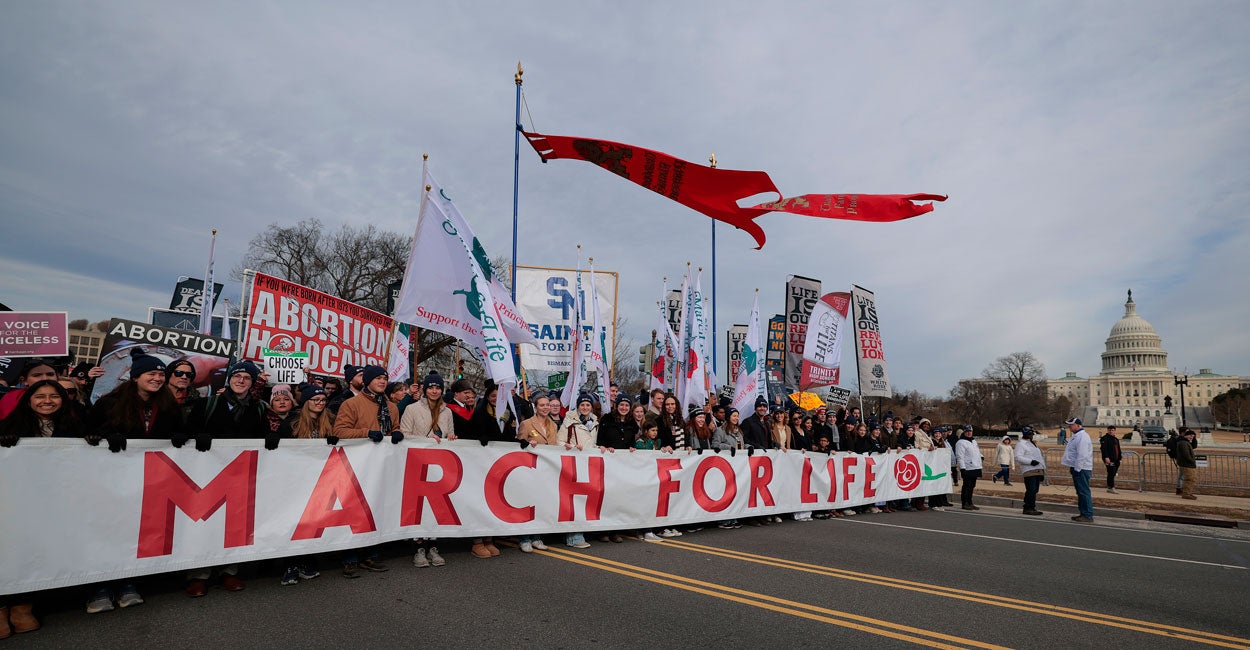
The following are remarks as prepared by Department of Health and Human Services Deputy Secretary Jim O’Neill to the March for Life Action Breakfast on Jan. 23.
Live Your Best Retirement
Fun • Funds • Fitness • Freedom
Thank you for the invitation to be with you here today, and for your passionate commitment to this noble cause.
The March for Life brings together Americans who care deeply about human dignity, ethical medicine, and the responsibilities that come with scientific and governmental power. I’d like to use my time speaking with you today to explain how public policy can reflect those values—clearly, carefully, and faithfully—while upholding the dignity of human life.
At HHS, we are focused on aligning federal health policy with a simple principle: science should serve people, not the other way around. That principle guides our actions in biomedical research, global engagement, pediatric care, and organ procurement.
This week, the National Institutes of Health notified scientists and stakeholders that NIH funds may no longer be used for research involving human fetal tissue obtained from elective abortions. The policy applies to research taking place within NIH, and to NIH-supported research at outside laboratories, including new grant awards, renewals, and ongoing projects that rely on such tissue.
In addition, HHS plans Secretary [Robert F.] Kennedy issued a statement to extending the NIH fetal tissue prohibition across all HHS operating divisions. The action would apply consistent restrictions to grants, contracts, and programs administered across the Department.
NIH is also seeking public input on whether to suspend acceptance of new human embryonic stem cell lines into the NIH registry. Advances in science may have made embryonic stem cells unnecessary. The request for information will help inform a potential phaseout of reliance on embryonic stem cells while encouraging the use of alternative research methods. NIH is calling for public comment on this issue, and I invite you to bring your passionate voices to this important conversation.
This is about modernizing science. It is about directing taxpayer-funded research toward methods that reflect both innovation and respect for human life. And it is about making sure ethical guardrails keep pace with scientific progress.
HHS has also realigned with the Geneva Consensus Declaration. Once again, under the second Trump administration, the United States is linking arms with global allies who share the belief that every human life has inherent dignity, nations have a sovereign right to set their own health policies free of international coercion by entities such as the World Health Organization, and there is NO. HUMAN. RIGHT. TO. ABORTION.
Unlike the WHO, the United States and our partners in the Geneva Consensus Declaration do not seek to redefine human rights; we affirm them.
In global health, clarity matters. When international institutions blur lines between care and coercion, or between health support and political pressure, trust erodes. By realigning with the Geneva Consensus, the United States is signaling that we will support women and families through health systems that respect life, culture, and law.
HHS is also affirming human dignity in our approach to sex-rejecting procedures for minors.
Men are men; men can never become women. Women are women; women can never become men.
This simple truth is denied by the Left, and they preach their false gospel that sex can be changed to the most innocent and vulnerable in society: our children.
A report issued last year by HHS bolstered by hundreds of pages of peer reviews showed that sex-rejecting procedures for minors do not improve lives in any measurable way. HHS stopped recognizing transgender procedures for minors as sound science, and last month we announced that we would be pulling the plug on all federal funding for hospitals that continue to perform these barbaric procedures. Youth wrestling with gender dysphoria deserve love and compassion, not a lifetime of off-label prescription drugs, puberty blockers, cross-sex hormones, and irreversible medical procedures they later regret as adults.
Affirming human dignity means recognizing that children are not experimental subjects, and that their futures should not be shaped by pressure, ideology, or myopic medical decisions. It also means ensuring that mental health support, counseling, and family-centered care remain central to treatment.
Separately, our Office of Refugee Resettlement plans to revise the Unaccompanied Children Program Foundational Rule to address how abortion services are facilitated or funded for unaccompanied alien minors. The revision could eventually limit federal involvement in abortion for minors in government custody, particularly vulnerable children under federal care.
Our focus is straightforward: protect children from harm, support families with honest information, and ensure that medicine adheres to its first obligation: do no harm.
HHS is also reforming the nation’s organ procurement system. Organ donation saves lives, but the system that supports it must earn—and keep—the public’s trust.
In the past several months, HHS has advanced reforms to improve oversight, transparency, and performance across organ procurement organizations. These reforms aim to ensure that every potential donation is handled with solemn care, that outcomes are measured honestly, and that patients waiting for transplants are treated with urgency and respect.
This is policy based on honoring donors and their families—and it is about making sure that a system built on generosity operates with integrity.
Across all of these areas—research ethics, global engagement, pediatric care, and organ procurement—there is a common thread: respect for the value of human dignity and the divine worth found in every person, old or young, male or female, born or unborn.
The pro-life movement has long argued that respect for life must be reflected in institutions, not just beliefs. That argument resonates because it speaks to a broader concern many Americans share: that systems have drifted away from their moral foundations. Reforming them is not about turning back the clock; it is about applying modern tools to timeless principles.
In the Trump administration, HHS is committed to doing our work transparently, using gold-standard science, rooted in moral objectivity.
Thank you for your advocacy, for your engagement, and for holding institutions to account. I look forward to continuing this work together.
Thank you.
The post ‘NO HUMAN RIGHT TO ABORTION’: What HHS Deputy Secretary Told the March for Life appeared first on The Daily Signal.
What's Your Reaction?
 Like
0
Like
0
 Dislike
0
Dislike
0
 Love
0
Love
0
 Funny
0
Funny
0
 Wow
0
Wow
0
 Sad
0
Sad
0
 Angry
0
Angry
0

I am just an average American. My teen years were in the late 70s and I participated in all that that decade offered. Started working young, too young. Then I joined the Army before I graduated High School. I spent 25 years in, mostly in Infantry units. Since then I've worked in information technology positions all at small family owned companies. At this rate I'll never be a tech millionaire. When I was young I rode horses as much as I could. I do believe I should have been a cowboy. I'm getting in the saddle again by taking riding lessons and see where it goes.


















Comments (0)