

Portland’s Journey From Symbol of Chic to Shabby
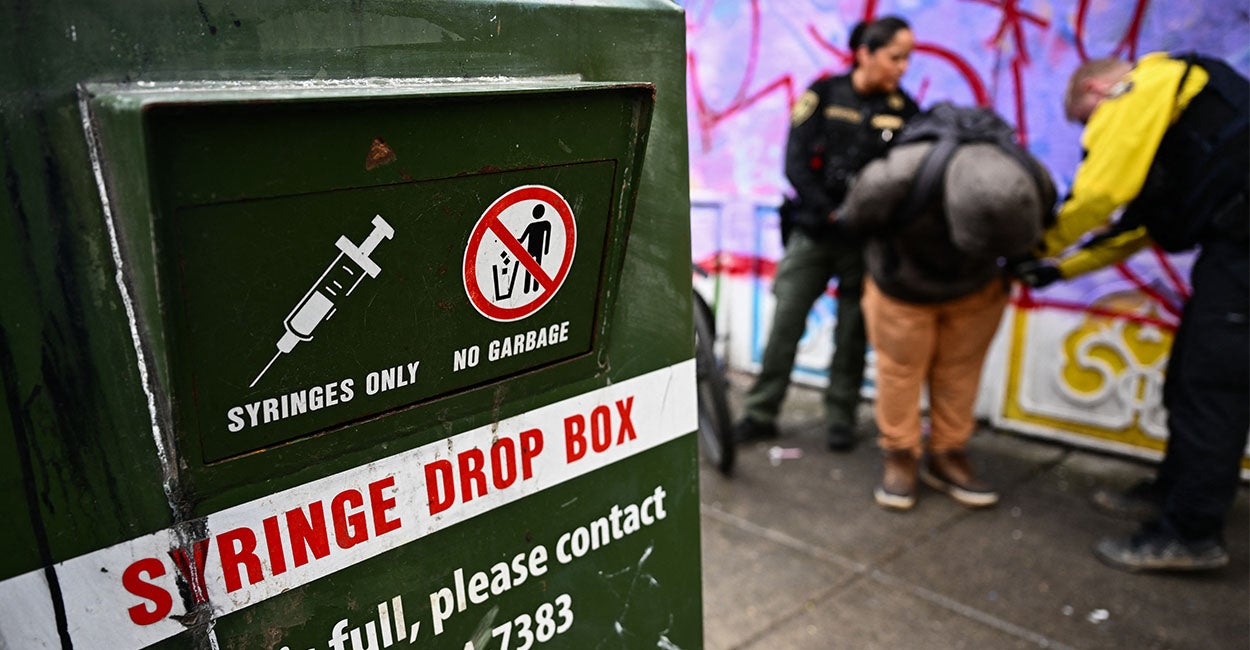
In December, bestselling author and humorist David Sedaris wrote a New Yorker magazine essay about a recent trip to Portland, Oregon.
Live Your Best Retirement
Fun • Funds • Fitness • Freedom
While on a walk to a donut shop, he “lost count of the strung-out addicts I passed on my way” before eventually encountering four homeless people huddled around an empty baby carriage and smoking drugs right on the sidewalk. Moments later, a dog belonging to one of the addicts rushed out and bit him.
Following the incident, Sedaris, a former methamphetamine addict himself, was struck by the fact that most people in Portland didn’t seem concerned about the state of the city—even the medical worker who treated him appeared more concerned with the dog’s well-being than what had happened to him:
I mean, how hard should it be to get a little sympathy when an unleashed dog bites you? What if I were a baby? I wondered. Would people side with me then? What if I were ninety or blind or Nelson Mandela? Why is everyone so afraid of saying that drug addicts shouldn’t let their dogs bite people? Actually, I know why. We’re afraid we’ll be mistaken for Republicans, when, really, isn’t this something we should all be able to agree on? How did allowing dogs to bite people become a Democratic point of principle? Or is it just certain people’s dogs? If a German shepherd jumped, growling, out of one of those Tesla trucks that look like an origami project and its owner, wearing a MAGA hat, yelled, “Trumper, no!!!,” then would the people in my audience be aghast?
That one of America’s most progressive cities has become a laughingstock in one of the country’s more progressive magazines is a sign of Portland’s ongoing troubles.
Like other big cities with major challenges, such as Chicago and San Francisco, Portland boasts many lovely areas and vibrant neighborhoods. But it is also defined by a range of pervasive problems—including crime, homelessness, drug addiction—that are less the consequences of modern society than self-inflicted wounds created by ineffective policies. If Portland stands out from other beleaguered cities, it is because its decline has been so swift.
If you’re familiar with the recent history of Portland—I am a third-generation Oregonian who has lived in the city—it was once the epicenter of urban cool. In 2009, there was so much tourism that The Oregonian newspaper ran a column headlined, “Sorry, NYT, We’re Just Not That Into You,” grousing that all the glowing national press about the city was making it harder for locals to get into their favorite restaurants. By the time the popular comedy show “Portlandia” premiered in 2011, the city was a genuine cultural phenomenon.
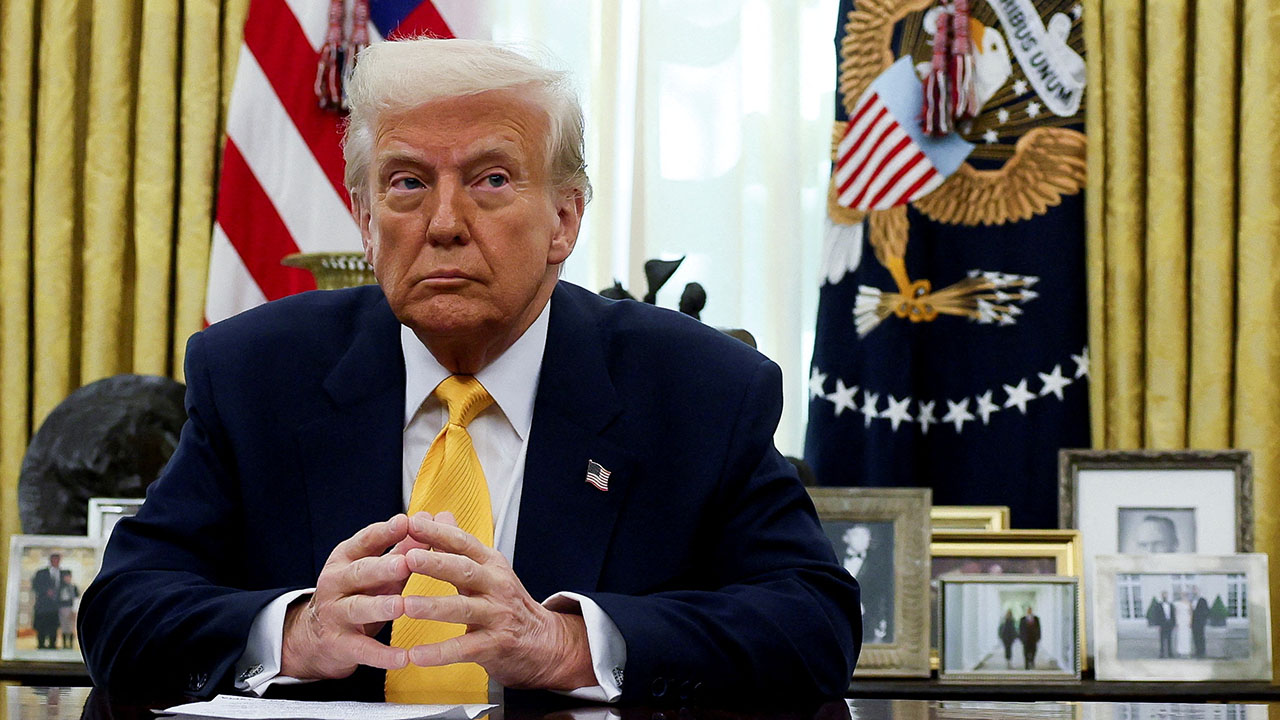
Last fall, after the city acquired a reputation for crime, homelessness, and dysfunction, Oregon politicians rushed to media outlets to assure the nation that the city was not literally on fire. They were responding to comments from President Donald Trump, who said, “The place is burning down, just burning down,” following violent protests outside of an Immigration and Customs Enforcement facility. CNN ran a “fact check” on Trump’s multiple statements about the city burning.
Oregon politicians were probably right that the president’s hyperbole was not helping defuse a tense situation. And unlike other cities famous for urban blight, Portland is still a beautiful place to live. Located at the base of 11,000-foot-tall Mt. Hood, and built around two major rivers, it has one of the most spectacular natural settings of any city in America. Last fall, Oregon Sen. Ron Wyden, a Democrat, traveled around the city and posted videos highlighting the picturesque neighborhoods to show that Portland can be a wonderful place to live, in contrast to Trump’s claim that the city is “war-ravaged.”
But in a figurative sense—and at least one literal sense—Trump is right. Portland is constantly on fire. In the year following July 2024, Portland had 6,268 fire-related incidents—and 40% of the fires in the city are a direct result of Portland’s out-of-control vagrancy.
Even city leaders feel the heat. In 2024, Portland City Councilor Rene Gonzalez’s car burned in a fire that authorities believe was intentionally set while it was parked in front of his family’s home. No one was arrested, but a website associated with Portland’s notorious Antifa network claimed responsibility. Then last October, a fire consumed a carport belonging to Portland City Councilor Candace Avalos, burning her car and damaging the side of her house. Authorities eventually determined the fire was started by a vagrant trying to stay warm.
The city also has much more sophisticated criminal problems. As Minneapolis uncovers evidence that it has lost billions of dollars in fraudulent schemes by the city’s Somali community, Jeff Eager, the former mayor of Bend, Oregon, has published a series of alarming reports revealing that Portland may have a similar large-scale problem with its welfare programs—some of it connected to more menacing kinds of organized crime.
Early last year, for example, Eager reported on his Substack, Oregon Roundup, about a man named Kevin Daniel Sanabria-Ojeda, whom authorities say is a member of the violent Venezuelan Tren de Agua criminal syndicate and who was arrested for attempted murder. According to Eager, Sanabria-Ojeda, along with an accomplice who remains at large, “kidnapped Maria Guadalupe Hernandez Velasquez outside her Seattle home, drilled into her hands with a power drill to force her to provide them her PIN for her debit card, robbed her of gold and cash, shot and wounded her and left her for dead in rural Washington.”
Somehow Velasquez survived the ordeal and police traced the two criminals to a house in a Portland suburb that police reports describe as a drug den, with “residents possibly using drugs in the back yard, large numbers of people coming and going at night, possibly entire vans full of people, and people being dazed or drugged … and on a few occasions groups of young women or girls being present at the address.”
That house was also listed as the address of Uplifting Journey LLC, an addiction recovery provider that received $2.3 million in state Medicaid funds between April of 2024 and March of 2025. Eager has further documented that owners of Uplifting Journey, Julius Maximo and Espoir Ntezeyombi, have multiple ties to three men indicted in Arizona for setting up a $60 million Medicare fraud ring that was laundering money by sending it to Rwanda. One of the leaders of the Arizona fraud even co-signed the lease on another dubious residence owned by Uplifting Journey in the Portland suburb of Gresham.
Despite all the documented evidence and the fact that Eager is the former mayor of one of Oregon’s largest cities, he’s been unable to get anyone else in the state’s media outlets to pay attention.
“I feel like I’ve seen the tip of the iceberg in Oregon,” Eager told RealClearInvestigations. “It’s a huge scandal, and I’m the only one that’s covered it so far …. The state government here couldn’t care less.”
Portland Mayor Keith Wilson, City Council President Jamie Dunphy, and Councilor Candace Avalos did not respond to requests for comment. In a written response to RCI, council member Dan Ryan said, “I hear those concerns every day, and I take them seriously. My priority is improving livability and public safety, and cultivating a vibrant economic environment in Portland.” Ryan proposed and helped achieve unanimous passage of the Storefront Support Program in October to help strengthen and stabilize the city’s small business community as part of a larger effort to provide residents with “better services for the taxes they pay. We need to rebuild trust, support our neighborhood main streets and downtown, and ensure Portland’s economic recovery reaches every corner of the city.”
Self-Inflicted Wounds
Echoing Sedaris, Eager says one key reason why the city’s massive crime problem goes unaddressed is that it’s largely self-inflicted and driven by ideology. “Hard core progressivism has destroyed what old school Oregon liberals built – farmers markets, parks, walkable communities, transit, and all the good kind of Portlandia-era liberal lifestyle stuff,” said Eager. “This brand of progressivism is just so against the rule of law, it’s ruined all those institutions that made Portland a cool, trendy, quirky place. It’s not really quirky anymore. It’s dangerous.”
Portland now has the second-highest crime rate of any city in America, behind Memphis. About one out of every 16 people in the city is the victim of a crime every year. This problem did not happen overnight. In 2017, the city’s Pulitzer-winning alt-weekly Willamette Week ran a feature on car theft in the city. “At least 102 people in the Portland area have been arrested multiple times in the past year for car theft, though half of 2017’s cases were never prosecuted,” the paper reported. A single 23-year-old homeless woman had been arrested for nine car thefts that year and hadn’t spent a day in jail.
The lack of law enforcement became obvious to everyone during the summer of 2020, as protests erupted in response to George Floyd’s murder in Minneapolis. In Portland, violent protesters laid siege to the federal courthouse downtown for months. Mayor Ted Wheeler was publicly supportive of the violent protest. Portland police said there were 22 riots around the courthouse between May and August of 2020, and the crowd was regularly hurling incendiary devices at the building. The city’s George Soros-backed district attorney declined to prosecute over half the rioters who were arrested.
That same summer, the police union, which had an antagonistic relationship with Wheeler and other local politicians, had its building repeatedly vandalized and set on fire. As part of the “defund the police” movement that year, Portland’s leftist City Council cut $15 million from the city’s law enforcement budget, eliminating 84 jobs in the police department—with predictable results. By November 2021, Wheeler acknowledged “many Portlanders no longer feel safe,” and the city council began the process of restoring some funding to the department—though the police are at loggerheads with local politicians and the department remains chronically understaffed.
But nothing that happened in the summer of 2020 had as big an impact on the decline of the city as events that fall. In November 2020, Oregon voters approved Measure 110, which downgraded the criminal penalty for possession of all hard drugs—including fentanyl, heroin, methamphetamines, and cocaine—to a civil violation. The measure passed with a solid 58% majority, and the initiative had major backing from the Drug Policy Alliance, American Civil Liberties Union, and Chan-Zuckerberg Foundation. Thanks to the funding from out-of-state organizations, supporters of 110 easily outspent those campaigning against it.
Starting in February of 2021, police could no longer arrest anyone for drug use. Under the law, if police come across anyone doing drugs, the most they can do is hand out a ticket giving them the following options: Come to a court date and plead not guilty, pay a $100 fine, ask for a reduced fine, or waive the fine by calling a number on the ticket that will help them get treatment.
Predictably, drug addicts were not concerned about the threat of a $100 civil penalty. According to The Wall Street Journal, of the thousands of tickets for drug use Oregon police handed out in the first three years the law was in effect, just 1% of the addicts called the number to connect them with treatment. There’s no doubt that the law made drug use in the state much worse—outreach workers and police began reporting that the Measure 110 was responsible for “drug tourism” attracting addicts from out-of-state. Decriminalization also spiked demand, significantly lowering the cost of purchasing illegal drugs. Most alarming, overdose deaths skyrocketed. In 2019, Oregon had 280 fatal opioid overdoses. In 2023, two years after Measure 110, there were 1,394 fatal opioid overdoses—a fivefold increase.
After a couple of years, even Portland residents could no longer tolerate Measure 110. Polls soon showed the law’s impact on public safety had made 110 deeply unpopular, and business leaders were organizing to put a repeal measure on the ballot. Before the law could be repealed by the voters, the Oregon legislature amended it in 2024 to remove the measure’s decriminalization provisions. Drug possession was once again a misdemeanor, punishable by six months in jail. The Drug Policy Alliance blamed the law’s undoing on an “intense disinformation campaign by drug war defenders.”
Critics say repealing some elements of Measure 110 didn’t fundamentally change the flawed progressive approach to the problem. “It’s all about ‘harm reduction,’ and there’s very little accountability that comes along with that,” says Ed Diehl, a Republican legislator who represents eastern Salem, 30 miles south of the city. “They have this idealistic view of people just choosing themselves to go get treatment, but when you’re addicted to hard drugs it just doesn’t happen.”
Economic Doom Loop
The city is also enduring a full-blown economic crisis. Businesses have been fleeing the city. As of last year, Portland had the highest commercial real estate vacancy rate of any major city in the country, and it remains at record levels. Anything above a 20% office vacancy rate is said to indicate “severe distress,” and Portland’s office vacancy rate is 34.6%. Powell’s Books, America’s largest independent bookstore and arguably the city’s most iconic retail operation, had four rounds of layoffs last year.
The city’s biggest office tower, the 42-story U.S. Bancorp building, was sold in 2015 for $372.5 million; last year it sold for $45 million. Residential real estate isn’t faring much better. In 2024, the Ritz-Carlton began selling luxury condos in a building downtown. Only 11 of the 132 condos have sold since then, and it recently announced its price was being slashed by 50%.
“When you enter one of these economic Doom loops, we could be 10 years trying to dig ourselves out of it,” says Diehl. “The problem is, we need a healthy, vibrant Portland.”
The ominous phrase “doom loop” is also how Eric Fruits, an economics professor at Portland State University, repeatedly described the eroding tax base and other problems in the Oregon Business Report. “IRS migration data shows that people leaving [the] county average $105,800 in annual income, while arriving residents average $73,540—a gap of $32,260 per household. Over the past two years, roughly $1 billion annually has left the county,” writes Fruits. “They’re not leaving because of the weather.”
In December, Columbia Sportswear CEO Tim Boyle, who’s long been outspoken about Portland’s homelessness and crime hurting his business, gave a blistering speech attacking Oregon’s economic policies. In addition to excoriating state politicians for presiding over the destruction of Portland’s real estate, Boyle blamed the fact that Portland has the nation’s second-highest individual tax rate after New York City for driving high-income earners out of the state. Boyle also revealed his advisors had recommended moving his business out of the state.
This wasn’t taken as an idle threat. Oregon’s homegrown coffee chain, Dutch Brothers, which has a market cap of nearly $12 billion, moved its corporate headquarters to Arizona last year. And incredibly, Boyle said all this at a press conference on the state’s 2026 economic development strategy, standing on the same stage as Oregon’s progressive governor, Tina Kotek.
Nike founder Phil Knight, CEO of the state’s largest company, is also loudly registering his displeasure. In 2023, Nike permanently closed its large outlet store in Portland, citing retail theft and public safety issues. Knight has donated to Oregon Democrats in the past, and his company remains avowedly liberal – Nike has pledged to pay abortion expenses for employees—but in recent years, Knight has made it clear he thinks state Democrats are too far gone. In November, he wrote a check for $3 million to the “Bring Balance to Salem” PAC, the largest single donation to Republicans in state history.
Political Opportunity
One measure of the political frustration over Portland is the Greater Idaho movement. Thirteen large counties in sparsely populated Eastern Oregon, representing about half the state’s land mass, have all voted to leave Oregon and join the neighboring state of Idaho, where the cultural and political climate is more amenable to their rural way of life. The Idaho Legislature has signaled it is open to receiving the counties and expanding the state, but changing the state borders would also require approval from the Oregon legislature, which is unlikely to happen for now.
Greater Idaho’s Executive Director Matt McCaw, a former high school teacher who lives in Crook County on the Eastern slope of the Cascades, three hours south of Portland, emphasizes that they’re not trying to secede from Oregon, so much as get out from under the thumb of Portland’s dysfunction. The urban-rural divide has become a significant force in American politics, and nowhere is this divide starker than in Oregon, where one politically radical metro area has a population of 2.5 million people in a state with a total population of 4.2 million.
“Our movement was born from the bad policies that get forced into our communities from Western Oregon,” says McCaw. “First, it was COVID policies, then this was exacerbated by Measure 110. The people of every county in Eastern Oregon voted against 110. And of course, the Portland metro area passed it, and forced it on the rest of the state.”
While the Greater Idaho movement is gathering momentum, others aren’t giving up on fixing Portland just yet. Some recent political developments suggest the state’s progressive leaders have finally pushed things too far, and it’s given reformers in the state hope. Last fall, Gov. Kotek strong-armed the legislature into passing a transportation spending bill that amounted to the largest tax increase in state history. The bill was so unpopular it failed to pass when first introduced, so Kotek called a special legislative session, where it passed by one vote in both the Senate and House, even though Democrats have supermajorities in both legislative chambers.
The public backlash to the law was swift and unprecedented. With only 45 days to gather the required 80,000 signatures to put a repeal of the tax increase on the ballot in November, the all-volunteer effort managed to submit 250,000 signatures from fed-up Oregonians in December. “It’s the most dramatic grassroots political thing that I’ve seen in Oregon politics ever,” says Eager.
That a measure repealing the transportation bill will be on the ballot this fall is seen as a huge problem by the state’s Democratic Party leaders. Kotek is running for reelection in the fall and does not want to appear on the ballot alongside a popular initiative repealing her signature legislation. After asking the legislature to repeal the transportation bill Kotek recently demanded they pass, state Democrats are now trying to move the repeal vote up to May so it doesn’t complicate Kotek’s reelection plans.
“We’re in uncharted territory, and just having this on the ballot is huge for folks on my side of the aisle. We feel it’s worth at least three to five points. That’s enough to possibly swing a governor’s race,” says Diehl.
But Diehl is also quick to emphasize that seizing on voter discontent is about saving the state from misguided progressives, not necessarily electing Republicans. He’s encouraged by the fact that the widespread opposition to Kotek’s big spending bill indicates that moderate Democrats are also rebelling against the state’s progressive faction. “The [traditional] liberals around here, and there’s still a lot of them, they’re looking at what’s going on and they think it’s crazy too,” he says.
However, Oregon’s federal candidates in the 2026 midterms will soon start running a blizzard of ads against an unpopular Republican president, and wresting political control away from Portland’s progressive voting bloc remains an uphill battle. But Diehl and his Republican colleagues in the legislature want to capitalize on this grassroots enthusiasm to rein in Portland’s progressives as much as they can.
“I try and be optimistic,” he says. “I wouldn’t be doing this stupid job if I wasn’t.”
We publish a variety of perspectives. Nothing written here is to be construed as representing the views of The Daily Signal.
The post Portland’s Journey From Symbol of Chic to Shabby appeared first on The Daily Signal.
What's Your Reaction?
 Like
0
Like
0
 Dislike
0
Dislike
0
 Love
0
Love
0
 Funny
0
Funny
0
 Wow
0
Wow
0
 Sad
0
Sad
0
 Angry
0
Angry
0

I am just an average American. My teen years were in the late 70s and I participated in all that that decade offered. Started working young, too young. Then I joined the Army before I graduated High School. I spent 25 years in, mostly in Infantry units. Since then I've worked in information technology positions all at small family owned companies. At this rate I'll never be a tech millionaire. When I was young I rode horses as much as I could. I do believe I should have been a cowboy. I'm getting in the saddle again by taking riding lessons and see where it goes.










Comments (0)