

President Trump Is Right, The West Cannot Survive On European Weakness
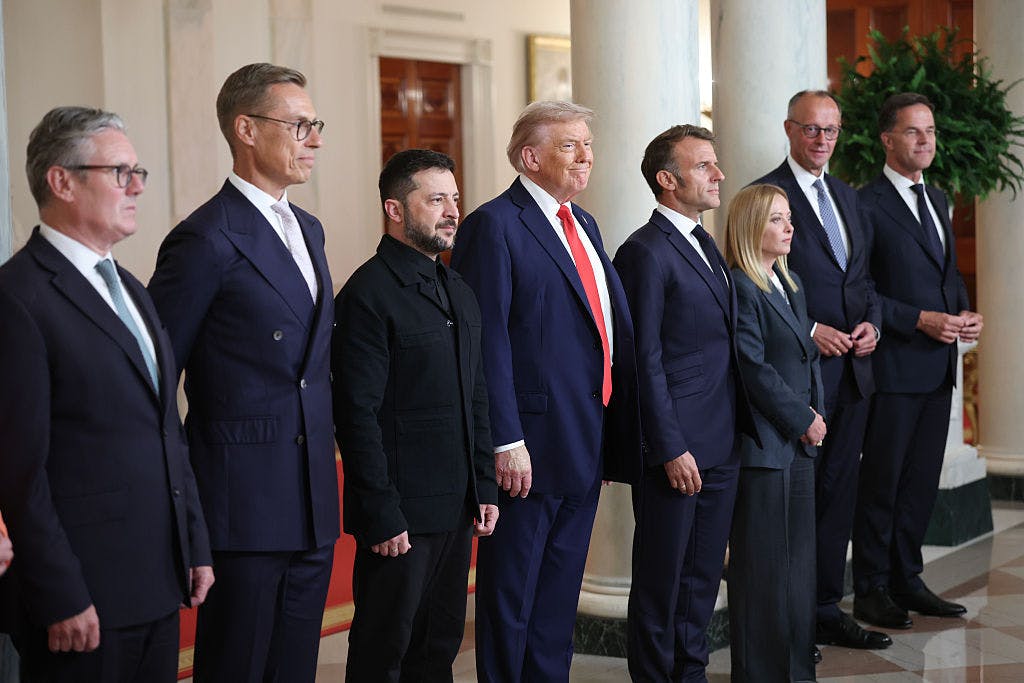
Europe’s weakness is no longer just Europe’s problem; it is the West’s crisis. For decades, the continent has drifted into complacency, retreating from free markets, hollowing out its militaries, and outsourcing its security to Washington. What began as integration hardened into dependency. The result is a Europe that is economically stagnant, strategically vulnerable, and increasingly unsure of its own identity.
Live Your Best Retirement
Fun • Funds • Fitness • Freedom
President Trump’s recently released National Security Strategy and the National Defense Authorization Act are the first major American documents in a generation that speak to Europe not as a ward, but as an adult. They state, in effect, that the West cannot survive if its largest democratic bloc insists on remaining structurally weak. America will not abandon Europe, but it will no longer indulge Europe’s illusions. The ball is now in Europe’s court.
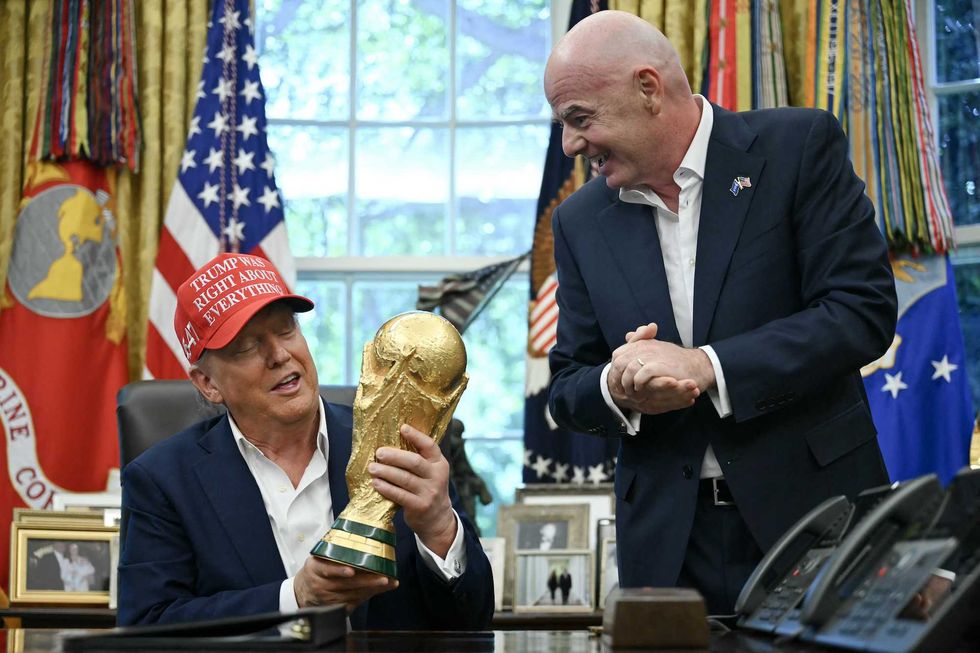
Trump’s statecraft is often misdescribed as improvisation. In reality, a Trump Doctrine of strategic sovereignty has emerged. Its core is simple: no nation is entitled to protection from the United States unless it actively contributes to collective security; coalitions are built on shared interests and values, not on inertia; and the West is worth preserving. Once the United States and Europe shared these beliefs, and their alliance was strong on this basis.
This abandons the fantasy of a self-enforcing “rules-based order.” Russia’s attack on Georgia or Ukraine, and other similar powers’ attacks on other weaker countries, have repeatedly shown that there is no universally accepted rules-based order. The simple, stubborn fact is that order is made and maintained by sovereign states that possess power, will, and clarity of purpose. Trump’s approach replaces the old habit of open-ended guarantees with a “balance of sovereigns”: the United States will remain the preeminent Western power, but its allies must become genuine pillars, not permanent dependents, to keep the balance of power in the West and keep at bay geopolitical adversaries that understand solely strength.
Trump has already done more to weaken the Russia-China-Iran-North Korea axis than his predecessor. Trump’s pressure on Moscow has been more consequential than Joe Biden’s. By pushing NATO allies to raise defense spending, by imposing secondary measures that hit Russian oil revenues, and by brokering peace in the Caucasus, Trump has constrained Russia’s maneuvering space.
Iran, once emboldened by Western appeasement, is now reeling. Israeli and American strikes have gutted its nuclear and military infrastructure. Combined with the Abraham Accords and the Armenia-Azerbaijan peace agreement, the Middle East has been reshaped in ways that keep Russia out and leave Tehran increasingly isolated. Iran’s proxies are weakened, its economy strangled, and its strategic depth reduced.
The updated Monroe Doctrine has likewise kept China out of the Western Hemisphere. Beijing’s attempts to buy strategic assets and political influence in Latin America have been blocked or rolled back, while Venezuela’s dictator is now under arrest, with his regime destabilized. Trump’s declarations about the Panama Canal and Greenland should be seen as part of this larger doctrine.
Taken together, these moves have fractured the “unholy alliance” of America’s adversaries. Europe should take note: Trump has shown that strength and clarity can weaken adversaries far more effectively than platitudes and half-measures. The United States is doing its part to reshape the global balance. The question is whether Europe will do its part to reshape itself.
Security begins with production. Europe’s retreat from free-market dynamism has hollowed out its competitiveness. While Trump has pursued reindustrialization, deregulation, near-shoring, and energy abundance in the United States, Europe has doubled down on regulatory maximalism and green utopianism — policies that have driven factories, capital, and talent elsewhere.
A continent that once powered the Industrial Revolution now tries to regulate its way into relevance. High taxes, rigid labor markets, and hostility to conventional and nuclear energy have produced dependence on Russian gas, Chinese supply chains, and American defense spending. There is no single European entity in the top 10 biggest companies, startups, or AI firms, because the European instinct has become “regulate before even creating”.
Real recovery will not come from new Brussels programs, but from unleashing the energy and initiative of millions of individuals and families who are now trapped under layers of taxation, bureaucracy, and paternalism. Europe does not lack talent; it lacks permission to use it.
Trump’s doctrine treats Europe’s stagnation not as an internal matter, but as a strategic liability. Economic weakness means underfunded militaries, brittle societies, and a politics increasingly tempted by accommodation with authoritarian suppliers of energy and credit. A Europe that cannot sustain industry will not sustain deterrence.
If Europe wants to be something other than a museum of past greatness, it must rediscover growth: lower and simpler taxes, domestic energy, and a serious commitment to frontier technologies. Otherwise, the center of gravity of the democratic world will keep shifting from the Atlantic to the Indo-Pacific, not by American design but by European default.
Trump’s strategy does something European elites have avoided for years: it links power to identity. It speaks of restoring the West’s “civilizational self-confidence” and calls on the nations of the free world to defend their histories, cultures, and borders.
This is not nostalgia. It is strategic clarity. A society that doubts its right to exist cannot project power. A civilization that treats its past as a moral burden will not endure the costs of defense, child-rearing, or long-term investment.
For too long, influential European institutions have treated national identity as suspect, the family as optional, borders as administrative details, and free speech as a negotiable privilege. The result is fragmentation: uncontrolled migration, parallel societies, and cultural self-censorship. In such a context, phrases like “strategic autonomy” are empty. Autonomy presupposes cohesion.
Trump’s message is that the West is not an NGO; it is a civilization. The President does not seek American domination of Europe. He seeks equilibrium. America First does not mean America Alone; it means an America strong enough to lead, partnered with European allies strong enough to matter. For Europe, that means three things: (a) Rearmament as an act of self-respect, not of deference to Washington. A Europe that cannot field serious forces from the Baltic to the Mediterranean is not “pacifist”; it is strategically unserious. (b) Reindustrialization and energy realism. A continent that shuts down reliable power without viable alternatives, and that drives industry offshore, will find its foreign policy constrained by whoever keeps its lights on. (c) Civilizational recovery. Europe must stop apologizing for its existence. Its nations, cultures and Judeo-Christian roots are not obstacles to the future; they are the only basis on which a free future can be built.
Trump has laid out a doctrine that treats Europe not as a client but as a potential equal. The question is whether Europe will seize this moment or shrink from it. The United States has made its choice: strength, sovereignty, and renewed Western leadership. If Europe fails to rise, the West will fall, not because America abandoned it, but because Europe abandoned itself.
* * *
The views expressed in this piece are those of the author and do not necessarily represent those of The Daily Wire.
What's Your Reaction?
 Like
0
Like
0
 Dislike
0
Dislike
0
 Love
0
Love
0
 Funny
0
Funny
0
 Wow
0
Wow
0
 Sad
0
Sad
0
 Angry
0
Angry
0

I am just an average American. My teen years were in the late 70s and I participated in all that that decade offered. Started working young, too young. Then I joined the Army before I graduated High School. I spent 25 years in, mostly in Infantry units. Since then I've worked in information technology positions all at small family owned companies. At this rate I'll never be a tech millionaire. When I was young I rode horses as much as I could. I do believe I should have been a cowboy. I'm getting in the saddle again by taking riding lessons and see where it goes.












Comments (0)