

Rubio Warns Visas Will Be Revoked, Praises Orbán During Budapest Visit
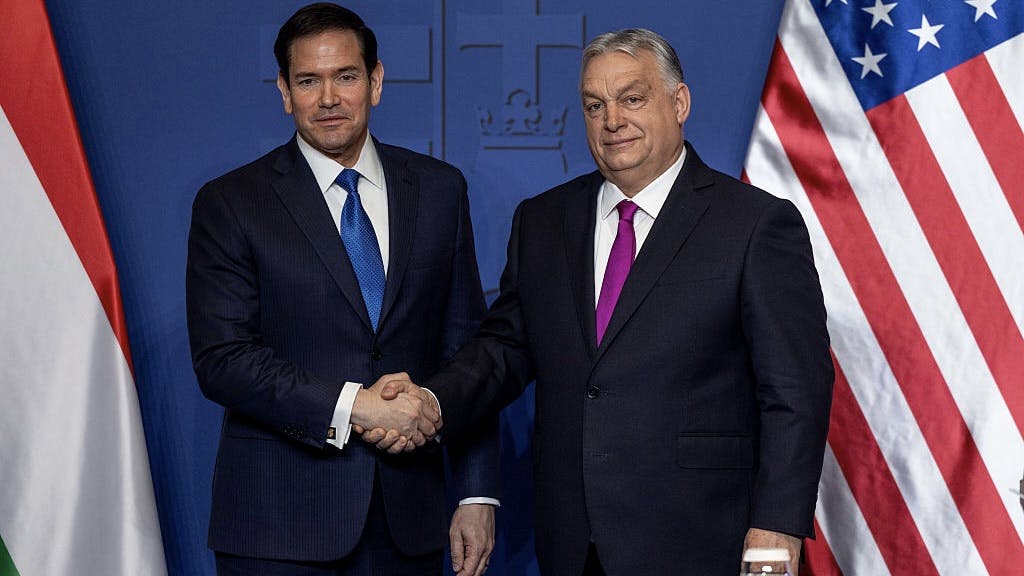
U.S. Secretary of State Marco Rubio on Monday delivered a blunt warning to foreign nationals entering the United States, saying visas are a privilege and will be revoked if visitors engage in activity deemed harmful to American national interests.
Live Your Best Retirement
Fun • Funds • Fitness • Freedom
Speaking during a joint press conference in Budapest alongside Hungarian Prime Minister Viktor Orbán, Rubio emphasized that entry into the United States carries conditions that extend beyond border screening.
“I’ve said this repeatedly — I don’t know why it’s so hard for some to comprehend,” Rubio said. “A visa — no one’s entitled to a visa. There is no constitutional right to a visa. A visa is permission to enter our country as a visitor.”
Rubio added that visitors who violate the terms of their stay — whether as students, journalists, tourists, or other temporary entrants — should expect swift consequences.
“If you enter our country as a visitor and you undertake activities that are against the national interest or national security of the United States, we will take away your visa,” he said. “In fact, if we knew you were going to do it, we probably never would have given you your visa.”
SECRETARY RUBIO: I’ve said this repeatedly. I don’t know why it’s so hard for some to comprehend it.
No one is entitled to a visa.
If you enter our country as a visitor and undertake activities against the national interests of the United States, we will take away your visa. pic.twitter.com/Y9hWlZpKBX
— Department of State (@StateDept) February 16, 2026
The comments come amid heightened scrutiny of foreign nationals participating in political activism, campus protests, and media activity inside the United States, as the Trump administration signals a more aggressive enforcement posture toward visa compliance and national security screening.
Rubio’s remarks were delivered during a high-profile visit to Hungary, likely chosen as an attempt to give a campaign boost to Orbán, who is up for re-election in April. Rubio repeatedly praised Orbán’s leadership and highlighted the close personal relationship between the nationalist leader and President Donald Trump.
“I’m going to be very blunt with you,” Rubio said. “The prime minister and the president have a very, very close personal and working relationship, and I think it has been beneficial to our two countries.”
Rubio described U.S.–Hungarian relations as experiencing a “golden age” under Trump, crediting the rapport between the two leaders for deepening cooperation on energy, defense, and strategic alignment.
During the visit, Rubio signed an agreement on U.S.–Hungarian civilian nuclear cooperation, including potential purchases of small modular reactors (SMRs), U.S.-supplied nuclear fuel, and spent fuel storage technology, a move aimed at strengthening Central Europe’s energy independence.
Hungary has emerged as a key ally for the Trump administration in Central Europe, alongside Slovakia, particularly among governments skeptical of the European Union’s immigration policies and continued military support for Ukraine. Orbán, widely viewed as Russia’s most reliable advocate within the EU, has maintained energy ties with Moscow while cultivating close relations with Trump and the broader MAGA movement.
Orbán has also publicly embraced Trump-style political branding, promoting the slogan “Make Europe Great Again,” and has received exemptions from American sanctions on Russian energy following meetings with Trump at the White House.
For American conservatives, Hungary has become an increasingly important focal point of ideological alignment. Budapest has hosted multiple iterations of CPAC events scheduled just weeks ahead of Hungary’s April elections. First elected prime minister in 2010, Orbán is seeking a fifth term and faces what many observers describe as the toughest race of his 16 years in power.
Rubio’s visa warning, delivered on politically friendly ground, reflects a shared governing philosophy between Washington and Budapest: that sovereignty does not end at physical borders, and that nations retain the authority to decide not only who enters, but under what conditions they are permitted to remain.
What's Your Reaction?
 Like
0
Like
0
 Dislike
0
Dislike
0
 Love
0
Love
0
 Funny
0
Funny
0
 Wow
0
Wow
0
 Sad
0
Sad
0
 Angry
0
Angry
0

I am just an average American. My teen years were in the late 70s and I participated in all that that decade offered. Started working young, too young. Then I joined the Army before I graduated High School. I spent 25 years in, mostly in Infantry units. Since then I've worked in information technology positions all at small family owned companies. At this rate I'll never be a tech millionaire. When I was young I rode horses as much as I could. I do believe I should have been a cowboy. I'm getting in the saddle again by taking riding lessons and see where it goes.















Comments (0)