

SCOTUS Knocks Down Trump’s Tariffs
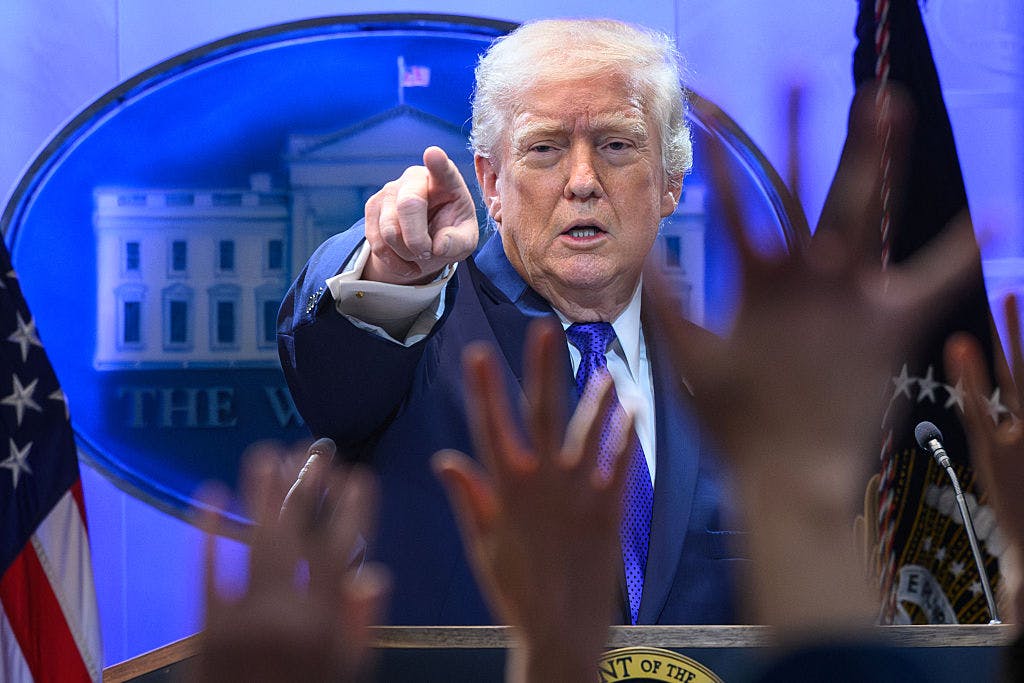
The Supreme Court has struck down the Liberation Day tariffs.
In a 6-3 decision, the Supreme Court basically struck down the 10% baseline tariff on all trading partners. It struck down what Trump called reciprocal tariffs on dozens of countries. They weren’t actually reciprocal tariffs because those countries were not actually charging us those tariffs. We were just charging them higher tariffs on the basis of trade deficits. Drug trafficking tariffs on Canada, Mexico, and China are gone. And the 145% effective rate on most Chinese goods is gone as well.
Live Your Best Retirement
Fun • Funds • Fitness • Freedom
The Supreme Court says that the president does not have the unilateral authority or ability to simply impose broad-scale tariffs.
The reason I originally said these tariffs were unconstitutional is because Article I “powers of the purse,” belong to Congress. That includes the power to tariff. Article I of the Constitution specifically names the powers of the purse. It says that the Constitution includes the authority to tax, borrow money, regulate commerce, coin money, establish post offices, declare war, and raise armed forces. That is what is in the tax, spend, and commerce powers of Congress.
Now the questions are, what can be delegated? What can’t be delegated? And what has been delegated?
So obviously, in certain specified contexts, Congress has delegated specific tariff authority to the president. But at any point, did Congress just say to the president, you can tariff anybody for any reason, interminably at any rate, that you want?
And the answer, says the Supreme Court, is no.
I agree with the decision, legally.

The question under consideration here was whether the president of the United States has the unilateral authority under the International Emergency Economic Powers Act (IEEPA), which is the power cited by the president of the United States, to levy tariffs on the entire world at once. That is the question at issue.
The IEEPA text at issue states:
At the times and to the extent specified in section 1701 of this title, the President may, under such regulations as he may prescribe, by means of instructions, licenses, or otherwise investigate, regulate, or prohibit any transactions in foreign exchange, transfers of credit or payments between, by, through, or to any banking institution, to the extent that such transfers or payments involve any interest of any foreign country or a national thereof, the importing or exporting of currency or securities, by any person, or with respect to any property, subject to the jurisdiction of the United States.
What the majority found is that IEEPA does not include broad-scale, unilateral, gigantic tariff power where the president cannot simply wake up one morning, print out a gigantic poster board, and say there is now a 45% tariff on the Solomon Islands that was not delegated in the IEEPA.
That decision is correct, although I find it somewhat ironic that Justice Roberts claimed that Obamacare was not a tax for purposes of finding it constitutional, but finds that tariffs are in fact a form of tax for purposes of finding them unconstitutional, as promoted by the president.
There are two arguments made by the majority opinion. One, the IEEPA does not actually authorize tariff power to the president in the way that the president has done.
This doesn’t mean the president doesn’t have alternative tariff power. There are other ways the president can impose tariffs if he wants to.
The second argument is that Congress never delegated this power to the president. If they had, it would be clear, and not some mystery. They would say, “All tariff power belongs to the president.”
They wouldn’t hide it in the text. That is what’s called the major questions doctrine. It’s part of the non-delegation doctrine. The non-delegation doctrine says that unless Congress has delegated a power that it holds to the executive branch, then the executive branch can’t exercise that power. And there are certain powers that Congress cannot actually just delegate to the executive branch, because those are core powers of Congress.
This is why you can’t just have Congress become a vestigial organ. It was never supposed to be this way.
If the president actually had the inherent power under his foreign policy powers to just impose tariffs, he wouldn’t need some sort of emergency declaration. The fact that they use the emergency declaration means this is not predominantly a foreign policy question.
I urge conservatives to think about this very strongly: If the president of the United States can simply declare a national emergency and then tariff the entire planet, what can’t the federal government do on the basis of an emergency? Many statutes authorize specific delegations of temporary authority under emergency circumstances. If that is broadened out to include things such as tariffing the whole planet, imagine Democrats saying, “Until all countries stop producing oil-powered vehicles, we are tariffing everyone at 70%.” They could do that based on the way the administration is currently interpreting the statute.
If it becomes clear that the Trump administration will let go of this issue, I think you will see the markets begin to climb. There are a lot of businesses in the United States that rely on foreign imports as inputs in their products, and they’ve been holding off on hiring; they’ve been holding off on development because they don’t know what’s coming down the pike.
I am still a constitutional conservative who likes the balance of powers, the checks and balances, who still remembers when the legislature was not a vestigial organ of government, and would like that to remain the case.
For conservatives, I understand: People love President Trump. I support President Trump as a general rule.
With that said, powers delegated to the executive branch do not flow back to the legislative branch very often. You’re not going to like those limits when they are applied to a president of a party to which you do not belong.
I’m finding it kind of ironic today, looking at all the Democrats who are celebrating this as a big victory. They wouldn’t be celebrating this if they understood it’s going to apply when a Democrat is in charge.
No one has expanded executive power in my lifetime like Barack Obama. And Joe Biden expanded it even further.
The notion that Democrats are not in love with executive power is insane to me.
It’s one of the reasons I don’t like the Democratic Party, because they keep wanting to expand the executive power at the cost of the checks and balances established by the Founders.
What's Your Reaction?
 Like
0
Like
0
 Dislike
0
Dislike
0
 Love
0
Love
0
 Funny
0
Funny
0
 Wow
0
Wow
0
 Sad
0
Sad
0
 Angry
0
Angry
0

I am just an average American. My teen years were in the late 70s and I participated in all that that decade offered. Started working young, too young. Then I joined the Army before I graduated High School. I spent 25 years in, mostly in Infantry units. Since then I've worked in information technology positions all at small family owned companies. At this rate I'll never be a tech millionaire. When I was young I rode horses as much as I could. I do believe I should have been a cowboy. I'm getting in the saddle again by taking riding lessons and see where it goes.
















Comments (0)