

Small Government vs. Big Crisis: The Conservative Dilemma
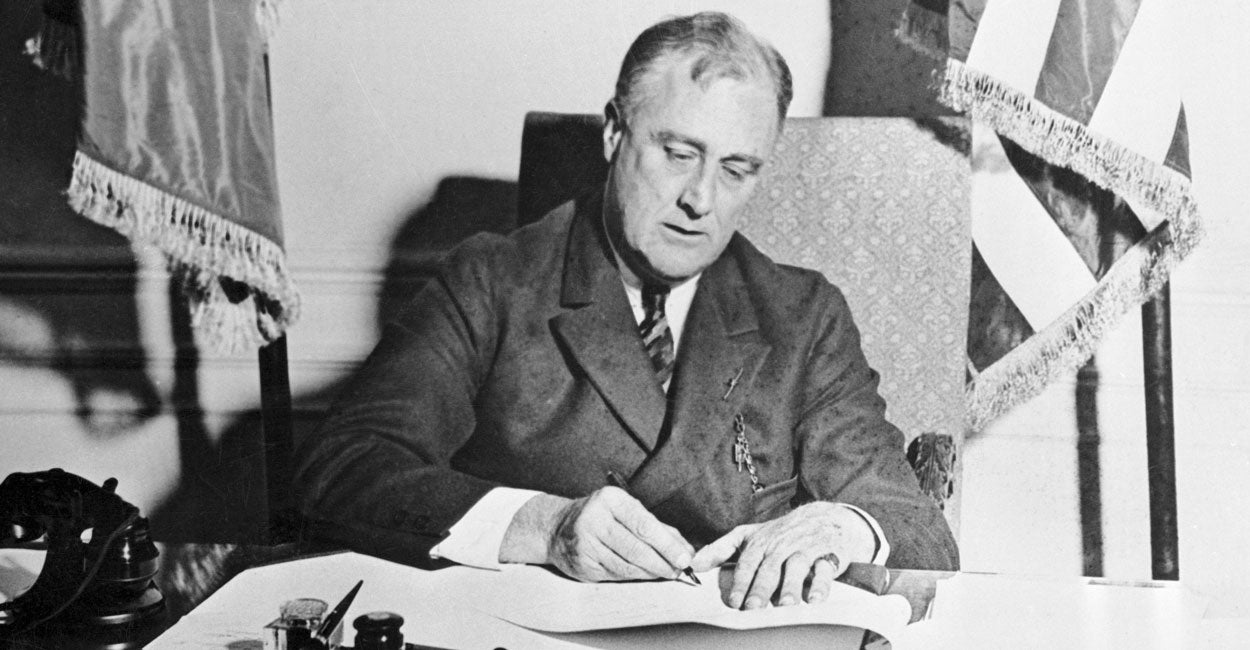
“Ambition must be made to counteract ambition,” said Founding Father James Madison, describing checks and balances in a nutshell. More than two centuries later, the scale is tipping. Executive power has grown dramatically and risks blurring the Founder’s vision of America.
Live Your Best Retirement
Fun • Funds • Fitness • Freedom
The conservative movement faces a paradox: holding to the values of limited government while responding quickly to crises, which inevitably expand executive power. Both parties are guilty of contributing to this trend.
This tension places pressure on conservatives, who must balance small-government principles with the demands of modern governance.
Libertarianism is gaining traction, growing partly as a reaction to this tension, especially among younger right-leaning voters who are questioning whether a movement committed to limited government can reconcile itself with the modern presidency. The real divide is no longer simply Left versus Right—it is institutional power versus constitutional restraint.
Our country was founded on the premise of limited government, separating ourselves from the tyrant King George III and reestablishing independence and natural rights.
Over time, we have fallen away from this notion—perhaps too close to King George’s vision.
When Crisis Calls for Action
When we think of presidential overreach, Abraham Lincoln’s suspension of habeas corpus and Franklin Roosevelt’s enactment of the New Deal often come to mind—and for good reason.
Lincoln is known as one of the most influential presidents in American history, rightfully so. From facilitating the freedom of slaves to preserving the Union, and passing the 13th Amendment and the Homestead Act, Lincoln clearly made his mark.
At the same time, Lincoln expanded executive power. In April 1861, he suspended habeas corpus to maintain order during the Civil War—a controversial decision that raised the question: How much power should the executive branch have during a national emergency?
Habeas corpus “roughly translates to a command to bring the body of the imprisoned to the court … to examine the grounds for a person’s imprisonment and decide whether continued imprisonment is lawful,” according to The Heritage Foundation.
This precedent set the stage for presidential expansion, showing the historical roots of the tension conservatives face today: responding to urgent conflict while respecting limited government.
On March 4, 1933, FDR gave his first inaugural address. “I shall not evade the clear course of duty. … I shall ask the Congress for the one remaining instrument to meet the crisis—broad Executive power to wage a war against the emergency, as great as the power that would be given to me if we were in fact invaded by a foreign foe.”
He believed Herbert Hoover, the previous president, was too timid in response to the 1929 stock market crash.
The New Deal introduced programs like the Social Security Act and the creation of federal agencies such as the Securities and Exchange Commission to stabilize the economy.
These measures addressed the crisis, but also expanded presidential authority, giving the federal government a larger influence on social and economic policy. Surely, we can see the lasting impact today.
The Pandemic’s Lesson: Power in Motion
Perhaps COVID-19 provides a more relatable example of executive overreach
It was spring break of 2020 when the news broke that COVID-19 had swept the world. Many students had their spring breaks extended by another week, then another, then another, until the semester was canceled.
Uncertainty flooded society, as people were filled with fear and unsure of what the future would hold, what vaccine mandates would look like, and how the government would respond. Americans watched as officials acted boldly and swiftly with what may be considered some of the most significant infringements on personal liberties in American history.
COVID-19, like crises before it, became another example of how emergencies accelerate executive authority—forcing conservatives to confront the same enduring paradox of balancing liberty and swift action.
Rise of Libertarianism
In a living room in Westminster, Colorado, the Libertarian Party was first conceived. Founded in 1971 and led by David Nolan, as well as John Hospers, Edward Crane, and others, these men created the party as a response to the increase in government overreach, particularly under the Nixon administration and during the Vietnam War.
The Libertarian Party website states: “The number of U.S. voters registered as Libertarian has surged by 92 percent since 2008, reports Ballot Access News.”
This rise can be attributed to the broad appeal of little to no government intervention. However, Madison pointed out a fundamental reality when he stated: “If men were angels, no government would be necessary.”
Although many conservatives have joined the Libertarian Party as a response to the expansion of executive power, even our Founding Fathers, who founded the country on the premise of small government, acknowledged the need for some form of governance—a reminder that even limited government requires structure to survive.
The post Small Government vs. Big Crisis: The Conservative Dilemma appeared first on The Daily Signal.
What's Your Reaction?
 Like
0
Like
0
 Dislike
0
Dislike
0
 Love
0
Love
0
 Funny
0
Funny
0
 Wow
0
Wow
0
 Sad
0
Sad
0
 Angry
0
Angry
0

I am just an average American. My teen years were in the late 70s and I participated in all that that decade offered. Started working young, too young. Then I joined the Army before I graduated High School. I spent 25 years in, mostly in Infantry units. Since then I've worked in information technology positions all at small family owned companies. At this rate I'll never be a tech millionaire. When I was young I rode horses as much as I could. I do believe I should have been a cowboy. I'm getting in the saddle again by taking riding lessons and see where it goes.


















Comments (0)