

State Department Ditches Old USAID Model, Sends $4 Billion Directly To African Nations
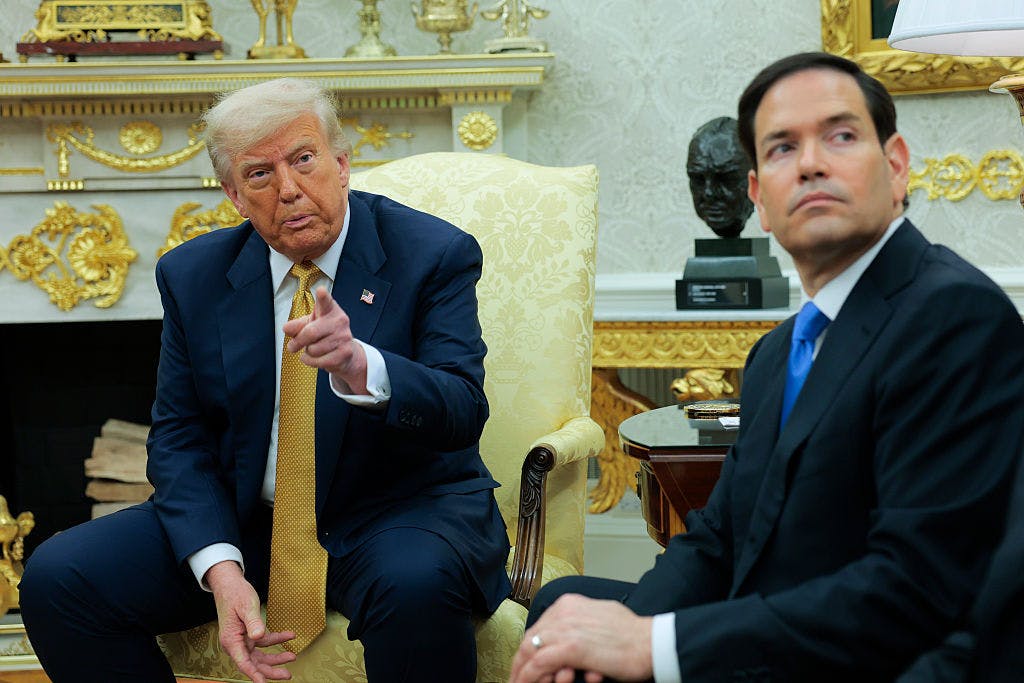
The Trump administration is ramping up its America First Global Health Strategy in its latest efforts to ditch the traditional USAID model by delivering billions in aid directly to several countries in Africa.
Live Your Best Retirement
Fun • Funds • Fitness • Freedom
Under the new model so far, which bypasses the propping up of the “NGO industrial complex,” the United States has signed six memoranda of understanding (MOUs) with six African countries totaling over $4 billion in direct U.S. investment matched by over $1.6 billion from signatory countries.
According to a senior State Department official, the old USAID system was unsustainable, “enriched beltway bandits,” and was designed to perpetuate itself rather than help countries become self-reliant.
“Now, under the Trump administration, we are committed to ensuring that every tax dollar spent overseas delivers real results by ensuring aid gets directly to its intended recipients and creating a structure that helps partner countries move toward self-reliance,” the official told The Daily Wire.
Countries that have signed so far include Kenya, Rwanda, Liberia, Uganda, Lesotho, and Eswatini, while Mozambique and Ethiopia are expected to sign similar MOUs next week.
According to the senior official, the Trump administration’s goal is to sign a dozen agreements before the end of the year.
The five-year MOU signed with Eswatini, a country in southern Africa, on Friday focuses on improving public health data systems, modernizing disease surveillance and outbreak response technology, and HIV prevention and treatment. In Eswatini, where 23.4% of people aged 15–49 live with HIV, the government plans to boost domestic health spending by $37 million over the five-year, $242 million MOU, according to the State Department.
Christmas Sale – Get 40% off New DailyWire+ Annual Memberships
Last week, when announcing the new initiative, Secretary of State Marco Rubio said the previous system was inefficient by funneling aid through foreign or U.S.-based NGOs that absorbed funding through overhead and administrative costs while limiting host-country control.
“We would go to a country and say we are going to help you with health care needs and then we would drive over to northern Virginia somewhere and find an NGO, one of these organizations, and give them all the money and tell them to go to this country and do their health care program for them,” Rubio said. “By the time it got down to it, the host country had very little influence … and only a percentage of the overall money ever actually reached the patients.”
Rubio added that he hopes to sign 50 such agreements with other countries.
“If we’re trying to help countries, help the country. Don’t help the NGO to go in and find a new line of business,” he said.
Top executives at health NGOs backed by American taxpayer dollars frequently have very high salaries. In 2024, the president of Research Triangle Institute earned over $1.4 million, and two of its vice presidents earned more than $850,000 each. At Johns Hopkins University’s Jhpiego Corporation, one executive earned over $1.08 million. Other top salaries included $598,348 at Management Sciences for Health, $545,290 at Family Health International, and $506,371 at Pact Inc.
In 2023, the president of the Elizabeth Glaser Pediatric AIDS Foundation earned $577,275, and the president of PATH earned $703,405.
What's Your Reaction?
 Like
0
Like
0
 Dislike
0
Dislike
0
 Love
0
Love
0
 Funny
0
Funny
0
 Wow
0
Wow
0
 Sad
0
Sad
0
 Angry
0
Angry
0

I am just an average American. My teen years were in the late 70s and I participated in all that that decade offered. Started working young, too young. Then I joined the Army before I graduated High School. I spent 25 years in, mostly in Infantry units. Since then I've worked in information technology positions all at small family owned companies. At this rate I'll never be a tech millionaire. When I was young I rode horses as much as I could. I do believe I should have been a cowboy. I'm getting in the saddle again by taking riding lessons and see where it goes.









Comments (0)