

The fastest way to stop Iran’s killers ... without firing a single shot
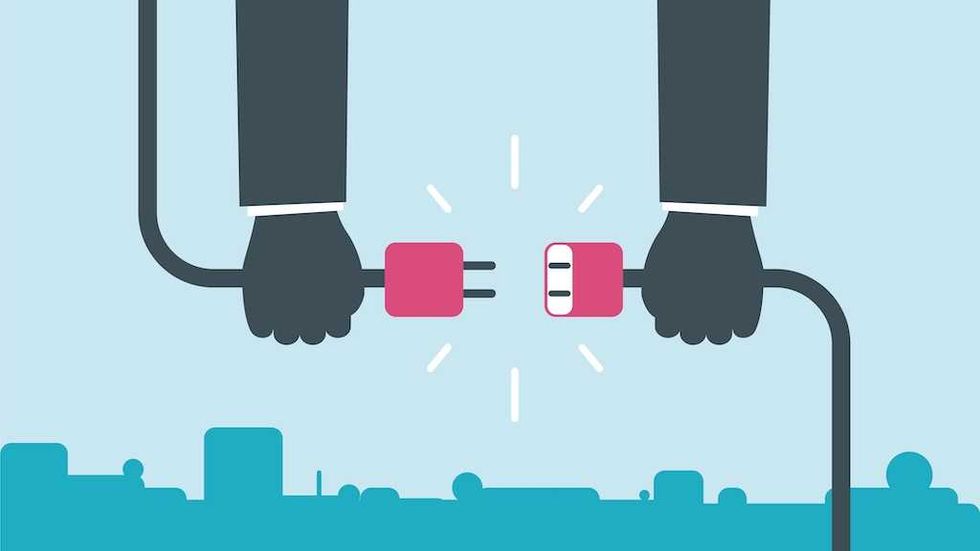
The mullahs of Iran have resumed the familiar work of slaughtering their own people. (Again!) The United States can respond without firing a shot — and without waiting months for a traditional embargo to bite.
Live Your Best Retirement
Fun • Funds • Fitness • Freedom
It can impose an electronic embargo.
An electro-embargo could do something sanctions often cannot: break the regime’s control quickly enough to matter while the killing is still underway.
Washington could pursue this approach unilaterally, or it could press the United Nations to authorize it under Article 41 of the U.N. Charter, which empowers the Security Council to order measures “not involving the use of armed force,” including the partial or complete interruption of “postal, telegraphic, radio, and other means of communication.” The text already exists.
The question is whether anyone has the imagination — and the nerve — to use it.
The electronic advantage
In the context of Iran’s continuing humanitarian emergency, the United States, with a bit of diplomatic legerdemain from Ambassador to the U.N. Michael Waltz, could challenge the Security Council to act. China and Russia sit on the council. They will posture. They will threaten vetoes. But even a public debate would force them to explain why the world should tolerate a regime that murders civilian protesters in the streets.
If the Security Council approves an Article 41 action, the United States could then present its combatant commanders with something Iran has never faced at scale: an embargo not on goods but on electrons.
Physical embargoes remain a standard tool of statecraft. They also take time. Iran can evade, reroute, smuggle, barter, and stall. An electronic embargo moves at the speed of light.
Target Iran’s hardline regime — not the Iranian people — by degrading the communications infrastructure that allows the government to command and control its security forces and manage the extraction and export of oil, its primary source of hard currency.
Strike the regime’s hardened telephone and cellular systems, satellite communications, and broadcast television.
Cripple the internal nervous system that keeps the state coordinated, disciplined, and armed.
The effect would be immediate. A regime that cannot communicate cannot coordinate raids, deploy forces efficiently, jam dissident signals, or maintain operational tempo. It cannot manage a modern oil export apparatus without functioning networks. It cannot run a crackdown in real time if it loses the ability to issue orders and track compliance.
The ‘Venezuelan formula’
Just as important, an electronic embargo could reverse the regime’s favorite trick: cutting the Iranian people off from each other and from the outside world. Tehran has already tried to block the internet and throttle social media. A targeted electronic campaign could negate that control and unleash an information tsunami — one the mullahs cannot shape, censor, or contain.
That shift matters. When citizens can communicate, organize, document, and broadcast, repression becomes harder and riskier. The regime loses its monopoly on narrative. Fear starts to spread in the other direction.
RELATED: Memo to Hegseth: Our military’s problem isn’t only fitness. It’s bad education.
 erhui1979 via iStock/Getty Images
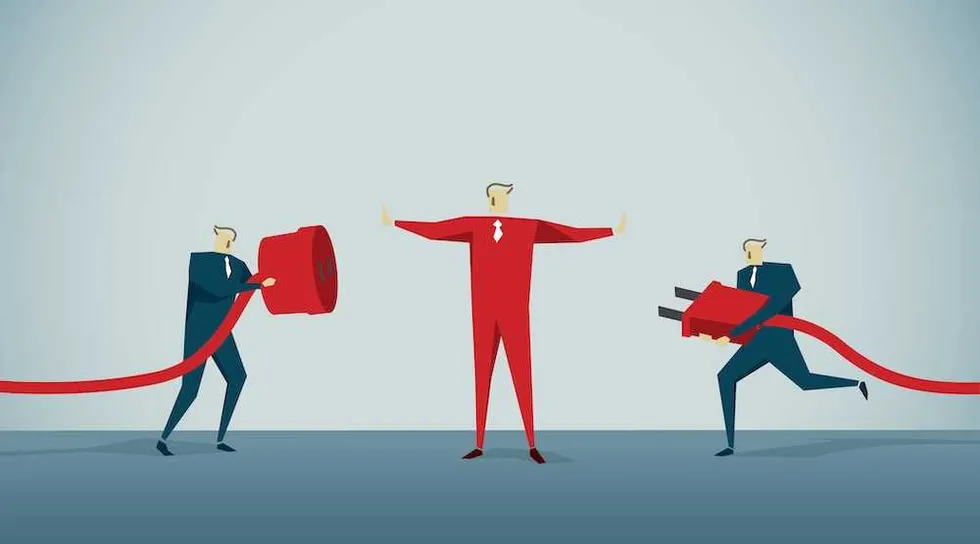
One can imagine a greatly expanded “Venezuelan formula”: degrade internal communications, then use broadcast means to confuse and complicate the regime’s grip on what is happening — while simultaneously encouraging the population to resist theocratic authority. The goal would not be spectacle. The goal would be collapse: the steady unraveling of the regime’s confidence, coherence, and control.
In this mode, a combatant commander could employ SOFTWAR principles to engage and degrade the mullahs through coordinated, non-kinetic lines of operation. Properly executed, such a campaign would affect nearly every aspect of Iranian society — and it would do so without turning Iranian cities into ruins.
A greater strategic payoff: China
The strategic payoff for the United States extends beyond moral clarity. It comes down to oil — and to China.
The recent decapitation of the Maduro junta in Venezuela proved a point many analysts ignore. The key factor is not the quantity of oil in a given country. It is control of the flow of oil. Energy states matter because they can fuel, fund, and sustain adversaries.
If the mullahs fall, China loses a major energy supplier at a moment when it can least afford disruption. Beijing’s ambitions depend on stable inputs. Xi Jinping’s dream of Chinese communist hegemony runs on energy. Remove an important provider, and you squeeze China’s strategic bandwidth — again.
That result alone justifies exploring an electronic embargo.
This is not a call for war. It is a call to use power creatively, within the bounds of international law when possible, and in defense of a population being beaten, shot, and silenced by its rulers.
The mullahs survive by controlling the physical streets and the electronic space above them. Take away the second, and the first becomes harder to hold.
An electro-embargo would not solve every problem. But it could do something sanctions often cannot: break the regime’s control quickly enough to matter while the killing is still underway.
What's Your Reaction?
 Like
0
Like
0
 Dislike
0
Dislike
0
 Love
0
Love
0
 Funny
0
Funny
0
 Wow
0
Wow
0
 Sad
0
Sad
0
 Angry
0
Angry
0

I am just an average American. My teen years were in the late 70s and I participated in all that that decade offered. Started working young, too young. Then I joined the Army before I graduated High School. I spent 25 years in, mostly in Infantry units. Since then I've worked in information technology positions all at small family owned companies. At this rate I'll never be a tech millionaire. When I was young I rode horses as much as I could. I do believe I should have been a cowboy. I'm getting in the saddle again by taking riding lessons and see where it goes.





















Comments (0)