

The Other Golden Fleet: The Urgent Need for a Strong Merchant Marine
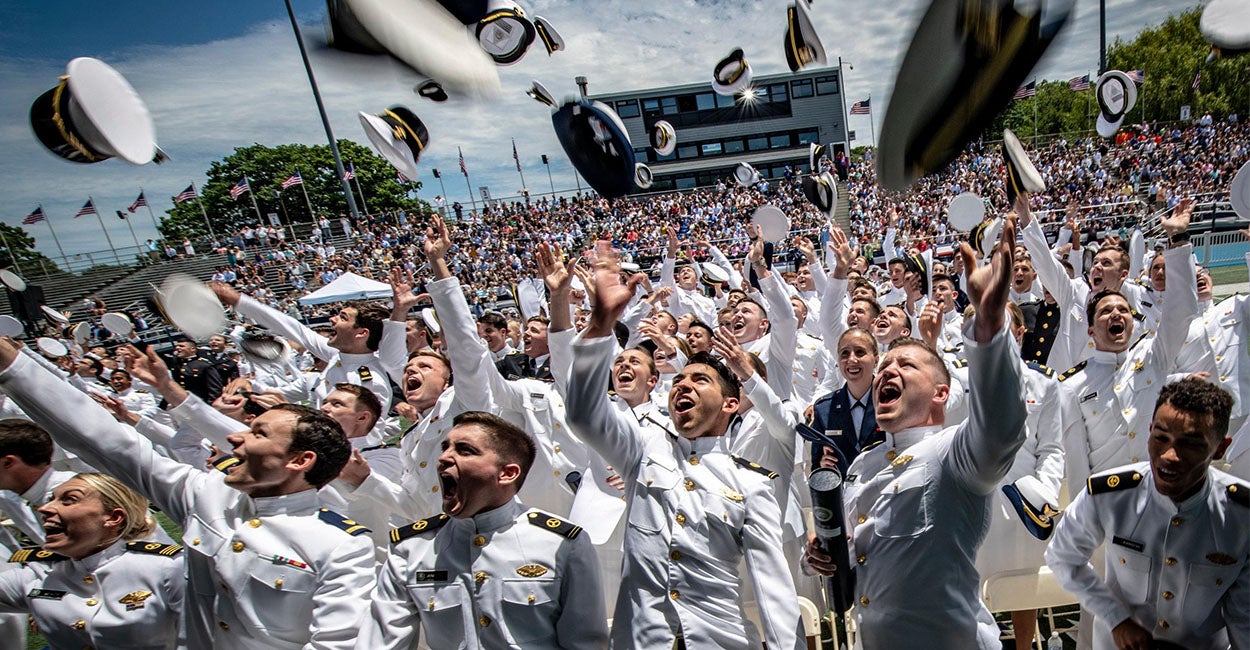
“The President has been clear–we must bring back our American maritime industrial might.”
Live Your Best Retirement
Fun • Funds • Fitness • Freedom
This recent statement by Secretary of the Navy John C. Phelan channels President Donald Trump’s strong commitment to a modern naval fleet that can protect America around the globe.
While much has been made of the new Trump-class of battleships, any advances in naval power will be left vulnerable if not backed up by serious efforts to revive America’s Merchant Marine. That’s a point that was made clear by Tidalwave, an ongoing major analytical project by The Heritage Foundation that’ s painted a dire picture of U.S. readiness for a prolonged Pacific war. The report noted that “…aging, and low-survivability CLF (Combat Logistics Force) inventory likely makes at-sea fuel replenishment the primary throttle on sustained naval operations.”
The Merchant Marine, composed of civilian vessels flying the U.S. Flag and crewed by Americans, is crippled by labor shortages and a small, stagnant fleet of less than 90 ships capable of international trade. A bipartisan bill to address the most glaring weaknesses–The SHIPS for America Act–has been stalled in Congress for almost a year.
Being able to move critical goods and equipment during time of war is a prerequisite for deterrence and victory in the Pacific. The two most pressing issues facing the Merchant Marine are a lack of ships and a shortage of qualified Mariners. A 2020 report found that we would be short by about 2,000 mariners in the event of a prolonged U.S. military engagement.
At present, Military Sealift Command (which supplies and refuels the Navy across the globe) has 12 tankers, less than 15% of the number required. And last year, 17 ships of this sealift command were sidelined due to personnel shortages. Yet by 2027, China says it plans to be prepared for an invasion of Taiwan, while we mothball some of our most strategically important assets.
These problems are the result of many factors, including a suboptimal recruitment campaign. The co-author of this article, Hollins Randolph, is the exception having not heard about the industry from family or friends before becoming a merchant mariner. To grow this vital force, a different approach to recruitment is needed. Among the general public, there is a lack of awareness about maritime careers; the SHIPS for America Act addresses this and includes initiatives aimed at raising awareness about maritime careers in K-12 settings. But most pressing is improving the conditions of the training of merchant mariners.
Foremost is the United States Merchant Marine Academy, often referred to as “King’s Point.”
Unfortunately, the reality for future merchant mariners at King’s Point is bleak; mold, leaky pipes, and a lack of hot water are all a daily reality. Not surprising then that graduations are down nearly 15% in the last five years. The SHIPS for America Act funds comprehensive renovations of the Academy and begins to address decades of neglect. Something seen firsthand and publicly called out as unacceptable by the Secretary of Transportation Sean Duffy.
The United States must have a commercial fleet capable of supporting national security–today it clearly does not. Moreover, reviving our maritime industry means leading in technology by, for example, bringing back nuclear propulsion for commercial shipping once taught at King’s Point.
Innovations like this will foster an American maritime comparative advantage and make American-built ships competitive, today sadly they are 26 times costlier than foreign equivalents. To this end, the SHIPS for America Act establishes Maritime Incubators such as the U.S. Center for Maritime Innovation, the National Shipbuilding Research Program, and Maritime Prosperity Zones to kickstart America’s maritime revival.
A century ago, after witnessing America scramble to find enough ships for the First World War, the sponsors of the Jones Act recognized the necessity of a strong Merchant Marine. Unfortunately, our Merchant Marine was allowed to wither. Then, in 1998, the People’s Republic of China decided to become the foremost maritime power to undermine America’s place in the world. For this new challenge, the provisions of the Jones Act alone will not suffice.
China in 27 years came from further behind than the U.S. today, to controlling over 120 ports around the world and 60% of the orderbook for new ships. The SHIPS for America Act and Trump’s executive order are largely aligned, together providing a strong signal to private industry to expand maritime innovation, build new shipyards, and work with our allies and partners to invest in our maritime industry.
In the meantime, reversing a slackening momentum on this endeavor requires orders for new ships to get American shipyards building the needed Strategic Commercial Fleet crewed by American merchant mariners.
Unfortunately, recent public partisan actions by co-sponsor Sen. Mark Kelly, a Democrat, to the SHIPS for America ACT are complicating what has been a non-partisan and widely supported effort. As a retired naval officer and graduate of King’s Point, Kelly’s advocacy for merchant mariners has been powerful. As such, it may be time to deepen the bench or bring onboard a new co-sponsor.
The post The Other Golden Fleet: The Urgent Need for a Strong Merchant Marine appeared first on The Daily Signal.
What's Your Reaction?
 Like
0
Like
0
 Dislike
0
Dislike
0
 Love
0
Love
0
 Funny
0
Funny
0
 Wow
0
Wow
0
 Sad
0
Sad
0
 Angry
0
Angry
0

I am just an average American. My teen years were in the late 70s and I participated in all that that decade offered. Started working young, too young. Then I joined the Army before I graduated High School. I spent 25 years in, mostly in Infantry units. Since then I've worked in information technology positions all at small family owned companies. At this rate I'll never be a tech millionaire. When I was young I rode horses as much as I could. I do believe I should have been a cowboy. I'm getting in the saddle again by taking riding lessons and see where it goes.





















Comments (0)