

The Trump Case Is Finally Dead, but Fani Willis Left Fulton County Taxpayers on the Hook for Millions of Dollars
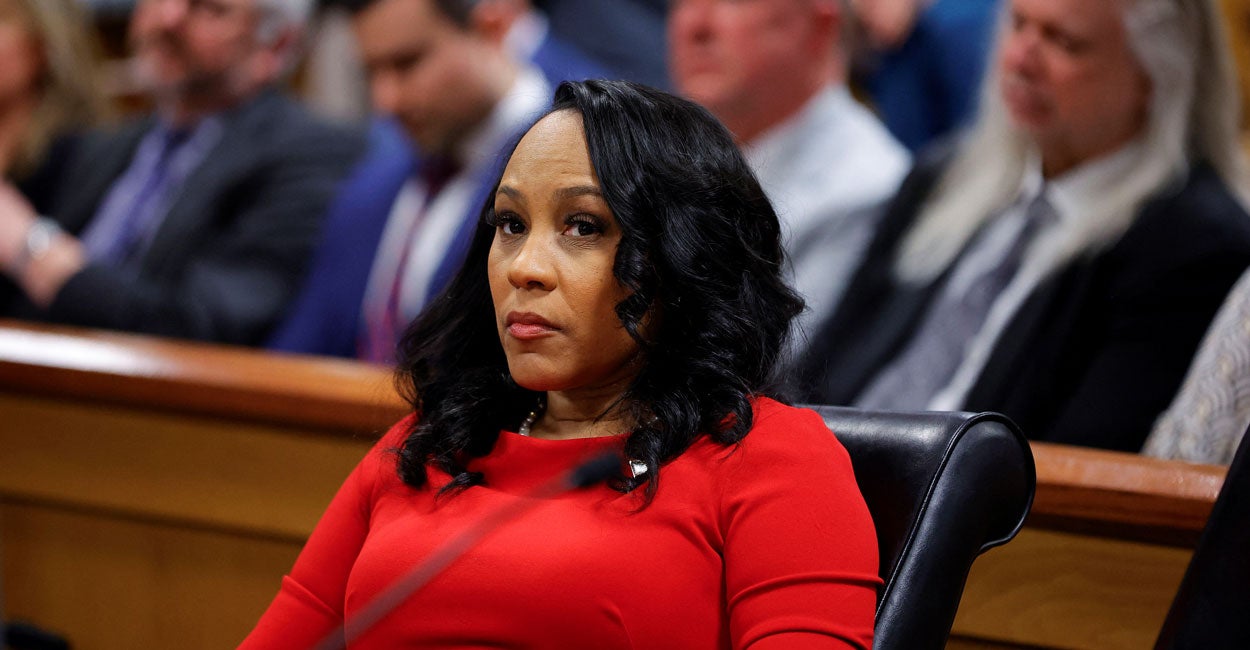
Fulton County District Attorney Fani Willis did not just blow up her own witch-hunt RICO prosecution through her unethical misbehavior. She handed the persecuted defendants, including President Donald Trump, the right to send Fulton County taxpayers the bill.
Live Your Best Retirement
Fun • Funds • Fitness • Freedom
A Fulton County judge has finally dismissed the 2020 election prosecution case Willis pursued against President Donald Trump and the remaining defendants in its entirety. It was a meritless case that should never have been brought in the first place. This came after the Georgia Court of Appeals and then the state Supreme Court disqualified Willis over a “significant appearance of impropriety” arising from her romantic relationship with the special prosecutor she hired, Nathan Wade, as well as numerous other problems with the case.
Georgia Code § 17-11-6, enacted this year, gives every defendant whose charges were dismissed the right to recover “all reasonable attorney’s fees and costs” from the budget of the DA’s office itself.
In plain English, Willis’s ethical lapses did not just destroy her own high-profile prosecution. It opened the door for as many as 15 defendants to send their multimillion-dollar legal invoices to the taxpayers of Fulton County. Many of those taxpayers voted to reelect Willis as their DA in last year’s election, bringing to mind the famous line from Shakespeare’s “A Midsummer Night’s Dream” uttered by Puck: “What fools these mortals be!”
In August 2023, Willis brought her politically-motivated indictment against Trump and 18 co-defendants, accusing them of a criminal “enterprise” to overturn Georgia’s 2020 election results. Nineteen people in all were unjustly dragged into court, from the former president to lawyers, party officials, and local activists, simply for doing what they had every constitutional right to do: question the outcome of the election, provide legal advice, and lobby state legislators to address their concerns.
Four defendants, facing early trial dates and multiple felony charges, eventually entered plea deals to minor charges in exchange for dramatically reduced sentences (and were granted first-offender status, which means that those convictions will be wiped away if they successfully complete a period of probation), leaving Trump and 14 others to face trial. It was supposed to be the showcase trial of Willis’s tenure, something she obviously envisioned putting her, a local, unknown prosecutor, on the national stage of the Democratic Party: the “Fulton 19” in a televised, RICO spectacle that she herself predicted could take four months of trial time and 150 witnesses.
But the unjustified prosecution turned into a soap opera about the prosecutor’s misdeeds.
Defense motions revealed that Willis had appointed her romantic partner, private attorney Nathan Wade, as special prosecutor and paid him hundreds of thousands of dollars in public funds to run the case. Bank and credit-card records showed Wade paying for trips with Willis to places like Napa Valley and the Caribbean at the same time, prompting allegations that she personally benefited from the prosecution through shared luxury travel on the county’s dime.
Judge Scott McAfee did not initially find an actual financial conflict, but he did find that the relationship created an “appearance of impropriety” and a “financial cloud of impropriety and potential untruthfulness” over the prosecution. Wade resigned to keep Willis on the case, but that was not enough to remedy the “impropriety.”
Upon appeal from Trump and the other defendants, the Georgia Court of Appeals disqualified Willis outright (and her entire office), holding that her conduct created a “significant appearance of impropriety.” The Georgia Supreme Court wisely declined to rescue her when it decided not to hear her appeal.
Once Willis was out, responsibility passed to Pete Skandalakis, executive director of the Prosecuting Attorneys’ Council of Georgia, to determine if the prosecution should be dropped or referred to a DA in a different county to pursue. After reviewing the evidence (or should we say lack of evidence?), the law, and the costs involved, Skandalakis moved to dismiss all the charges that remained against the defendants.
In his motion to the court, he wrote what should have been obvious from the very beginning, that “It is not illegal to question or challenge election results. Our nation’s foundational principles of free speech and electoral scrutiny are rooted in this very freedom.” As our colleague John Malcolm pointed out long ago in a previous article, Skandalakis noted that the alternate electors who were prosecuted “lacked criminal intent” and “believed their actions were legally required to preserve Georgia’s electoral vote in the event” Trump won his then-pending lawsuit contesting the results.
And the lawyers who were prosecuted? Skandalakis said he was “extremely reluctant to criminalize the act of attorneys providing flawed legal advice.” While we might disagree with his claim that the lawyers provided “flawed” legal advice, the point Skandalakis makes is vitally important—the lawyers were being criminally prosecuted for doing what lawyers are supposed to do: provide good faith legal advice and vigorously represent their clients, even if the arguments they make are ultimately rejected by a court. He noted that since “multiple interpretations are equally plausible, the accused is entitled to the benefit of the doubt and should not be presumed to have acted criminally.”
McAfee then issued a one-paragraph order dismissing the case “in its entirety.”
That phrase should keep Fulton County’s finance office awake at night.
When legislators passed the bill to codify § 17-11-6 this year, they were not shy about what they were doing. Asked whether the measure would benefit the Trump defendants, the bill’s sponsor explained that it would apply to “all 15 defendants” who were still fighting the case.
The new law mandates two crucial things. First, it says that if a prosecuting attorney in a criminal case “is disqualified due to improper conduct” and a subsequent prosecutor or the court dismisses the case, the defendant “shall be entitled to an award of all reasonable attorney’s fees and costs incurred by the defendant in defending the case.” Second, and most important for taxpayers, it mandates that any award “shall be paid from the funds of the office of the prosecuting attorney as budgeted by the county.”
Nineteen defendants were indicted. Four took plea deals. That leaves up to 15 individuals, including the former president, whose charges have now been dismissed in their entirety and who may invoke § 17-11-6.
What might that cost? We already know some of the numbers that are public. The Georgia Republican Party spent roughly $2.3 million defending three of its leaders who served as alternate electors. Other defendants poured hundreds of thousands of dollars into high-powered legal teams or raised large sums on crowdfunding sites to keep up with the onslaught. Trump himself has been represented by nationally known lawyers whose hourly rates are not exactly discounted.
Local media are already reporting that Fulton County taxpayers could be “on the hook” for “tens of millions” of dollars in fee awards if the defendants file, as they no doubt will, motions seeking those funds under the new statute and judges deem their bills to be reasonable. Those payments must come out of the budget allocated to the Fulton County DA’s office, which means either service cuts, delayed reforms, or higher taxes to refill the pot. Fulton County is already contemplating a property tax increase of roughly $32 million just to address a separate federal mandate to fix its “abhorrent, unconstitutional” jail conditions.
In other words, while Willis may never personally sign a reimbursement check, her conduct has put every homeowner and small business in Fulton County in the position of underwriting the legal defense of the victims she chose to indict in her unwarranted prosecution to further her political ambitions.
When a prosecutor’s “improper conduct” blows up a case, the innocent should not be financially ruined for the privilege of having been wrongly dragged into court. Reimbursement of their legal fees can’t reimburse these defendants for the aggravation, stress, reputational harm, and the personal, emotional costs they have suffered, but at least some of their financial woes will be addressed through this law.
But there is a second lesson that Georgia, and the rest of the country, should draw from this fiasco. Prosecutorial power is so immense that its misuse by unethical lawyers can be catastrophic, not just for the defendants who have to fight baseless charges, but for taxpayers who have to remedy that DA’s malfeasance. The Willis-Wade debacle also made the Fulton County District Attorney’s Office an object of ridicule. Now it threatens to drain millions from public safety budgets to reimburse defendants who never should have been victimized in the first place.
Georgia legislators did the right thing when they made counties liable for the costs of prosecutorial misconduct. But they should also make sure that district attorneys face real, personal consequences for the same illicit behavior. That means tighter rules, mandatory disclosure of personal and financial ties with outside counsel, and a meaningful disciplinary process when a DA’s inexcusable “lapse in judgment” results in the collapse of such sham show trials and political vendettas.
The lesson is simple. When prosecutors treat their office as a vehicle to further their political agendas and personal relationships, it is not just defendants who suffer. It is every citizen who pays taxes and discovers they are footing the tab for someone else’s lawfare.
The post The Trump Case Is Finally Dead, but Fani Willis Left Fulton County Taxpayers on the Hook for Millions of Dollars appeared first on The Daily Signal.
What's Your Reaction?
 Like
0
Like
0
 Dislike
0
Dislike
0
 Love
0
Love
0
 Funny
0
Funny
0
 Wow
0
Wow
0
 Sad
0
Sad
0
 Angry
0
Angry
0

I am just an average American. My teen years were in the late 70s and I participated in all that that decade offered. Started working young, too young. Then I joined the Army before I graduated High School. I spent 25 years in, mostly in Infantry units. Since then I've worked in information technology positions all at small family owned companies. At this rate I'll never be a tech millionaire. When I was young I rode horses as much as I could. I do believe I should have been a cowboy. I'm getting in the saddle again by taking riding lessons and see where it goes.












Comments (0)