

There Is No Appomattox For America’s Current Conflict
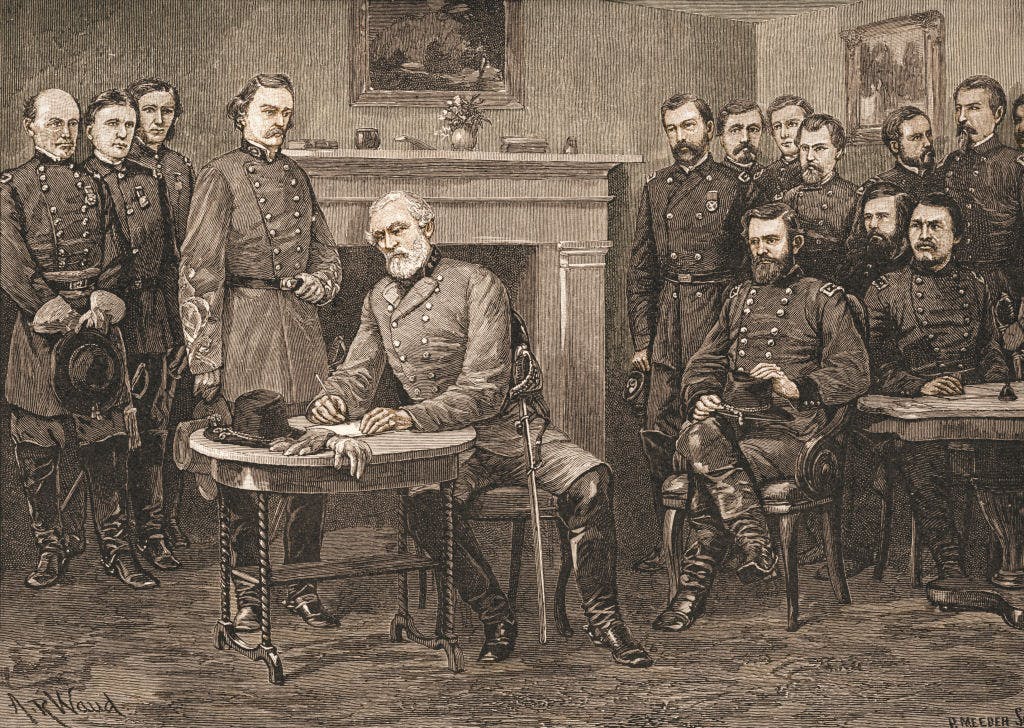
Before Donald Trump stunned the legacy media by winning the 2016 election, Hillary Clinton reassured Americans that “the challenges we face today do not approach those of Lincoln’s time. Not even close.”
Live Your Best Retirement
Fun • Funds • Fitness • Freedom
Measured by bloodshed alone, she was right. Nothing today rivals the carnage of Antietam or Shiloh. Yet in a deeper sense — culturally, psychologically, and spiritually — the United States may now be more divided than it was when Americans were literally leveling rifles at each other.
The reason is profound: in 1861, both sides still believed in the legitimacy of the American experiment itself.
That may sound counterintuitive. How could the Confederacy — founded on secession and slavery — have believed in the principles of 1776, the Constitution, and the Bill of Rights that followed? The answer lies in what the Confederates themselves said. In their Declarations of the Causes of Secession, Southern states were explicit. Mississippi declared, “Our position is thoroughly identified with the institution of slavery — the greatest material interest of the world.” Across the declarations of South Carolina, Mississippi, Georgia, Texas, and Virginia, preserving slavery appears more than eighty times as the central justification for rebellion. Taxes appear once. Tariffs not at all.
This clarity explains a historical paradox: how the country could fight a war of extraordinary savagery and yet reconcile with relative speed once it ended.
The South believed — wrongly and catastrophically — that it was defending the founding principle of self-governance. In its view, states retained sovereignty and thus the right to secede if the federal government threatened their interests. That those interests included the enslavement of millions was morally rationalized or ignored. The North, meanwhile, increasingly understood the war as a test of whether the Declaration’s claim that “all men are created equal” had any binding meaning at all.
As Abraham Lincoln recognized, both sides could not be right. But both believed they were acting in service of America. The Civil War resolved a single, defining question: whether self-government extended to the right to enslave others without due process. The ruling was handed down with prejudice at Appomattox.
The defeated South accepted the verdict — grudgingly, imperfectly, but decisively enough to prevent endless insurgency. By the end of the nineteenth century, former Confederate states had become among the most patriotic regions of the country. Former Confederate general James Longstreet captured that reconciliation when he wrote in 1899, “Barring a little family misunderstanding of a generation back, the South has never been anything but loyal.”
That sentence would be unimaginable today.
Reunion after the Civil War was possible because, once slavery — the central issue — was settled, North and South still shared a reverence for the nation’s founding. They disagreed violently about its application, but not about its legitimacy. They still loved and believed in the innate goodness of their country.
Now consider the present.
What comparable issue divides us today — one that, once resolved, would allow the country to heal? What shared assumptions remain beneath our disputes?
The uncomfortable answer: very few.
We no longer merely disagree over policy. We disagree over whether the United States itself is a moral enterprise. Americans increasingly do not share a common origin story. When one looks at John Trumbull’s painting of the presentation of the Declaration of Independence, one side sees flawed but courageous men risking everything to found a republic that, despite its contradictions, expanded human freedom. The other sees little more than oppression: “racist, sexist, slave-owning hypocrites” whose words about liberty are dismissed as fraudulent from the outset.
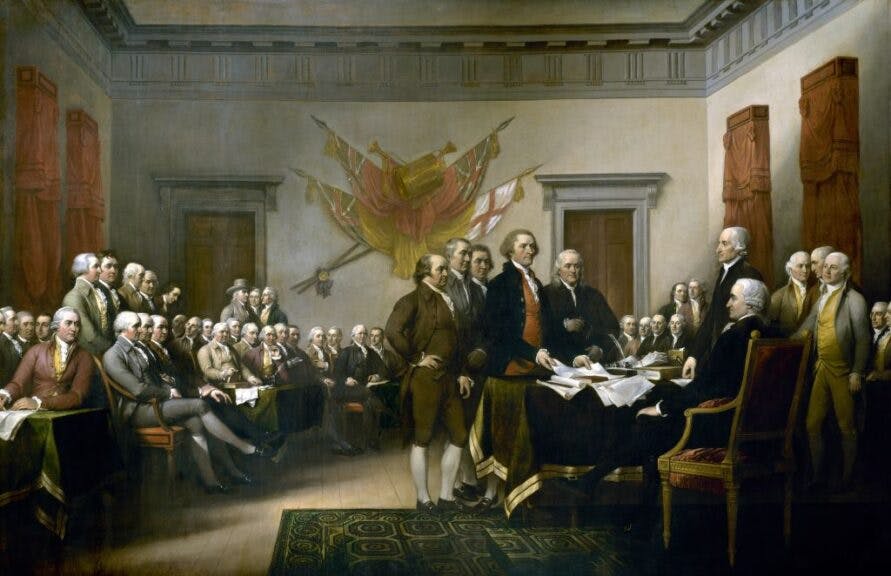
Universal History Archive/Getty Images
These are not policy disagreements; they are competing realities. They cannot be resolved by elections or concluded by a surrender ceremony. There is no Appomattox for a conflict this diffuse.
Today’s divide is not organized around a single issue like slavery. It is cultural and perceptual. It plays out not on battlefields but across classrooms, workplaces, media, and daily life. Even our fiercest moral debates — abortion, immigration, gender — are symptoms rather than causes. They reflect a society that no longer agrees on truth, limits, or even basic definitions.
The Civil War removed a localized moral cancer, and the body politic survived. Today’s divisions resemble something more metastatic, dispersed throughout the entire system. There are no clear fronts, no decisive battles, no final terms — only endless skirmishes.
Lincoln urged “charity toward all and malice toward none.” But charity requires reciprocity. It requires a shared belief that persuasion matters and that one’s opponent is still a fellow citizen.
Whether such an audience still exists is the question that will define the years ahead.
* * *
Brad Schaeffer is a commodities fund manager, author, and columnist whose articles have appeared on the pages of The Wall Street Journal, NY Post, NY Daily News, The Daily Wire, National Review, The Hill, The Federalist, Zerohedge, and other outlets. He is the author of three books. You can also follow him on Substack and X.
The views expressed in this piece are those of the author and do not necessarily represent those of The Daily Wire.
What's Your Reaction?
 Like
0
Like
0
 Dislike
0
Dislike
0
 Love
0
Love
0
 Funny
0
Funny
0
 Wow
0
Wow
0
 Sad
0
Sad
0
 Angry
0
Angry
0

I am just an average American. My teen years were in the late 70s and I participated in all that that decade offered. Started working young, too young. Then I joined the Army before I graduated High School. I spent 25 years in, mostly in Infantry units. Since then I've worked in information technology positions all at small family owned companies. At this rate I'll never be a tech millionaire. When I was young I rode horses as much as I could. I do believe I should have been a cowboy. I'm getting in the saddle again by taking riding lessons and see where it goes.















Comments (0)