

Trump’s New National Security Strategy Garners Support Across Conservative Movement
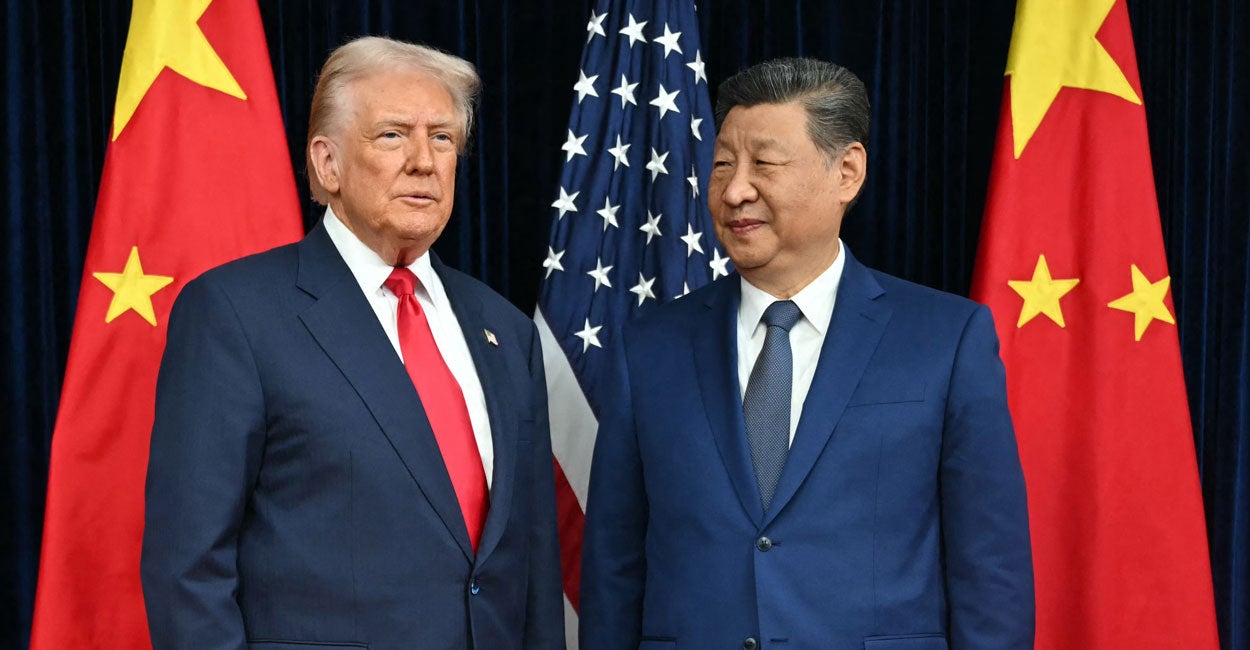
President Donald Trump’s new National Security Strategy is garnering support across the conservative movement.
Live Your Best Retirement
Fun • Funds • Fitness • Freedom
On Friday, the Department of State released its new National Security Strategy—a policy paper detailing the administration’s priorities across the world. To some in the conservative orbit, it is a 33-page crystallization of just how the Trump movement wants to re-think America’s role in the world.
The paper advocates a new idea of America’s regional priorities: domination of the Western Hemisphere, shifting away from foreign aid and ideological influence campaigns in Africa, restoring peace and socio-economic vitality to Europe, and ending the policies that have made America cower before China on the world stage.
Sen. Eric Schmitt, R-Mo., who sits on the Senate armed services committee, told The Daily Signal it is a welcome pivot away from misguided strategies of the past.
“This strategy gets the priorities right. It reasserts American leadership in our own Hemisphere where border security, cartel violence, and foreign encroachment threaten our people, and it meets the China challenge with the strength and clarity we’ve lacked for decades. Sen. Eric Schmitt, R-Mo., who sits on the Senate armed services committee, wrote in a statement to The Daily Signal.
Some of Scmitt’s Democrat colleagues in the senate, however, expressed their dismay that America will not be pursuing interventionist policies in the name of liberally-construed human rights.
Sen. Chris Van Hollen, D-Md., wrote on X that it “abandons the idea that we should stand up for freedom & human rights around the world,” and “lectures our European allies & embraces authoritarian leaders.”
Sen. Mark Kelly, D-Ariz., for instance, wrote on X that it “would weaken U.S. influence across the globe and undermine our national security.”
In Schmitt’s mind, however, the new National Security Strategy “defines clear interests, aligns power to purpose, and rejects the fantasy that America can remake the world at will.”
“Strength is used to deter war, not to chase endless nation-building,” the Missouri senator continued. “This strategy restores the first duty of government: to defend the American people. It secures our borders, rebuilds our industrial and military strength, and makes clear that our path to peace is through national power.”
Dan Caldwell, a former Senior Adviser in the Pentagon, appears to agree with Schmitt’s assessment that the Trump administration is seeking to abandon the failed foreign policy of prior administrations. The strategy “is a true break from the failed bipartisan post-Cold War foreign policy consensus – a consensus that drove us headlong into endless wars and enabled free-riding by our allies,” Caldwell told The Daily Signal in a statement.
Sen. Mike Lee, R-Utah, also praised the paper’s emphasis on hemispheric hegemony in a statement to The Daily Signal.
“The Biden administration neglected our hemisphere to America’s detriment. Now we must contend with narco-terrorists, cartels, and Chinese influence. The NSS is an important first step in reasserting U.S. hegemony in our hemisphere and to make Americans safe and prosperous,” the Utah senator said.
In many ways, the paper proposes a resurrection of the nineteenth-century idea of America having a duty to dominate its neighborhood.
It explicitly calls for a “‘Trump corollary’ to the Monroe Doctrine,” wherein neighboring governments would cooperate with the United States to combat criminals, “hostile foreign incursion or ownership of key assets,” and “ensure our continued access to key strategic locations.”
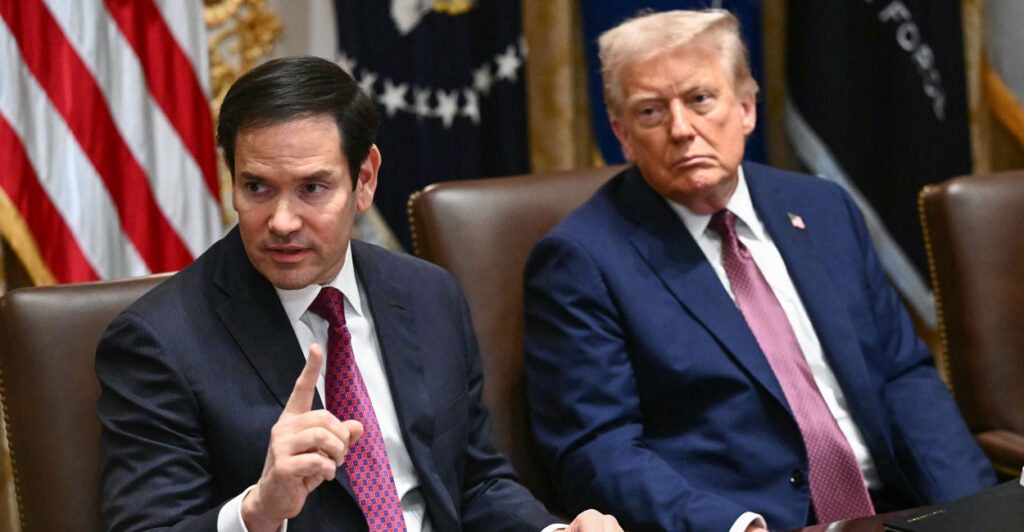
Rob Greenway, director of the national security center at the Heritage Foundation and a former Deputy assistant to President Donald Trump, told The Daily Signal in a statement that he believes the document provides “timely context to what has been a successful tenure, and the thinking that will guide the nation going forward.”
Middle East De-Emphasized
In the Middle East, the White House argues that, despite the fact that the region has been a focus of American military strength for decades, it is in fact not as strategically important as many suggest.
“Conflict remains the Middle East’s most troublesome dynamic, but there is today less to this problem than headlines might lead one to believe,” it reads, arguing that Israel and America’s strikes on Iran, as well as the recently negotiated ceasefire with Hamas, have brought new stability.
“The days in which the Middle East dominated American foreign policy in both long-term planning and day-to-day execution are thankfully over,” it bluntly states. “Not because the Middle East no longer matters, but because it is no longer the constant irritant, and potential source of imminent catastrophe, that it once was.
Curt Mills, executive editor of The American Conservative, writes often about America’s regional priorities and argues that America funding and fighting wars is often to its detriment.
Over all, he told The Daily Signal he is not surprised by the paper’s opposition to nation-building projects.
“A document that just declared that the US is going to be back in the Middle East in a major way, I think, would have been fairly shocking. That’s not what Trump has been saying,” Mills told The Daily Signal. “That’s not what his subordinates generally espouse… it’s just a question of whether or not there’s the follow-through.”
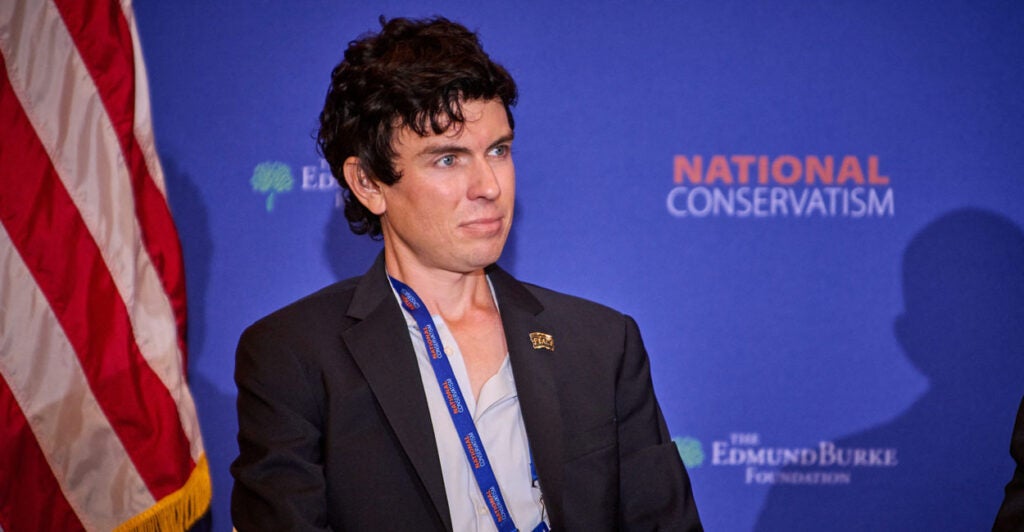
Cool Down of Cold War with China?
The lengthiest section—subtitled, “Win the Economic Future, Prevent Military Confrontation”— is on Asia, where the administration views America’s relationship with China as flawed but sees possibility for a positive relationship.
The paper calls for a rebalancing of the Sino-American economic relationship by reducing reliance on Chinese imports, combatting intellectual property theft, and finding new trading partners.
To ensure peace in the Pacific and the independence of Taiwan, it calls for building up a powerful military “to deter and prevent a large-scale military conflict.”
However, Mills pointed out that the China policy appeared less hawkish than one might expect.
The Asia section calls for “balanced” trade with China, rather than an embargo, and advocates taking steps to prevent military conflict.
“This does not sound like an administration that wants a protracted kinetic war with China anytime soon, let alone a protracted economic war,” Mills said.
New Policies For Europe and Africa
In addition to the paper’s call for a revived Monroe Doctrine, it advocates reevaluating America’s role in Africa and Europe.
In the brief section on Africa, for example, the authors call on America to “transition from an aid-focused relationship with Africa to a trade- and investment-focused relationship.”
The White House proposes an America-first Africa strategy, in which “harnessing Africa’s abundant natural resources and latent economic potential” is the focus, rather than promoting “liberal ideology.”
In the lengthier section on Europe, the paper includes much more explicitly civilizational goals, as it laments the continent’s “strife, censorship of free speech and suppression of political opposition, cratering birthrates, and loss of national identities and self-confidence.”
“We want Europe to remain European, to regain its civilizational self-confidence, and to abandon its failed focus on regulatory suffocation,” it reads.
At the top of the White House’s list of policy priorities is “reestablishing conditions of stability within Europe and strategic stability with Russia,” an effort Trump has been engaged in since his inauguration.
A Global Rebalancing?
What is clear is that the administration does not believe it can be everywhere at once—that some regions are simply more important than others when it comes to American national security.
Greenway of the Heritage Foundation told The Daily Signal of the realignment of priorities, “I expect it will require a shift in resources -to include personnel- to the western hemisphere and possibly Asia to align with the administration’s priorities.”
Still, Mills recommends that readers watch the administration’s actions more than its policy papers.
“It’s very interesting. I think it’s much better than a bad NSS, but this isn’t the Magna Carta of Trumpism,” said Mills. “The President has many virtues, but I would say drafting policy documents, reading policy documents, and sticking to specific details of policy is not exactly his modus operandi.”
The post Trump’s New National Security Strategy Garners Support Across Conservative Movement appeared first on The Daily Signal.
What's Your Reaction?
 Like
0
Like
0
 Dislike
0
Dislike
0
 Love
0
Love
0
 Funny
0
Funny
0
 Wow
0
Wow
0
 Sad
0
Sad
0
 Angry
0
Angry
0

I am just an average American. My teen years were in the late 70s and I participated in all that that decade offered. Started working young, too young. Then I joined the Army before I graduated High School. I spent 25 years in, mostly in Infantry units. Since then I've worked in information technology positions all at small family owned companies. At this rate I'll never be a tech millionaire. When I was young I rode horses as much as I could. I do believe I should have been a cowboy. I'm getting in the saddle again by taking riding lessons and see where it goes.


















Comments (0)