

U.S. Strikes On Iran Created Severe Bottlenecks To The Regime’s Nuclear Weapons Pipeline
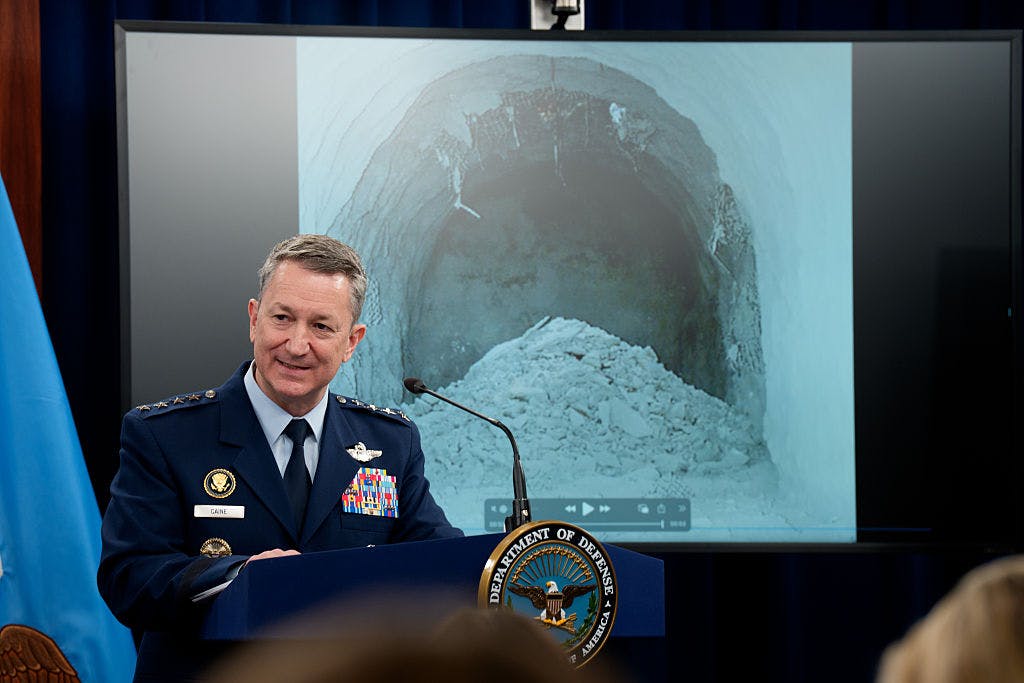
The U.S. and Israeli strikes on Iran’s nuclear program in June inflicted significant damage, creating critical bottlenecks across the country’s weapons-building supply chain that pushed Tehran’s nuclear ambitions into a period of uncertainty and disruption, according to post-strike assessments.
Live Your Best Retirement
Fun • Funds • Fitness • Freedom
Before the attacks, Iran was widely viewed as a nuclear threshold state, only months away from being able to assemble a nuclear weapon if its leadership chose to do so. It reportedly possessed sufficient enriched uranium — once further refined to weapons grade — to fuel as many as 22 nuclear weapons within five months, with enough material for roughly half that number available within weeks. Iranian scientists were reportedly accelerating work on weaponization, laying the groundwork for a final political decision by the supreme leader.
The June strikes, carried out by the United States and Israel, targeted multiple layers of Iran’s nuclear enterprise. Analysts describe the damage in system-level terms: not only to individual facilities, but to the interconnected steps required to enrich fuel, fabricate weapon cores, and assemble a bomb. The attacks destroyed or severely damaged machinery, processing facilities, and stockpiles essential for producing highly enriched uranium. Iran’s route to weapons-grade plutonium was eliminated entirely.
Equally consequential was the blow to Iran’s weaponization effort. Israeli strikes crippled facilities linked to bomb design and fuel-core production, struck administrative centers overseeing the program, and killed more than a dozen nuclear scientists. Even damage to a single element of this complex system, experts say, can dramatically slow progress; taken together, the losses represent a major setback.
Yet the long-term impact remains uncertain. Iran has refused inspections by the International Atomic Energy Agency, the only body capable of verifying what assets survived or could be recovered from underground sites. Tehran may attempt to rebuild, reconstituting capabilities over time.
Complicating matters further, Iran formally declared in October that all obligations under the Joint Comprehensive Plan of Action had expired, ending international oversight of its nuclear activities. Since the strikes, Iran’s program appears to have entered a new phase marked by secrecy, disarray, and internal anxiety.
Satellite imagery shows little activity at the bombed sites — Fordow, Natanz, and Isfahan — where power systems were destroyed, and debris still blocks access. Still, concerns persist. Intelligence officials say Iran may retain a stockpile of 60% enriched uranium and could be seeking new underground enrichment sites, signaling that while the program has been battered, it has not necessarily been extinguished.
According to FDD, regarding Iran’s centrifuge manufacturing, TABA/TESA Karaj and Esfahan tunnel sites have been destroyed, but the Natanz Pickaxe Mountain site is under construction. As for the testing and development of centrifuges, the Tehran Nuclear Research Center and the Kalaye Electric site have been destroyed. Vis-à-vis uranium production and mining, the Saghan 11 & 2 sites are still operational, but for uranium conversion, production of UF6, the Esfahan Uranium conversion facility was destroyed. As for uranium enrichment, the Natanz Pilot Fuel Enrichment plant was destroyed, and the Fordow Fuel Enrichment plant was deeply buried, so any intact highly enriched uranium would need to be excavated. Russia is still supplying enriched uranium fuel. Iran’s capacity for weaponizing uranium and plutonium has been severely degraded.
What's Your Reaction?
 Like
0
Like
0
 Dislike
0
Dislike
0
 Love
0
Love
0
 Funny
0
Funny
0
 Wow
0
Wow
0
 Sad
0
Sad
0
 Angry
0
Angry
0

I am just an average American. My teen years were in the late 70s and I participated in all that that decade offered. Started working young, too young. Then I joined the Army before I graduated High School. I spent 25 years in, mostly in Infantry units. Since then I've worked in information technology positions all at small family owned companies. At this rate I'll never be a tech millionaire. When I was young I rode horses as much as I could. I do believe I should have been a cowboy. I'm getting in the saddle again by taking riding lessons and see where it goes.

















Comments (0)