

Western Allies Say Alexei Navalny Was Poisoned With Frog Toxin, Accuse Putin’s Kremlin Of Political Murder
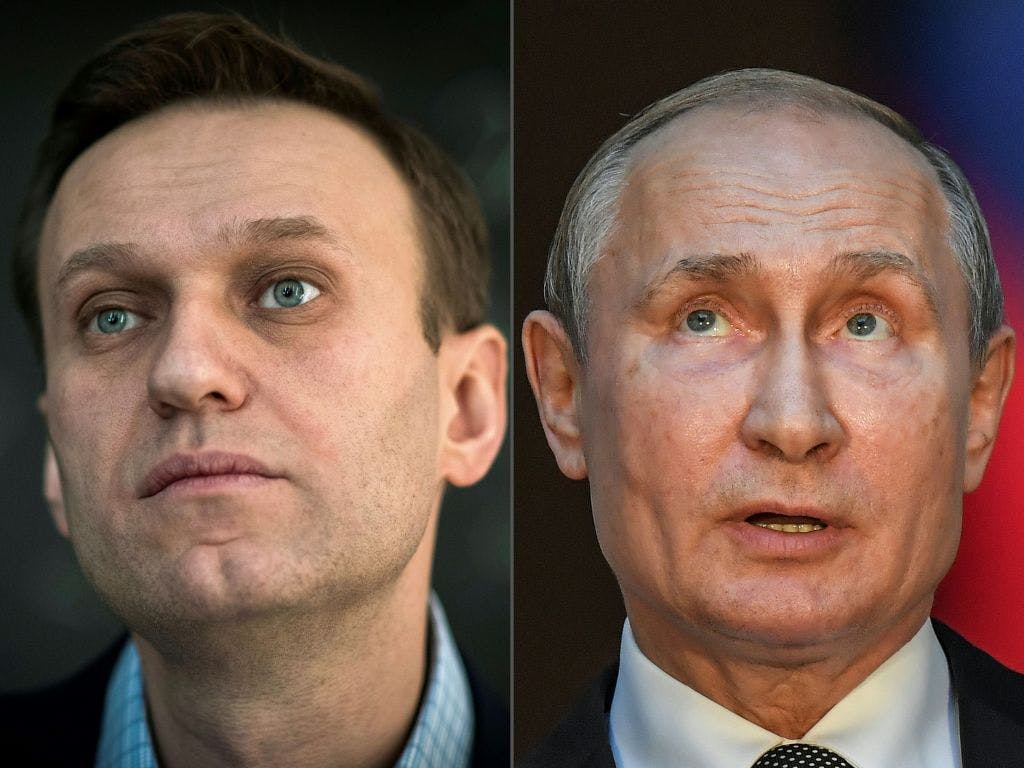
Western governments accused the Russian state on Saturday of assassinating opposition leader Alexei Navalny using a rare toxin derived from South American dart frogs, rejecting Moscow’s long-standing claim that the Kremlin critic died of natural causes in prison.
Live Your Best Retirement
Fun • Funds • Fitness • Freedom
The findings, announced at the Munich Security Conference by officials from the U.K., Sweden, the Netherlands, and Germany, leave little doubt about the cause of Navalny’s death. For two years, questions lingered over whether his death was a natural consequence of imprisonment or a calculated act of state violence. Now, with scientific evidence confirming what Navalny’s widow and new leader of the Russian opposition, Yulia Navalnaya, and her allies long suspected, the focus has shifted to the Kremlin’s responsibility and the broader implications for Russia’s treatment of political dissent.
The statement released by the European governments says forensic analysis of biological samples taken from Navalny’s body confirmed the presence of epibatidine. “There is no innocent explanation for the presence of this toxin,” the British Foreign Office said, adding that epibatidine is “not naturally found in Russia” and originates from poison dart frogs native to South America.
Navalny, 47, died on February 16, 2024, while serving a 30.5-year sentence in a high-security penal colony above the Arctic Circle. Russia’s prison service claimed at the time that Navalny collapsed after feeling unwell during a walk and could not be revived.
Western officials now say that explanation does not withstand scrutiny.
“Only the Russian government had the means, the motive, and the opportunity to deploy this lethal toxin against Alexei Navalny during his imprisonment,” said U.K. Foreign Secretary Yvette Cooper, in the U.K.’s own statement. “By using this form of poison, the Russian state demonstrated the despicable tools it has at its disposal and the overwhelming fear it has of political opposition.”
The toxin identified, epibatidine, is estimated to be up to 200 times stronger than morphine. Officials said it remains unclear how the substance was administered, though they stressed that access to Navalny was tightly controlled by Russian authorities at the time of his death.
Navalny’s widow said the announcement was welcomed as closure, that it confirmed what she had believed since the moment she learned of her husband’s death.
“I’m satisfied,” Navalnaya said in an interview following the announcement. “It’s difficult for me to say that it’s good news, because my husband was killed. He was very young — he was less than 50.”
Navalnaya said she never believed the Kremlin’s account that Alexei Navalny died suddenly of natural causes. The day before his death, she said, they spoke by video link and he appeared healthy.
“We saw him just one day before — yes, by video connection — but he was laughing. He looked absolutely healthy,” Navalnaya said. “So it was obvious to me that something horrible happened to him.”
From the outset, she said, she believed responsibility lay with Russian President Vladimir Putin.
“I was sure that it was Vladimir Putin who killed him,” she said. “And it’s not the first time.”
Navalnaya pointed to a 2020 assassination attempt, when Navalny was poisoned with a Novichok nerve agent while traveling in Russia. After recovering in Germany, he returned home and was immediately arrested — a move widely condemned by Western governments.
“It was obvious to me that he was poisoned, that he was killed in this penal colony,” she said. “We didn’t know how exactly, and we knew it would take a long time to discover how it happened.”
That uncertainty, Navalnaya said, has now been resolved.
She said she was “very grateful to the governments of the U.K., Sweden, the Netherlands, and Germany,” adding that “all the uncertainty is now dismissed.”
“This is not just our investigation,” she said. “This is an investigation based on very, very scientific sources.”
Navalnaya has since assumed a public leadership role in Russia’s opposition movement, vowing to continue her husband’s anti-corruption work despite mounting personal risk. For her, the Western findings represent an official, evidentiary record of what she says the Kremlin tried to erase.
Moscow had delayed the release of Navalny’s body for more than a week. Thousands of mourners later attended his funeral in Moscow, while hundreds more were detained across Russia for laying flowers in his honor.
The joint European governments have formally notified the Organisation on the Prohibition of Chemical Weapons of their findings, alleging that Russia breached the Chemical Weapons Convention. French Foreign Minister Jean-Noël Barrot said the findings showed that Moscow was willing to use prohibited weapons against its own citizens to maintain power.
Throughout his imprisonment, Navalny remained the most prominent critic of Russian President Vladimir Putin, exposing corruption and calling for democratic reform. The Kremlin has repeatedly dismissed allegations of wrongdoing, characterizing Western accusations as politically motivated.
As of publication, Russian officials had not commented on the latest findings.
What's Your Reaction?
 Like
0
Like
0
 Dislike
0
Dislike
0
 Love
0
Love
0
 Funny
0
Funny
0
 Wow
0
Wow
0
 Sad
0
Sad
0
 Angry
0
Angry
0

I am just an average American. My teen years were in the late 70s and I participated in all that that decade offered. Started working young, too young. Then I joined the Army before I graduated High School. I spent 25 years in, mostly in Infantry units. Since then I've worked in information technology positions all at small family owned companies. At this rate I'll never be a tech millionaire. When I was young I rode horses as much as I could. I do believe I should have been a cowboy. I'm getting in the saddle again by taking riding lessons and see where it goes.









Comments (0)