

What to Expect in Supreme Court Arguments on Women’s Sports Case
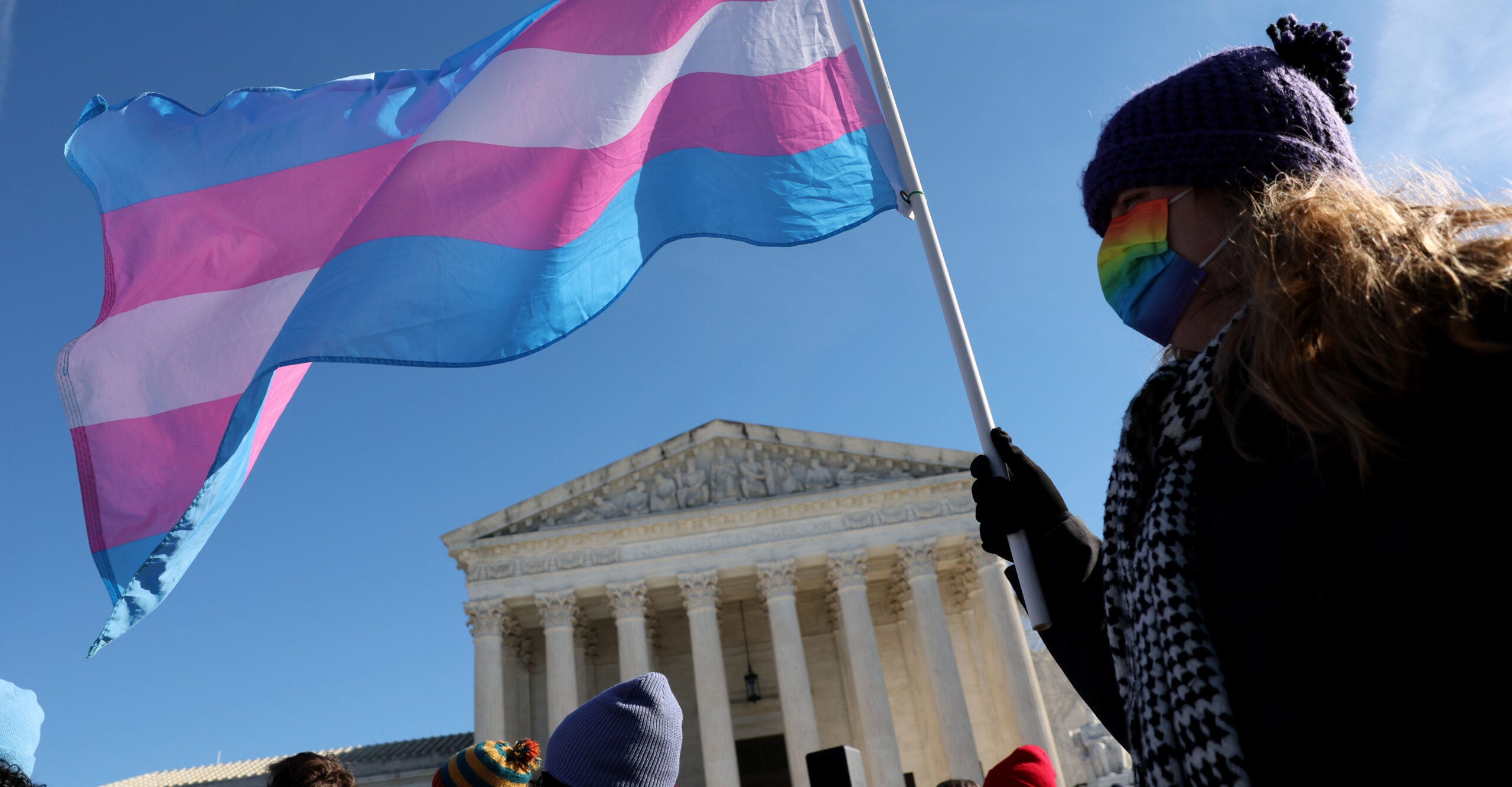
In what could be one of the most far-reaching and contentious cases of the 2025-26 term, the Supreme Court will hear arguments on Tuesday about male participation in women’s sports.
Live Your Best Retirement
Fun • Funds • Fitness • Freedom
The decision will likely affect laws in 25 states that ban males identifying as females from competing in women’s sports.
Another 14 states, and the District of Columbia, have laws or policies that require participants be allowed to compete in sports based on their gender identity, according to the Gay, Lesbian & Straight Education Network.
Justices will hear arguments in combined cases that originated in Idaho and West Virginia.
Legislatures in both states enacted bans on males in female sports. Federal circuit courts have blocked both laws, deciding they violated federal Title IX prohibitions on sex discrimination in federally-funded activities, as well as the Equal Protection clause of the 14th Amendment to the U.S. Constitution.
“I suspect the high court will take a closer look at that rationale,” Zack Smith, a senior legal fellow at The Heritage Foundation, told The Daily Signal.
There are two cases to look at when considering how justices might rule in the women’s sports case.
In 2020, in the case of Bostock v. Clayton County, the majority held that Civil Rights Act protections against sex-based employment discrimination extended to cases of gender identity and sexual orientation.
However, last year, the high court ruled in the case of U.S. v. Skrmetti that states can prevent sex changes on minors.
Justice Neil Gorsuch ruled in the majority in both cases, so his questions on Tuesday could be informative about how the majority might rule, Smith said.
If the court considers “strict scrutiny,” as happened in 2020, “it could be more difficult for the state laws to survive,” Smith said of laws preventing male participation in female sports.
However, if the court considers the states have a “rational basis” to enact the laws, as the majority concluded in the 2025 “transgender” case, it will likely favor the right of the state legislatures to enact the laws.
The case of Little v. Hecox out of Idaho involved college athletics. The Fairness in Women’s Sports Act in Idaho banned males from competing in female sports.
The plaintiff Lindsay Hecox, a male identifying as female, sued the state to compete on the women’s track and cross-country teams at Boise State University. The 9th U.S. Circuit Court of Appeals upheld a district court’s judgment that prevented the Idaho law from taking effect.
The West Virginia v. B.P.J. case is a middle school athletics case. The lawsuit is over the state’s Save Women’s Sports Act. Becky Pepper-Jackson, a 13-year-old male identifying as female who wanted to compete on the girls’ cross-country team, challenged the law.
The 4th U.S. Circuit Court of Appeals ruled West Virginia’s law violates Title IX.
The arguments on Tuesday could likely have federal implications as well. President Donald Trump signed an executive order in February 2025 to withhold federal funds from states that allow biological males to play in women’s sports.
The post What to Expect in Supreme Court Arguments on Women’s Sports Case appeared first on The Daily Signal.
What's Your Reaction?
 Like
0
Like
0
 Dislike
0
Dislike
0
 Love
0
Love
0
 Funny
0
Funny
0
 Wow
0
Wow
0
 Sad
0
Sad
0
 Angry
0
Angry
0

I am just an average American. My teen years were in the late 70s and I participated in all that that decade offered. Started working young, too young. Then I joined the Army before I graduated High School. I spent 25 years in, mostly in Infantry units. Since then I've worked in information technology positions all at small family owned companies. At this rate I'll never be a tech millionaire. When I was young I rode horses as much as I could. I do believe I should have been a cowboy. I'm getting in the saddle again by taking riding lessons and see where it goes.









Comments (0)